Wednesday, May 17, 2023

RIP Pale Male, the one who started it all

I received word last night of the passing of Pale Male, the legendary red-tailed hawk who built his nest atop a luxury residence on 5th Avenue, across the street from Central Park and the Metropolitan Museum of Art. His life has been documented over the last three decades by dedicated birders and photographers.


In a Facebook post (you don't need an account to view), hawk rehabber Bobby Horvath from WINORR writes:

"Pale Male was the inspiration for thousands not only in New York City but worldwide to begin birding or photography. . . He lived at least 30 years in a challenging environment that NYC poses and there will never be another hawk as well known and loved as he was. . . We feel it was better he was found and cared for than if he passed somewhere never to be found and unknown circumstances. Hopefully it was simply age related issues and it was just his time after an amazing unmatchable lifespan."

I was aware of Pale Male long before I came to New York. His story had spread across the country to the west coast, where I grew up, and brought a face and name to the ever-distant wild hawks I usually saw soaring high over the highways and fields. By the time I came to the city, he was already a long-established celebrity. He was the hawk who started it all, making a living in Central Park, the epicenter of the largest metropolitan area in the country. How amazing that a wild hawk could not only survive, but thrive in such an "unnatural" place. His legacy lives on in the numerous resident red-tailed hawks who, following his lead, now inhabit this city.

You can read up on the history of Pale Male on his wiki page, and I highly recommend watching the award-winning documentary, The Legend of Pale Male, which features many familiar faces in the local birding community. And, Pale Male inspired author Marie Winn to write the acclaimed book, Red-Tails in Love.

Credit must go to Lincoln Karim, who tirelessly dedicated his life to documenting Pale Male in his beautiful photos, as seen on palemale.com (currently down). His last video of Pale Male in Central Park can be viewed here.

Thursday, May 11, 2023

Three chicks for Christo and Amelia

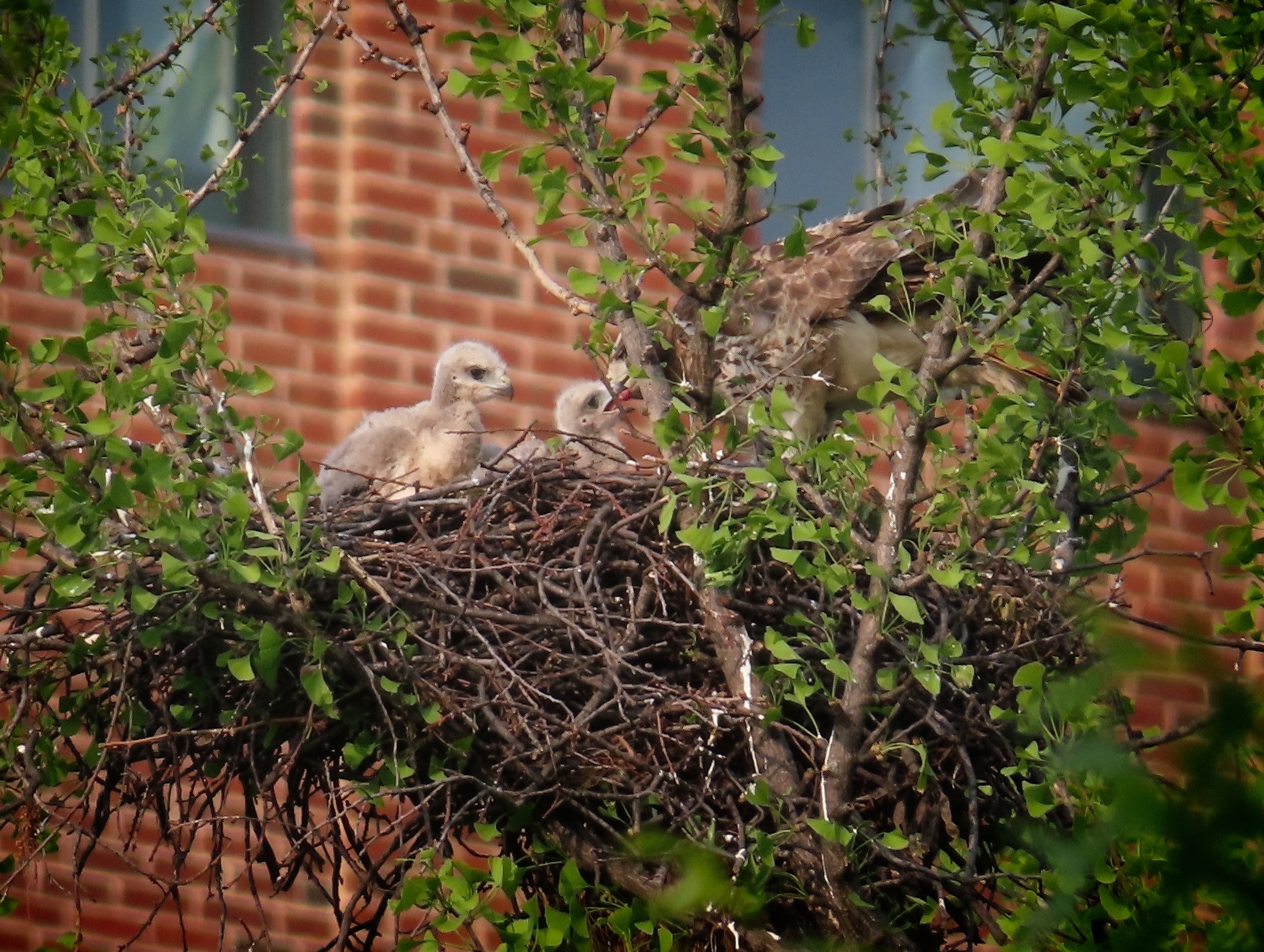
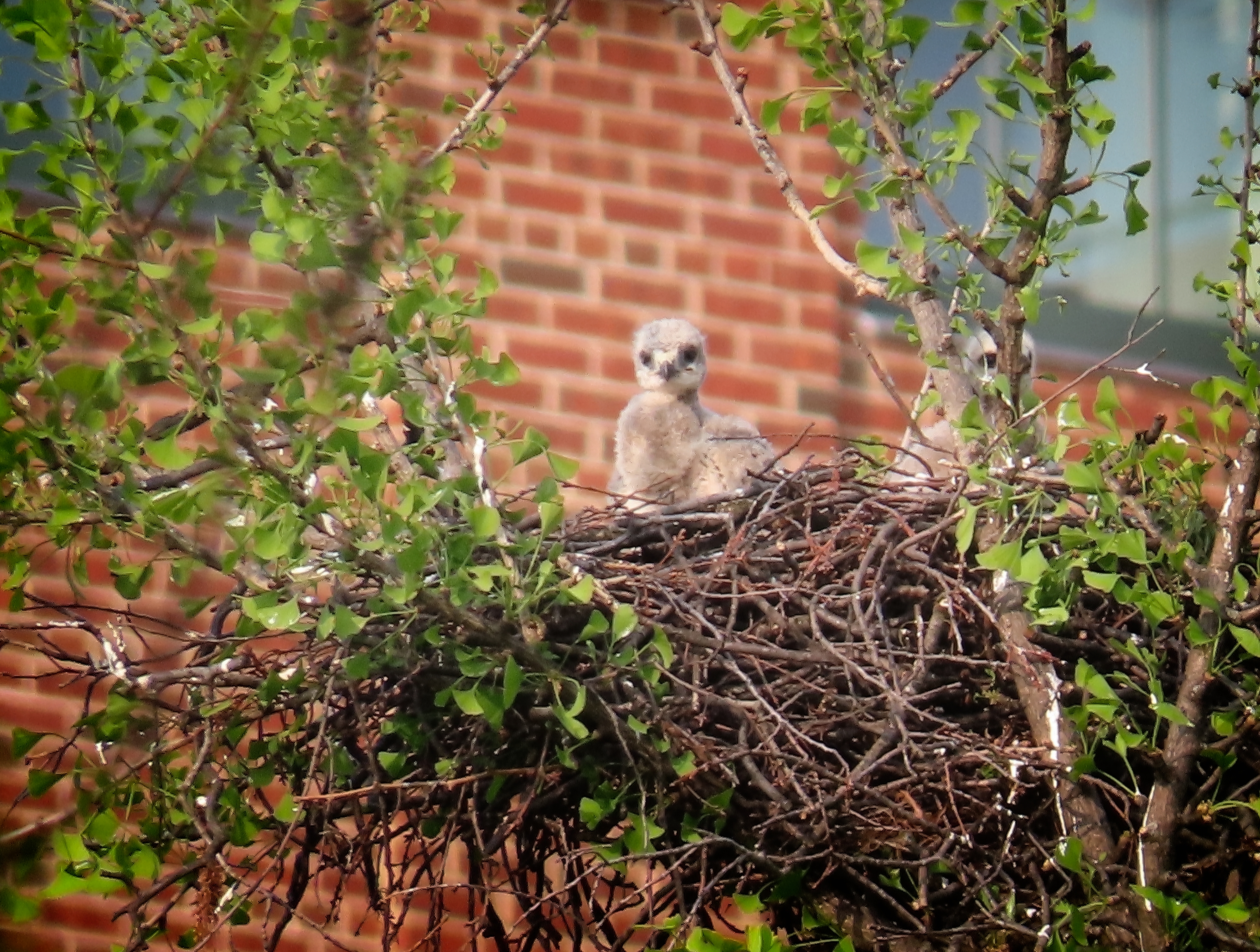
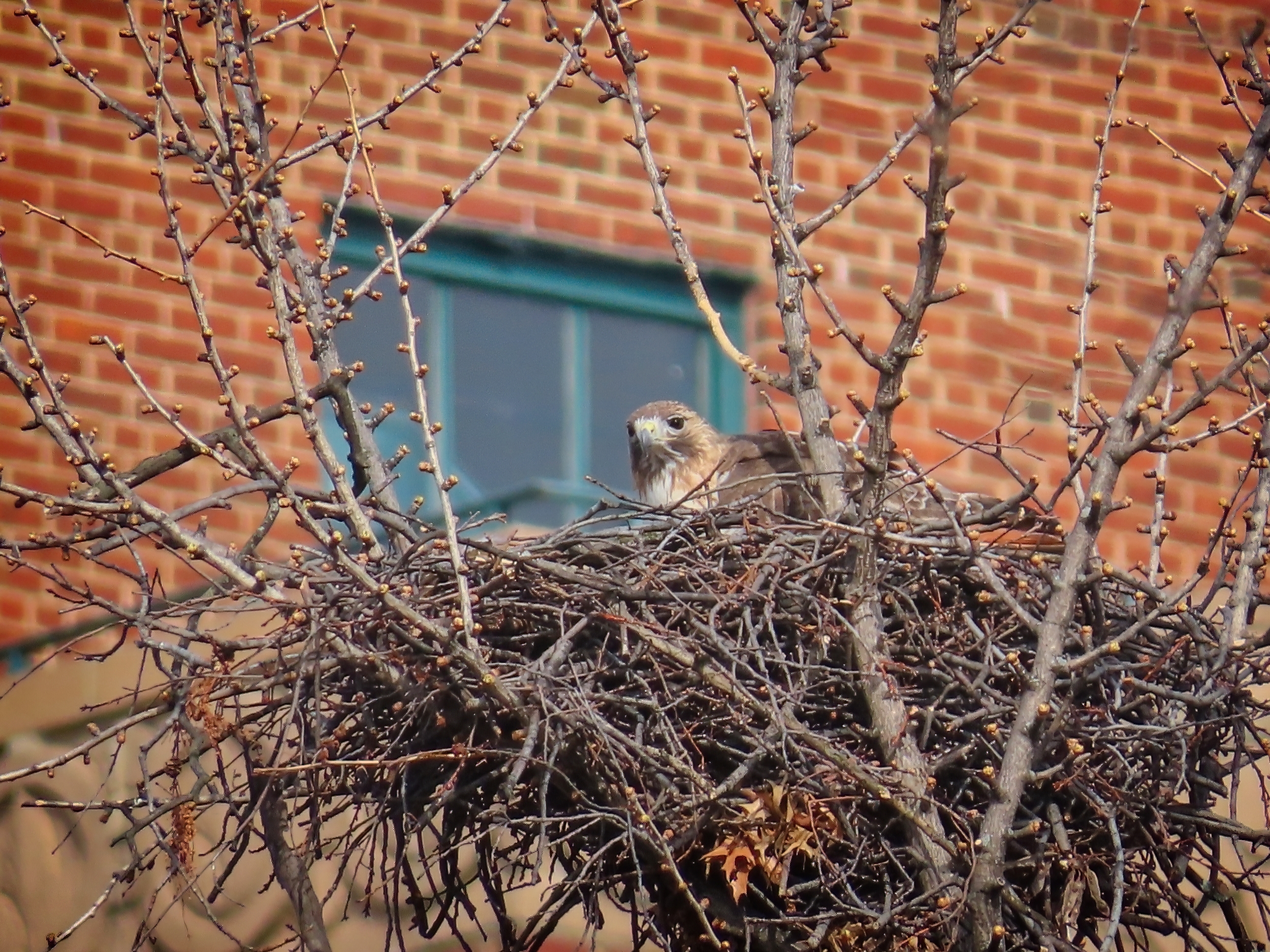
Three chicks have revealed themselves in the Tompkins Square red-tailed hawk nest, although they have been a challenge to capture all together.

These photos, taken May 9, clearly show three nestlings. Mom Amelia is behind the branches on the right side of the nest.


I am unable to tell who is who, but it seems like the older two are big enough to observe fairly well, while the third is still very small and not tall enough to see over the edge of the nest. The oldest is three and a half weeks old.

This brief clip from May 9 shows one of the older two stretching and showing off a full crop.

This clip from the same day shows Amelia feeding one of the chicks.

Backing up a bit, this is what was visible on May 1:

Hellooo world!

You can see the little ear hole in this profile shot.

Mom serving dinner:


Fast-forward to May 9 and the chicks are significantly bigger.


The crop on this chick is bigger than its head - they're eating well.


At three weeks old, the pin feathers are starting to emerge on the wings.


These photos taken on May 10 show Amelia resting with her kids.


Amelia flew out briefly and brought back a sprig of locust pods to add to the nest.

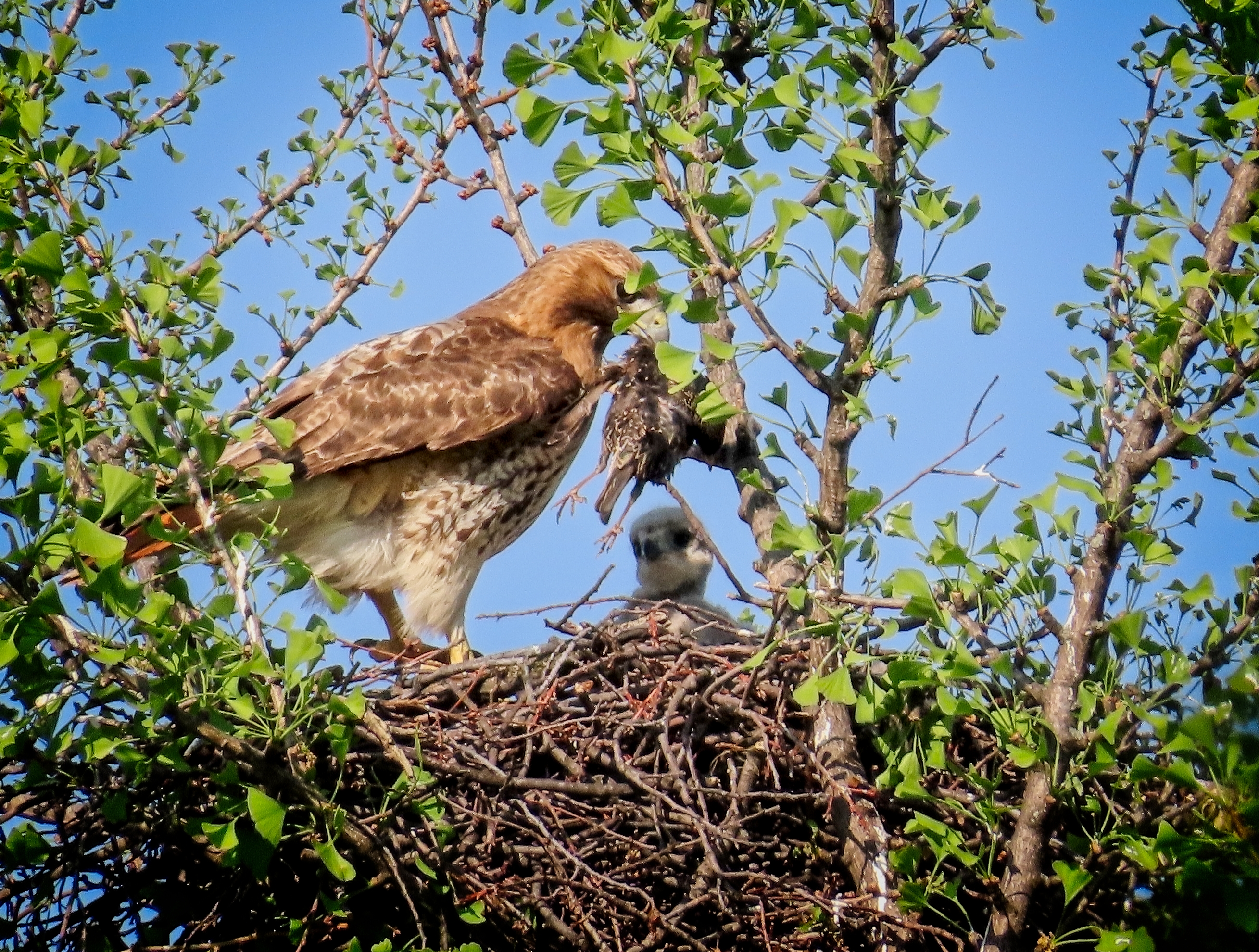
Dad Christo made a food delivery.

After Christo dropped off the food, Amelia picked it up to prepare the dinner menu, which turned out to be European Starling.

The older two nestlings:


The chicks are starting to show dark feathers on their wings, and at least one of them has pin feathers on their tail that look to be about an inch long. Their appearance will start to change rapidly now, so we will relish this fleeting time of fuzzy white cuteness.


Wednesday, April 26, 2023

Hatch time for Amelia and Christo

Tompkins Square red-tailed hawks, Amelia and Christo, hatched their first egg a few days ago, but the chick(s) are not yet visible.

We've seen feedings taking place, as seen in this short video of Amelia taken on April 20. You can see her dipping her head into the nest, but the little one(s) are still too small for us to see.


How many chicks are there? 
 
Don't know! We'll just have to wait and be surprised. Meanwhile, here are some images taken over the last several weeks as the hawks were brooding their eggs.

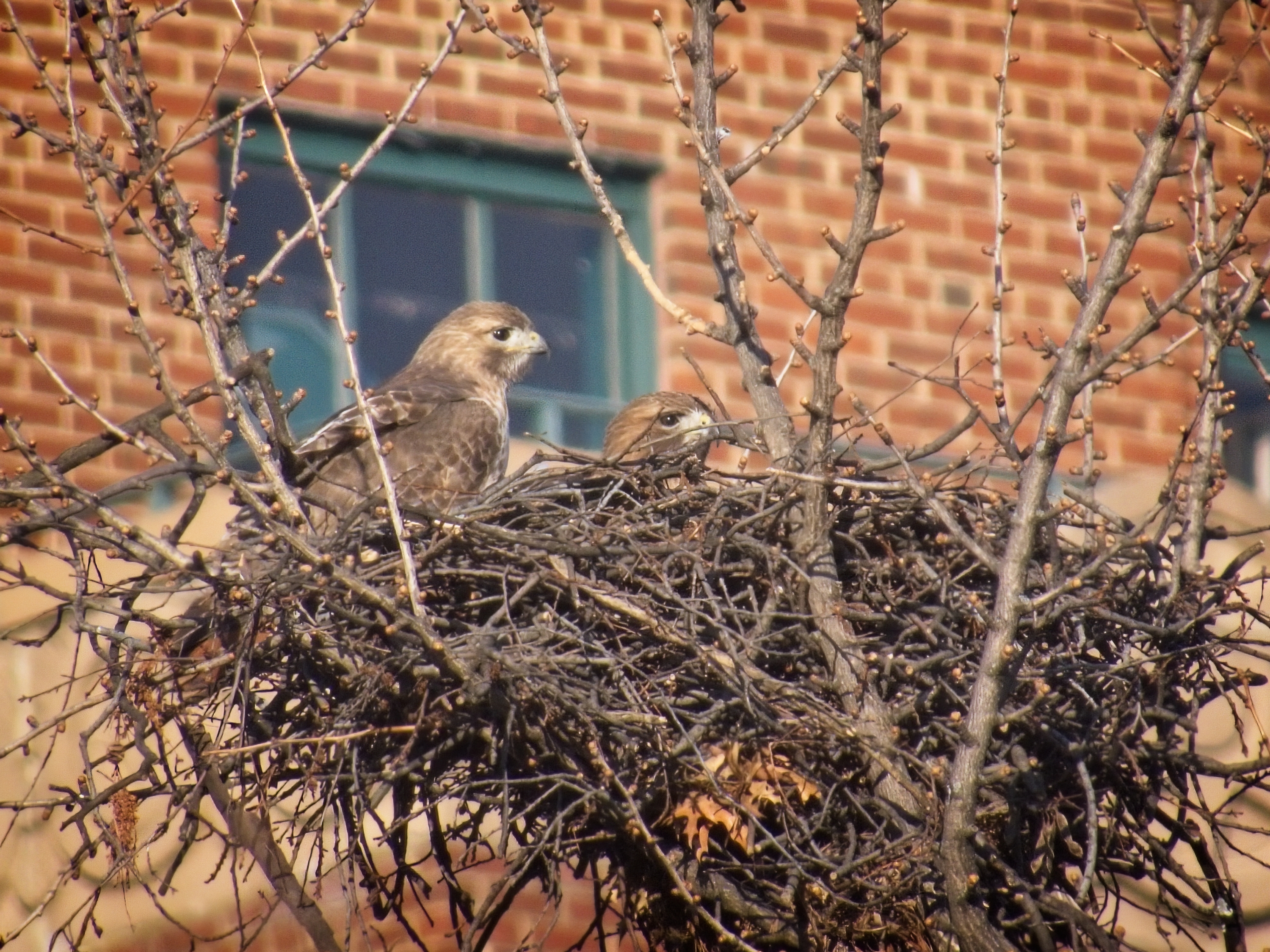
Christo and Amelia:


Amelia and Christo:


Amelia and Christo:


Amelia coming in for a landing - you can see Christo's tail sticking out on the left side of the nest:


Amelia brooding:


Amelia confronting an intruding squirrel:


Amelia has done most of the brooding, staying on the nest for hours at a time. Every so often, Christo would bring her food and she's taken it away from the nest to eat and stretch her wings. Below, Amelia takes off with a rat, compliments of Christo.


In this video from March 16, the hawks perform a nest-switch. Amelia takes over brooding and Christo flies off.

On March 22, Christo took over brooding and Amelia flew off.

And this one from April 3 shows Amelia taking over brooding with Christo flying off.

Brood time is generally dull, but it's been interesting to see the leaves changing on the tree. This is Christo on March 24 and the buds of the ginkgo are just beginning to show.

Amelia on March 31:

Amelia on April 2:

The leaves are really becoming visible in this photo of Christo on April 12:

Amelia on April 13:

Amelia and Christo on April 20:


The leaves are still growing on the tree, as well as the surrounding trees, and my favorite vantage point has now been obliterated by leaves. As the hawks began building this nest last July/August when the tree was in full bloom, I can't help but wonder if they chose this particular place because it provided a lot of cover. Of all the nest locations they've had, this one seems to be the most difficult to observe despite being in plain sight. Perhaps this was by design...

Friday, April 14, 2023

2023 Spring Bird Migration - Part 1

Spring migration is underway, bringing us some new birds to observe across the city. Below are some highlights from early in the season.

Pine Warbler:


Although Song Sparrows are generally around all year, their song is a sign of Spring's arrival.


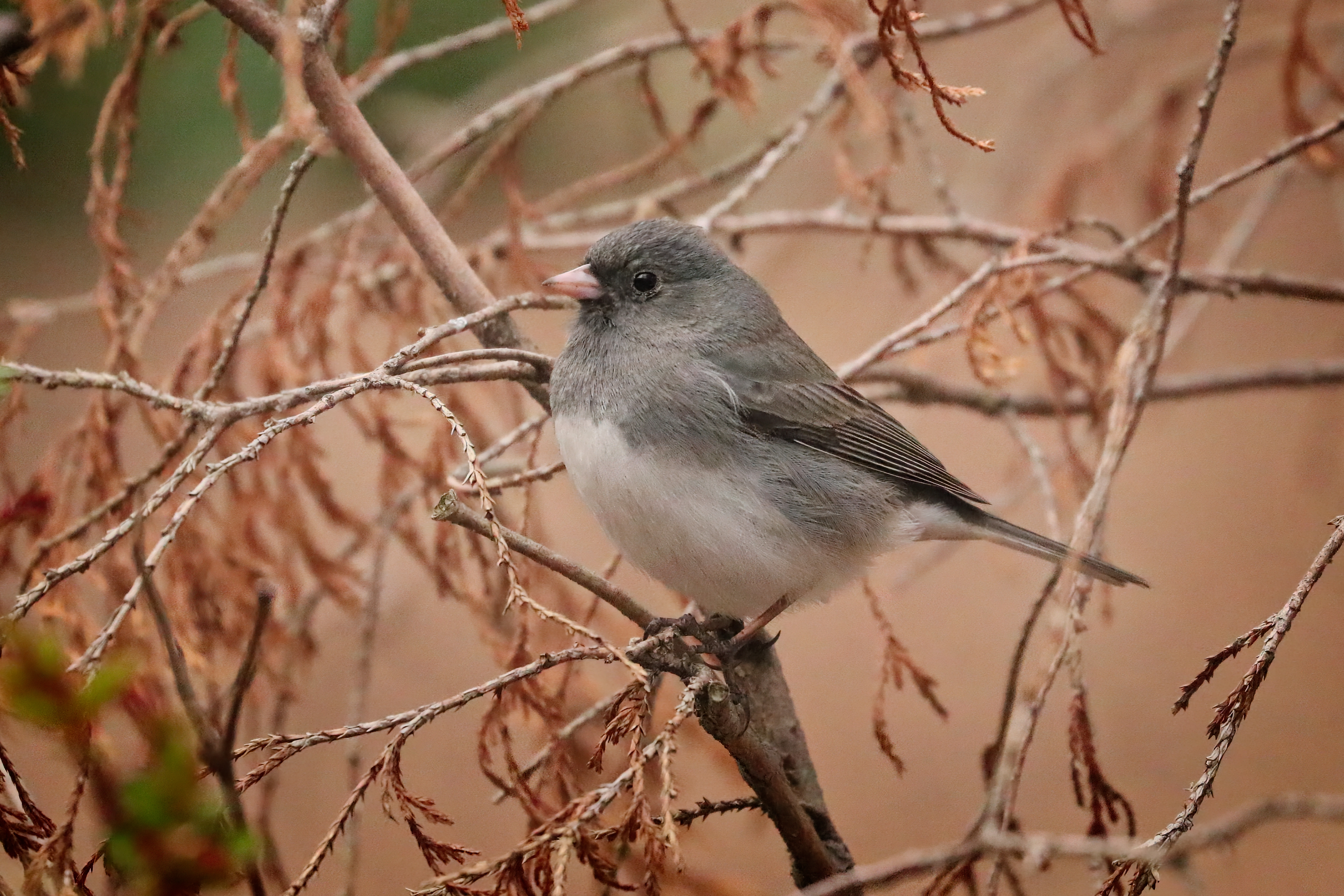
Dark-Eyed Juncos have been with us this winter, but are now moving north to their nesting grounds.


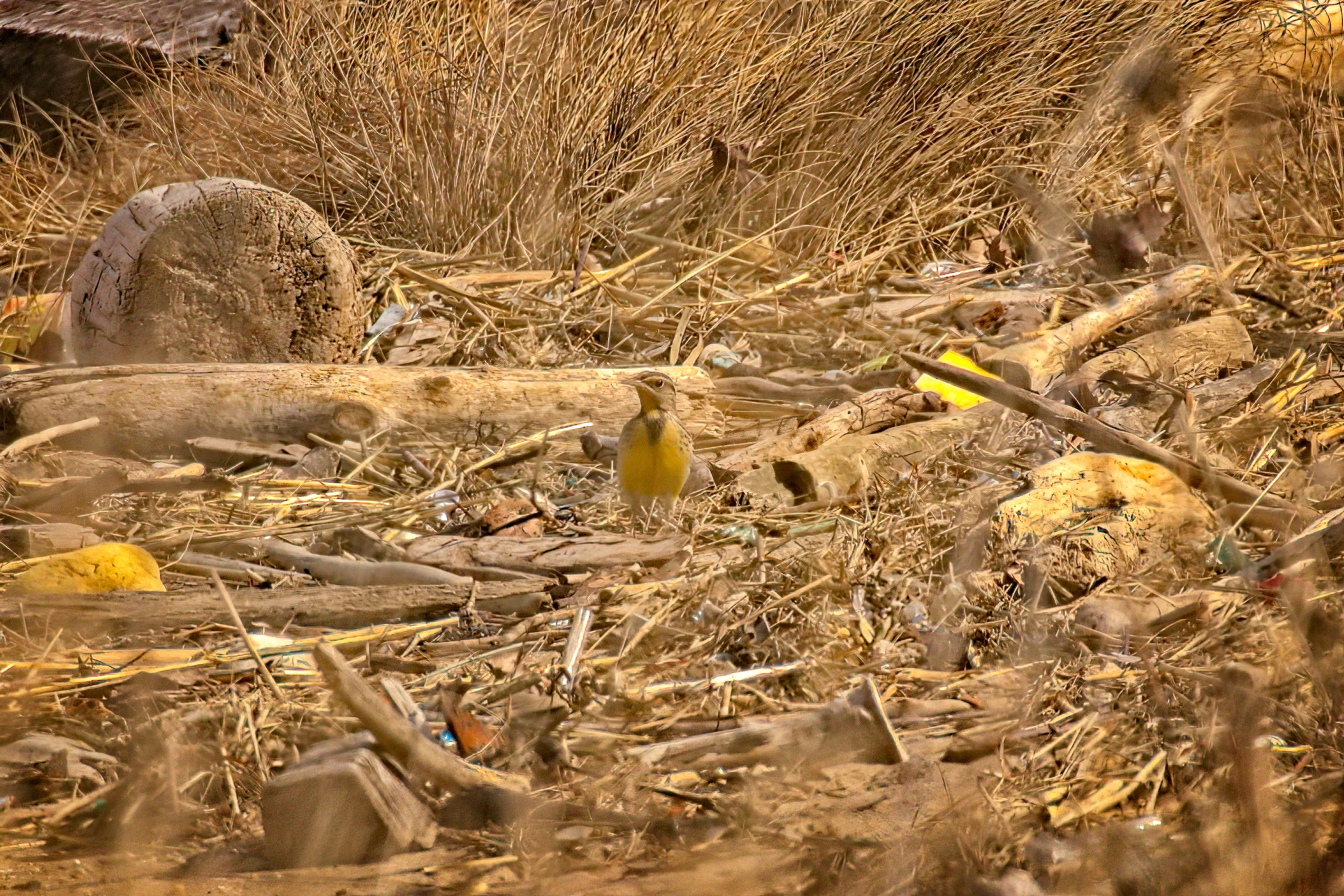
This is not really a migrant, but a very unusual visitor to the east coast. Several weeks ago, this Western Meadowlark appeared in Brooklyn and seems have settled in. They are normally found on the west coast, so it is a mystery how this one ended up here.


It looks very similar to the Eastern Meadowlark, but the prominent white outer tail feathers seen in flight are one distinguishing field mark.


Wading birds like this Snowy Egret are returning north after wintering in warmer areas.


Ducks that have over-wintered in our area are now moving out. This is probably the last sighting of Greater Scaup I'll have here until they return next fall.
 

Male and female: