Tuesday, October 18, 2016

Back to work

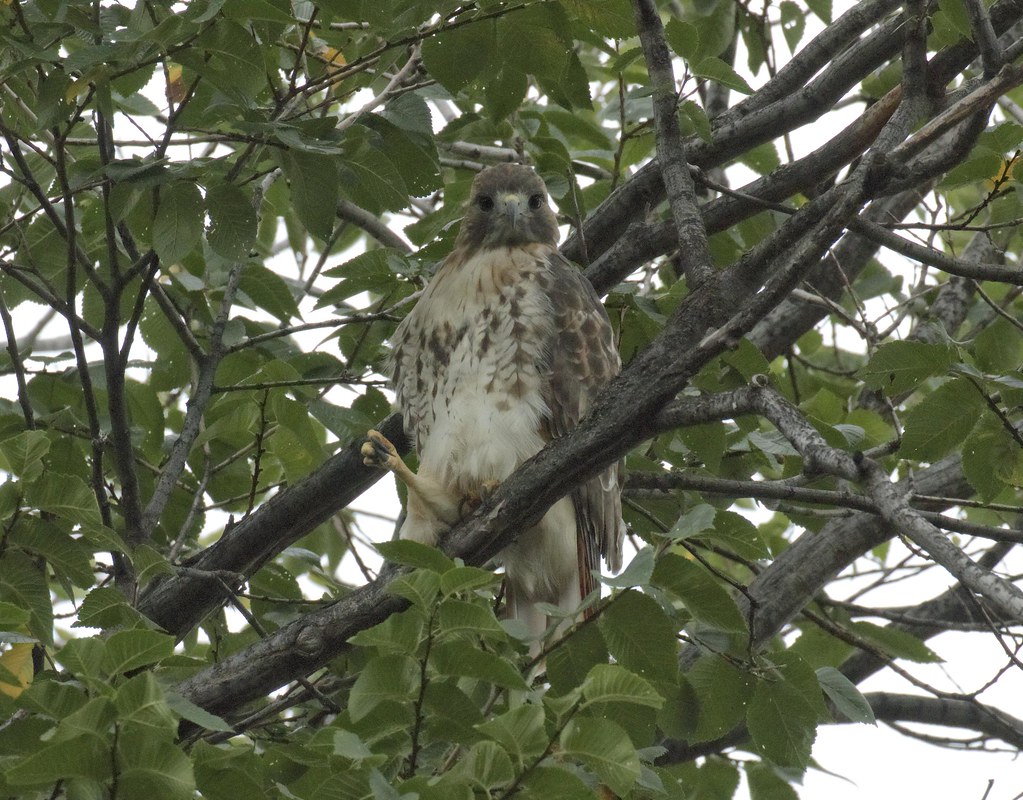
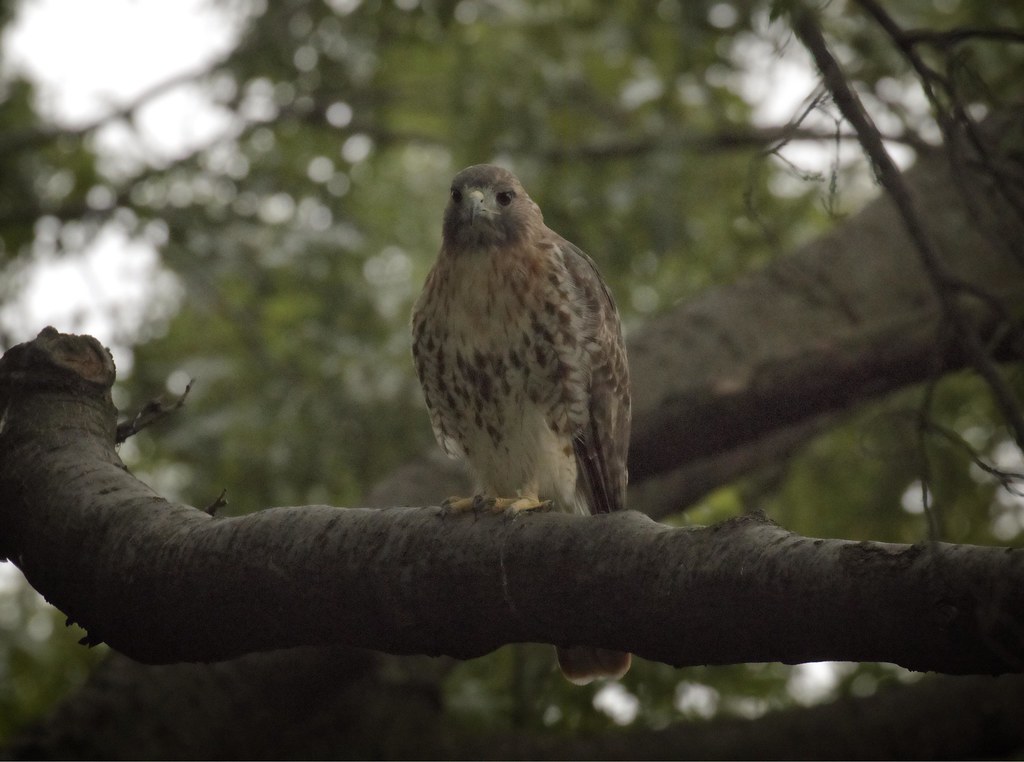
Summer is over, the kids have flown, so it's time for hawks Christo and Dora to find something to do with their time.  Being the industrious types, they have spent the last couple of weeks building a second nest near the ping pong table in Tompkins Square Park.  Breeding season doesn't happen until late January or early February, so this does not necessarily mean they'll use this nest for their next family.  It could be a bonding exercise, helping to strengthen their cooperation and partnership.

Or, maybe they just want a new rec room.

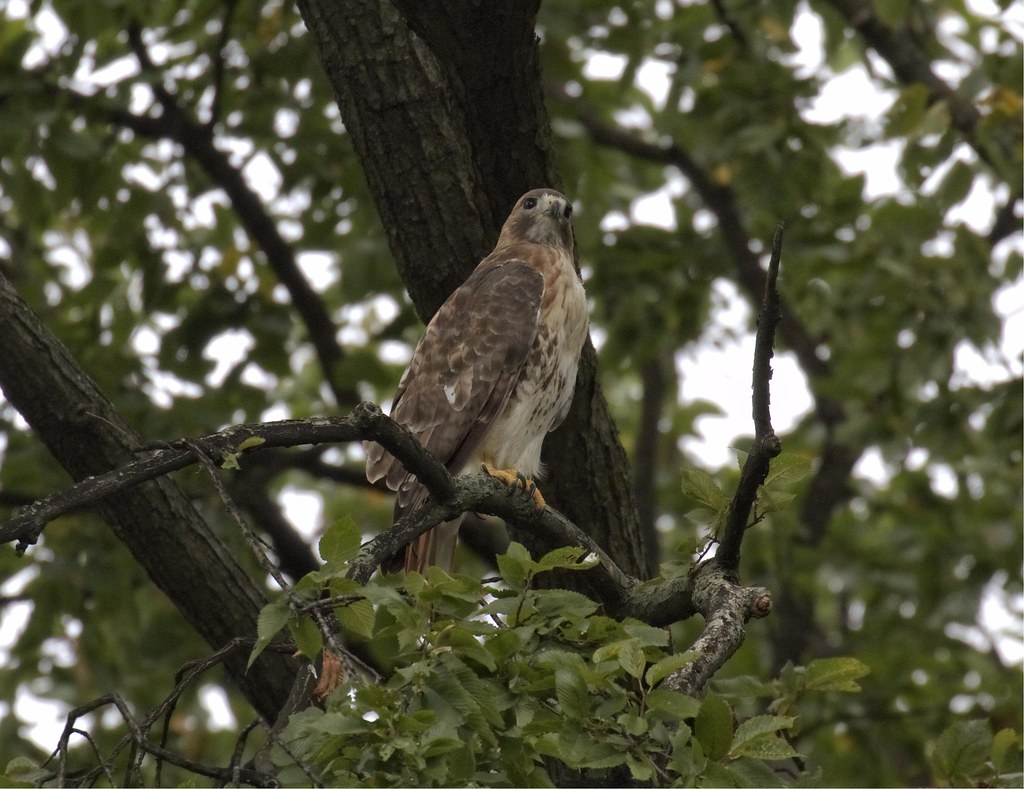
In the photo below, the nest is the blob of leaves on the left.  Dora is perched a couple of feet above it.  Christo is on the branch on the lower right side of the photo.
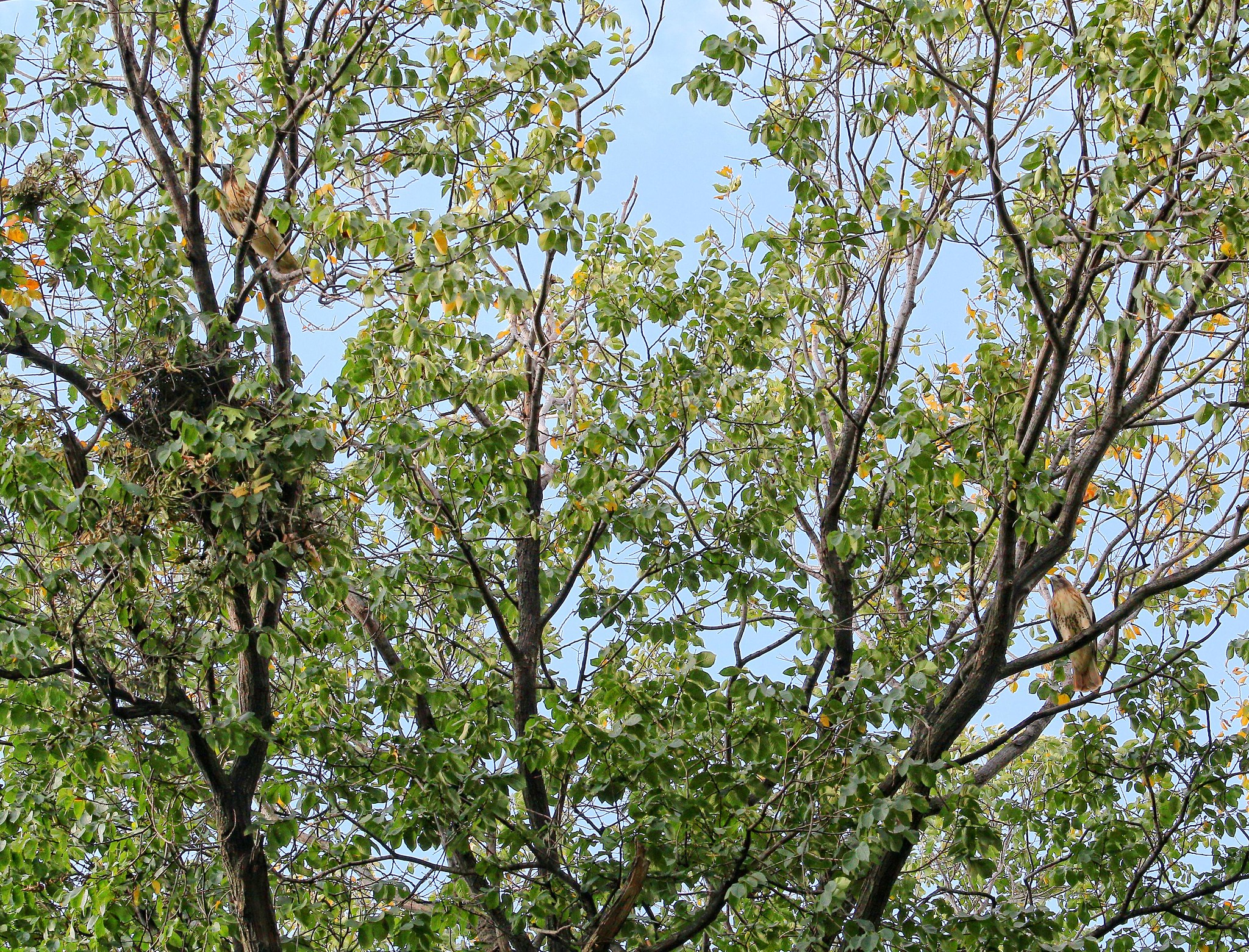
Dora and Christo with new nest

From what I've heard about hawks, building a nest in October is fairly unusual, but it's not the first time for this pair.  Last October, Dora surprised us by building their current nest in the ginkgo tree near the Avenue B and 8th Street entrance to the park.  She seemed to be the one to initiate that project, but I don't know which one of them chose to create this new one.  Both hawks have been working on it. 

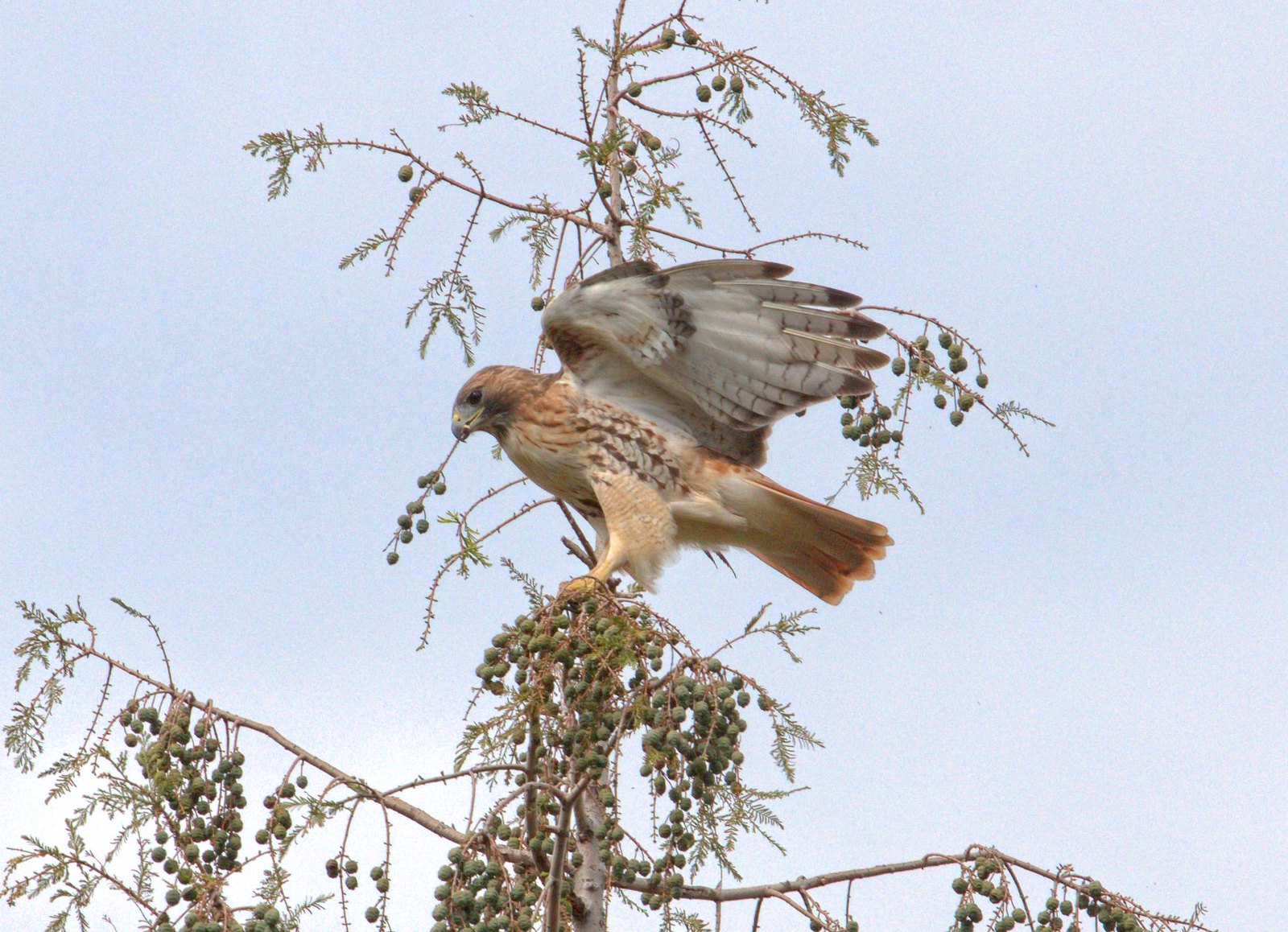
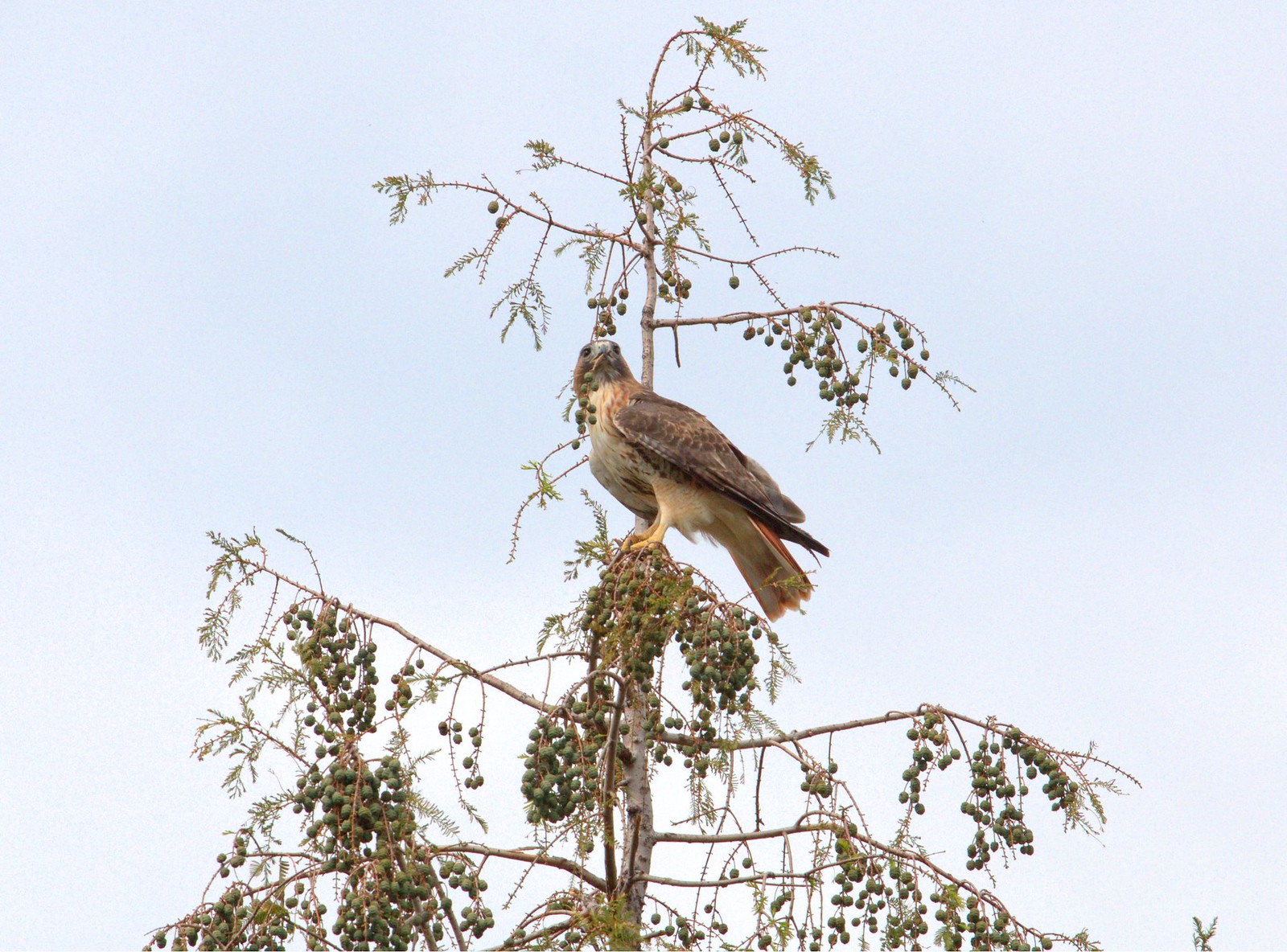
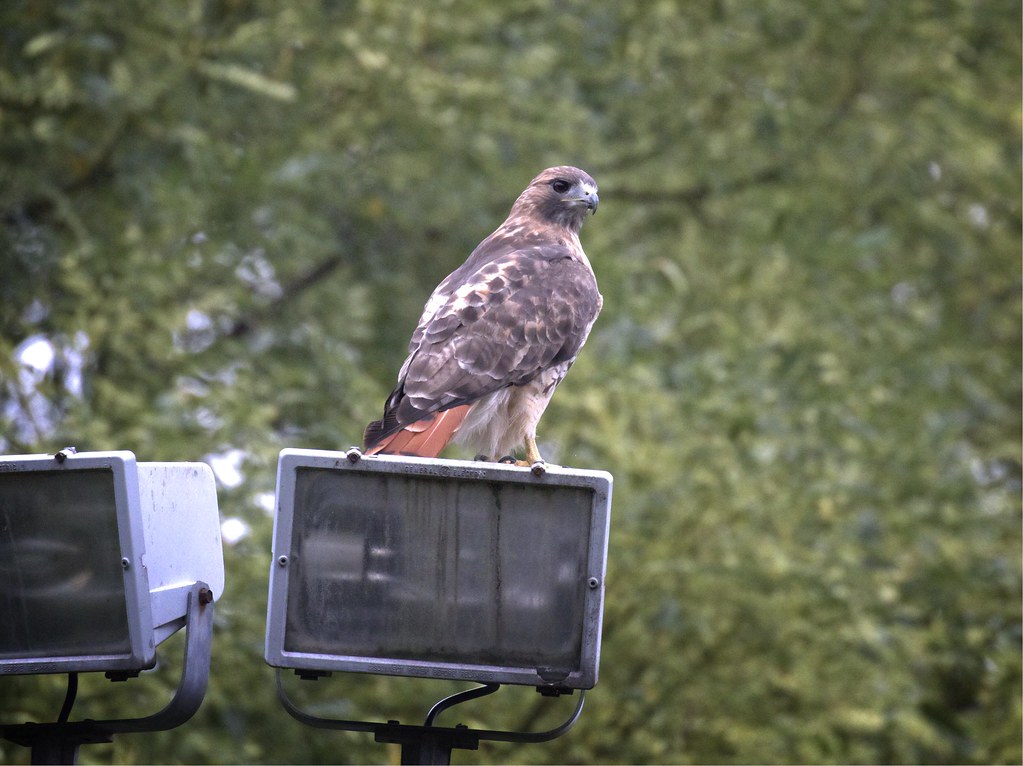
I don't know if it's significant, but the branch that holds the nest in the ginkgo tree was one of Dora's favorite perches.  The branch that holds the second nest is one I've seen Christo on many times over the last three years.  In the photo below, Christo sits on top of the new nest.
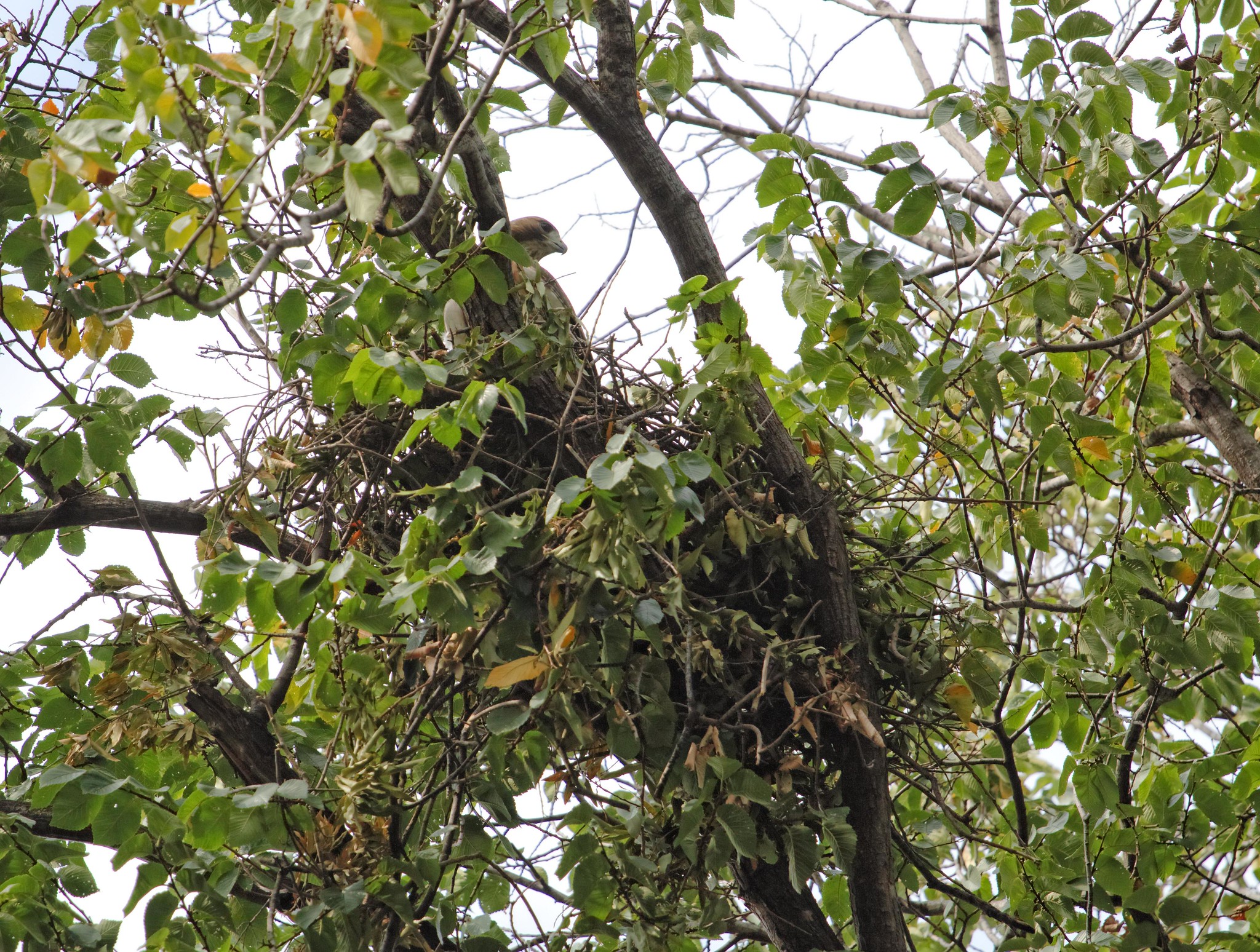
Christo in his new nest

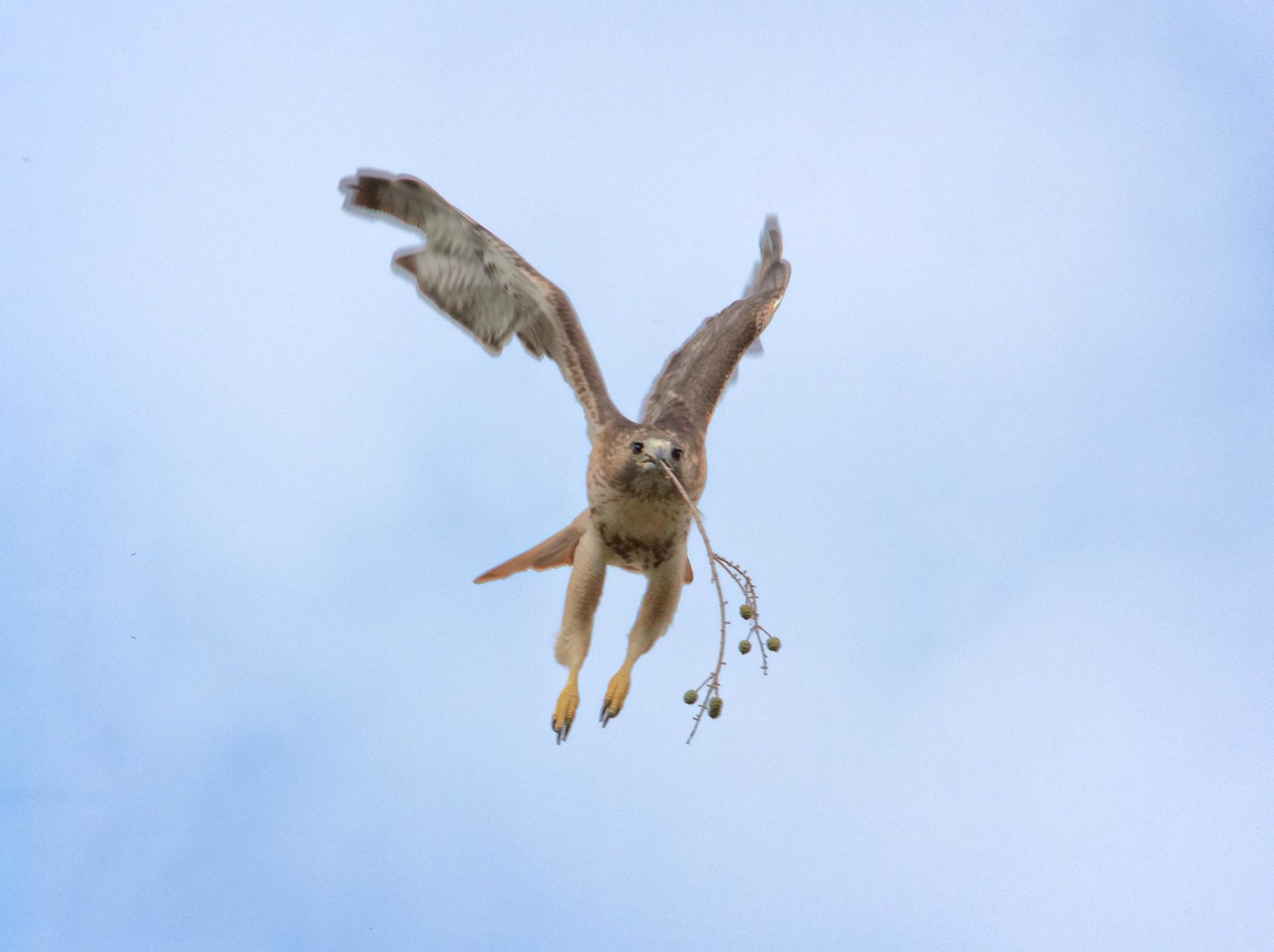
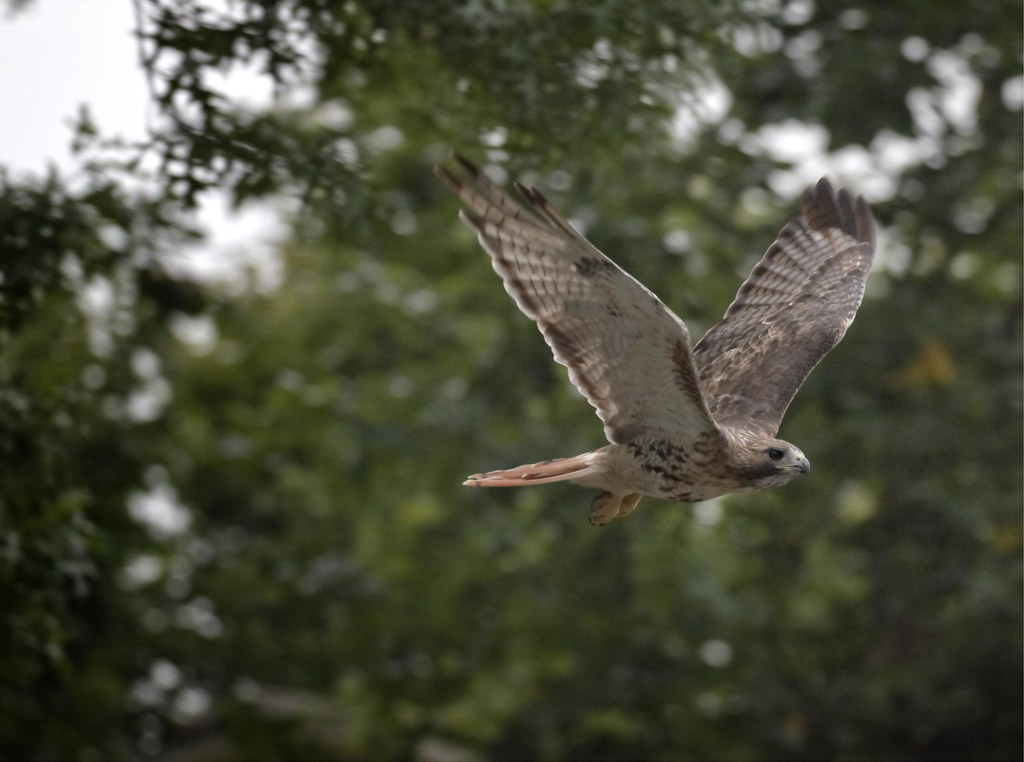
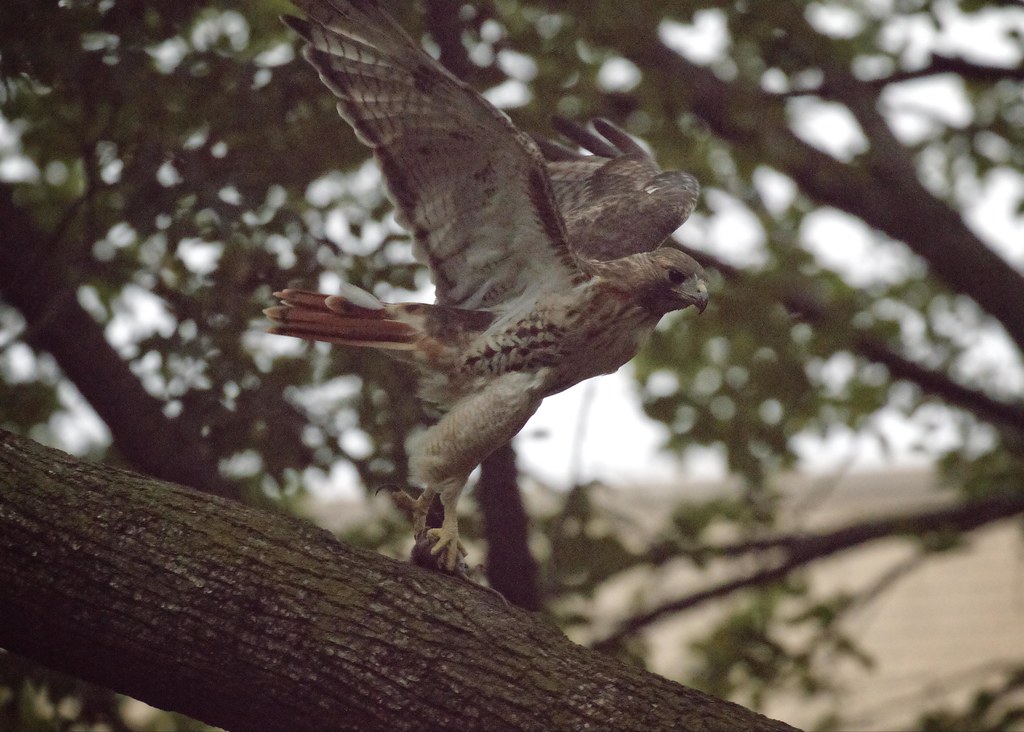
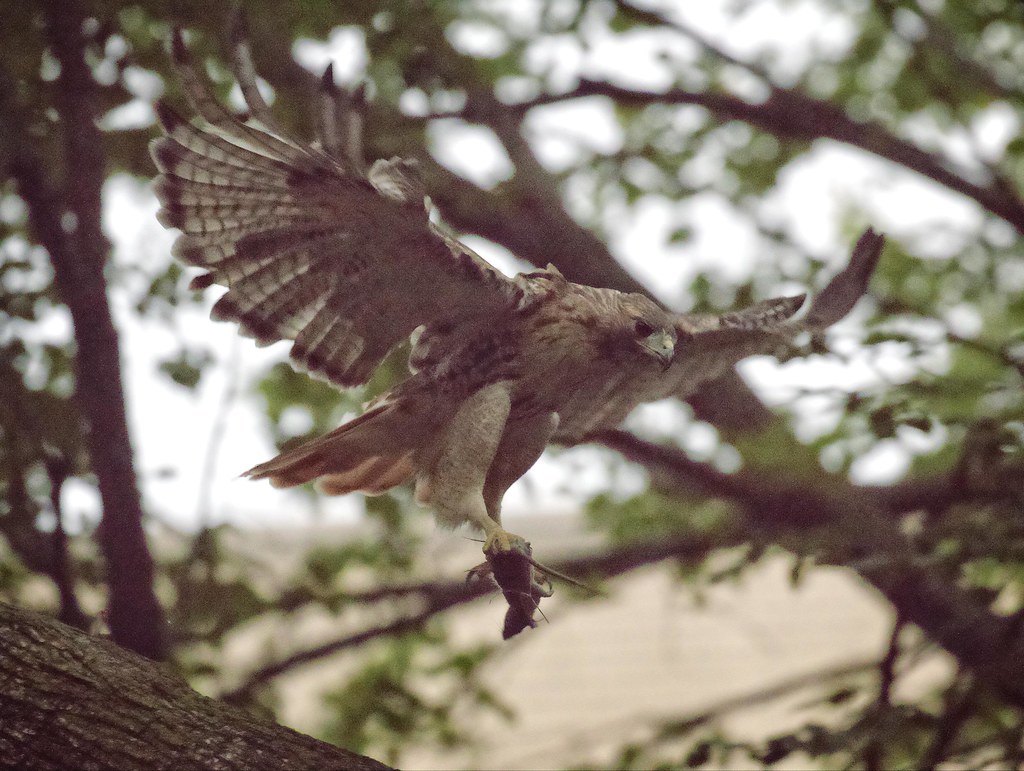
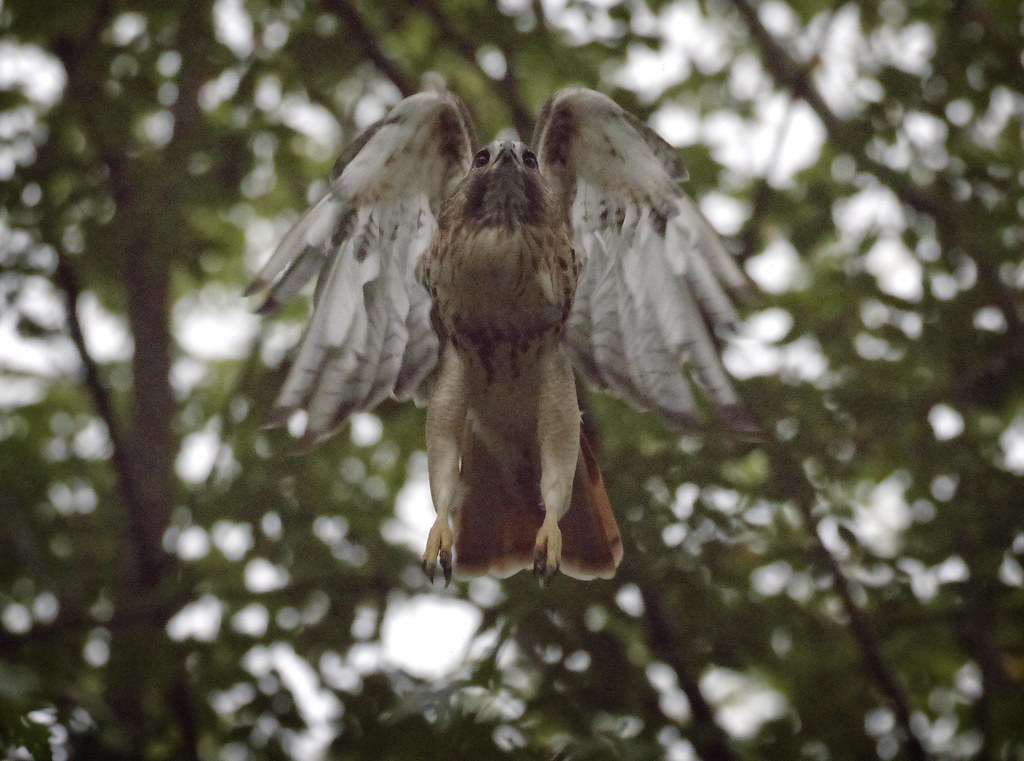
And here he is flying in with a stick.
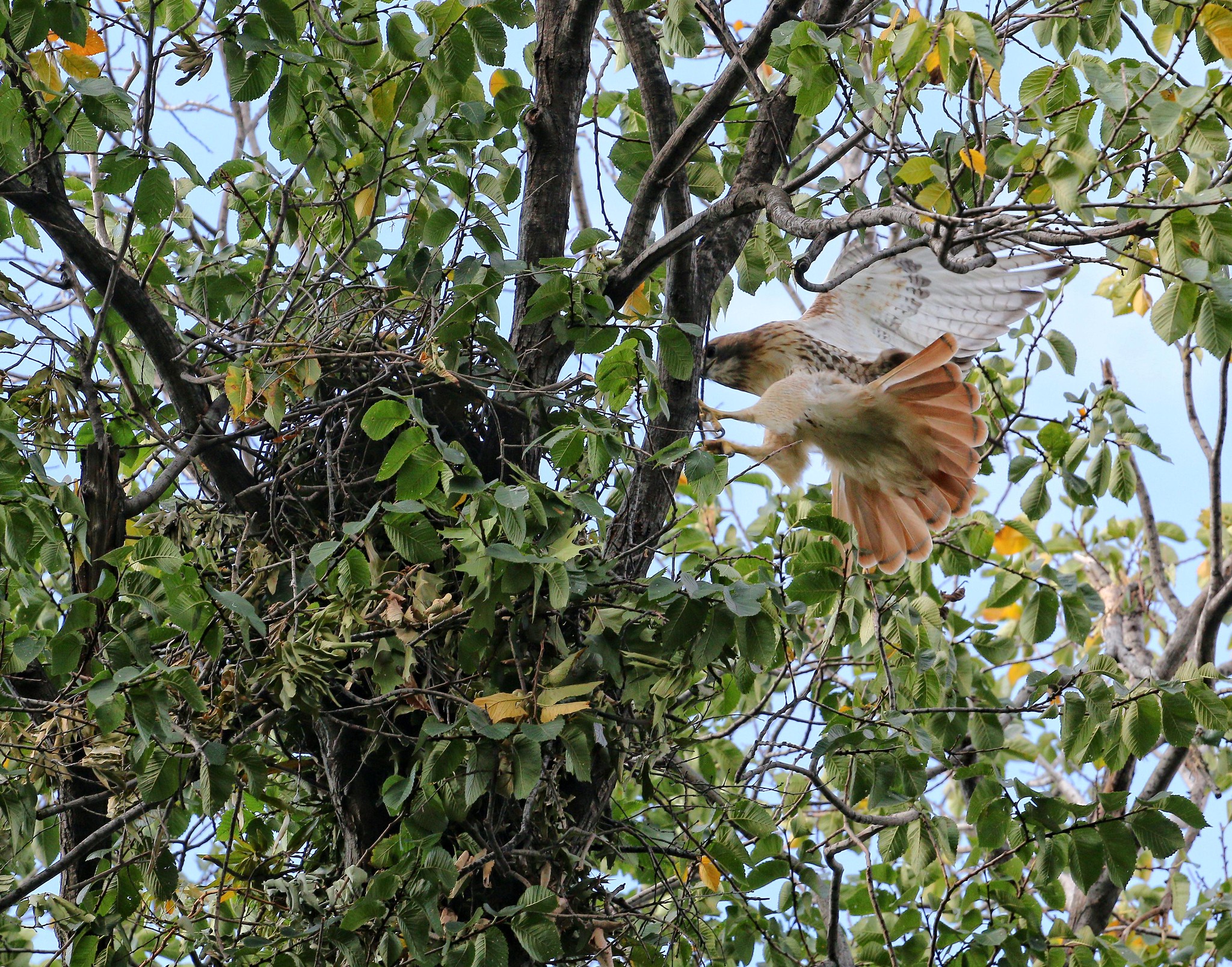
Christo takes a stick to the nest

Where do the hawks get the sticks?  Below, Christo breaks twigs from the same tree that holds the nest.
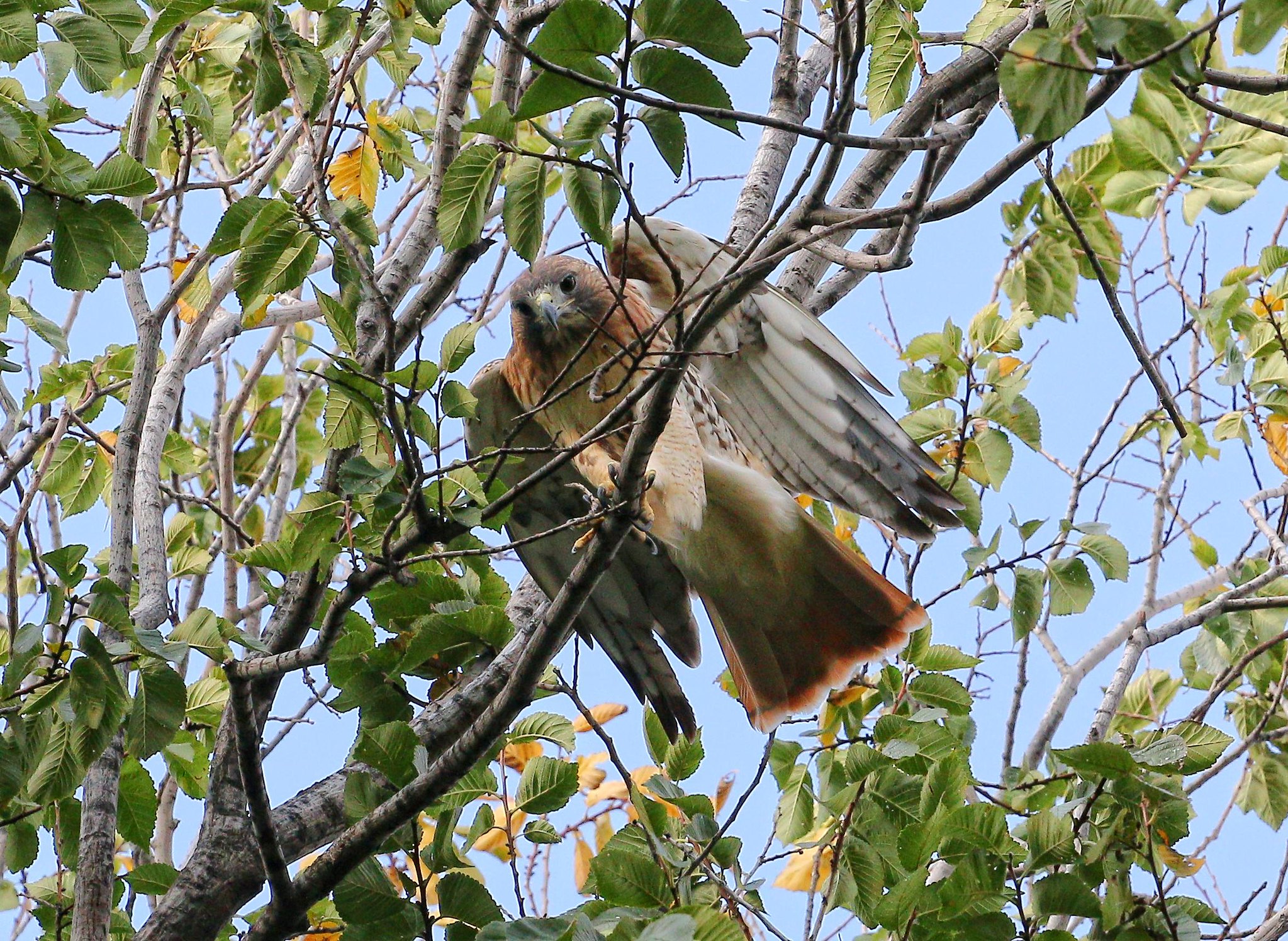
Christo breaks sticks

Twice on the same day, I saw him take branches from the redwood tree next to the men's restroom.  He used this tree for nesting material last February as well.
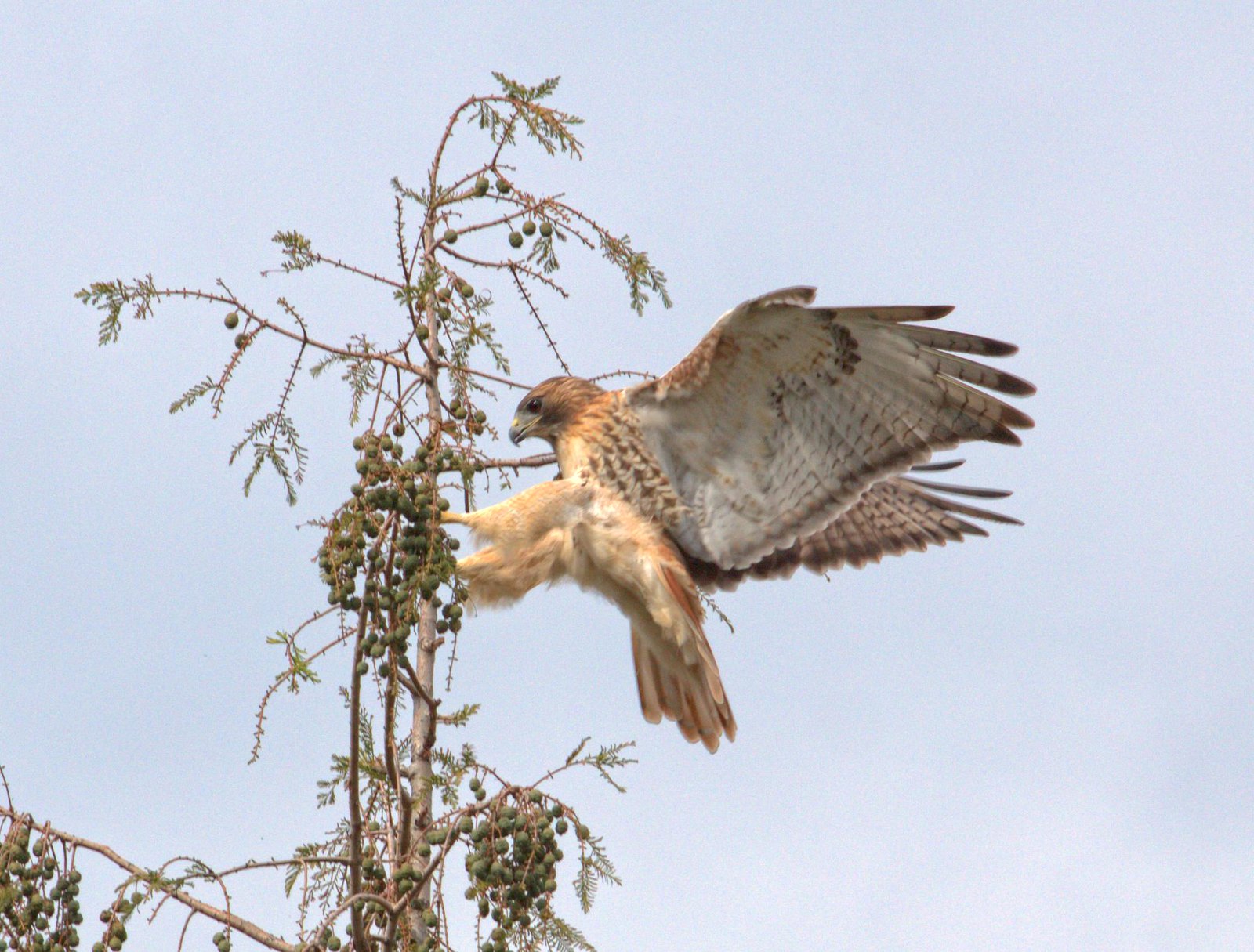
Christo gathers nesting material

Christo gathers nesting material

Christo gathers nesting material

Christo gathers nesting material

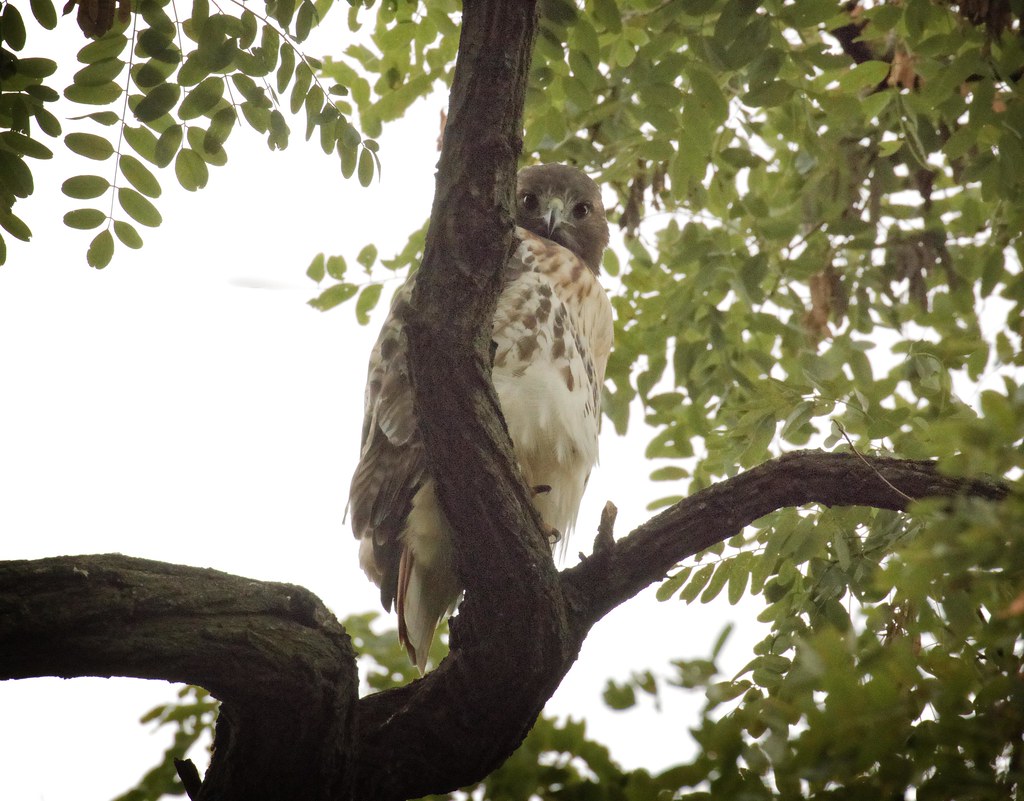
At the end of a long busy day, Dora rests and scratches.
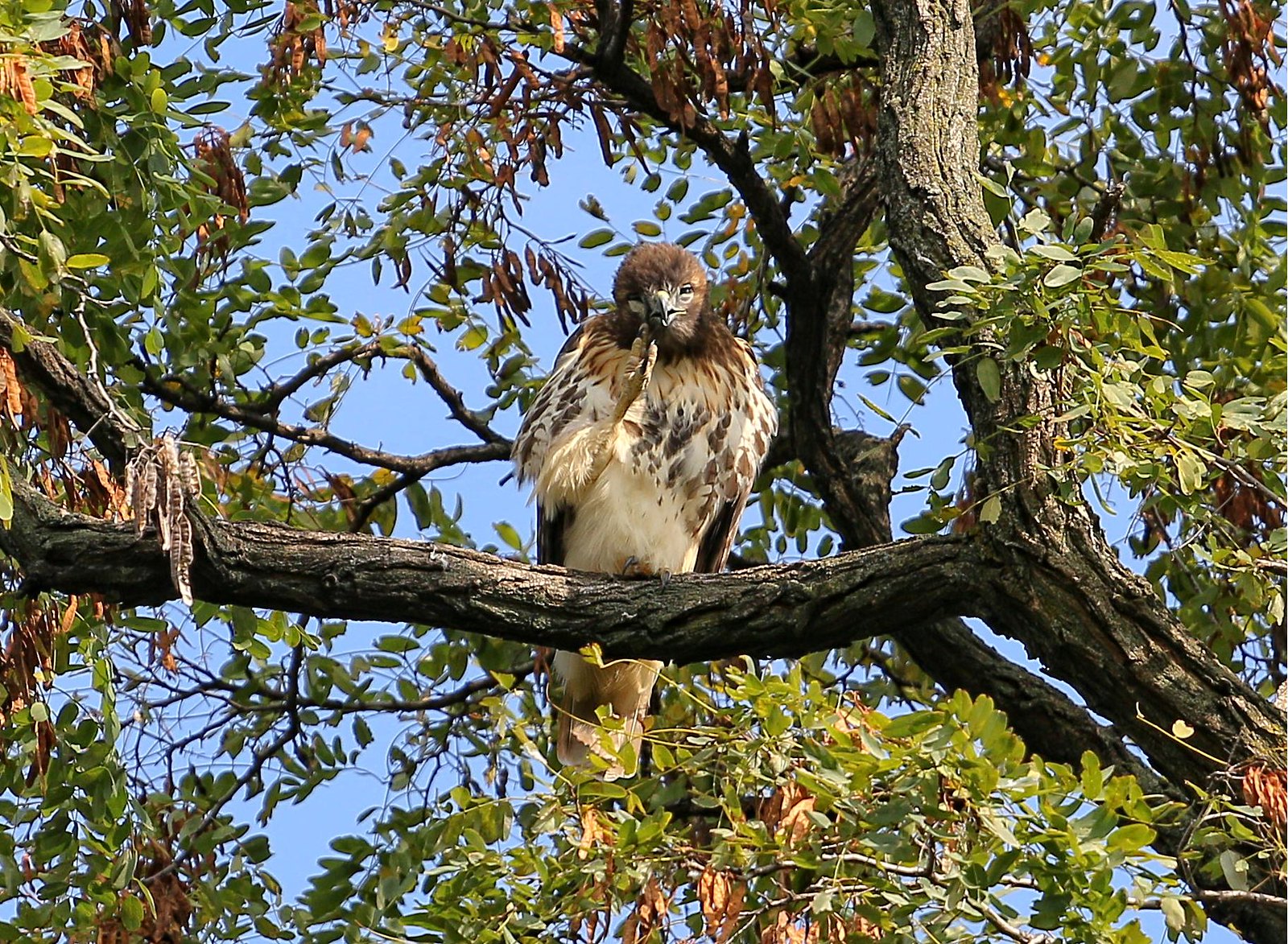
Dora scratches

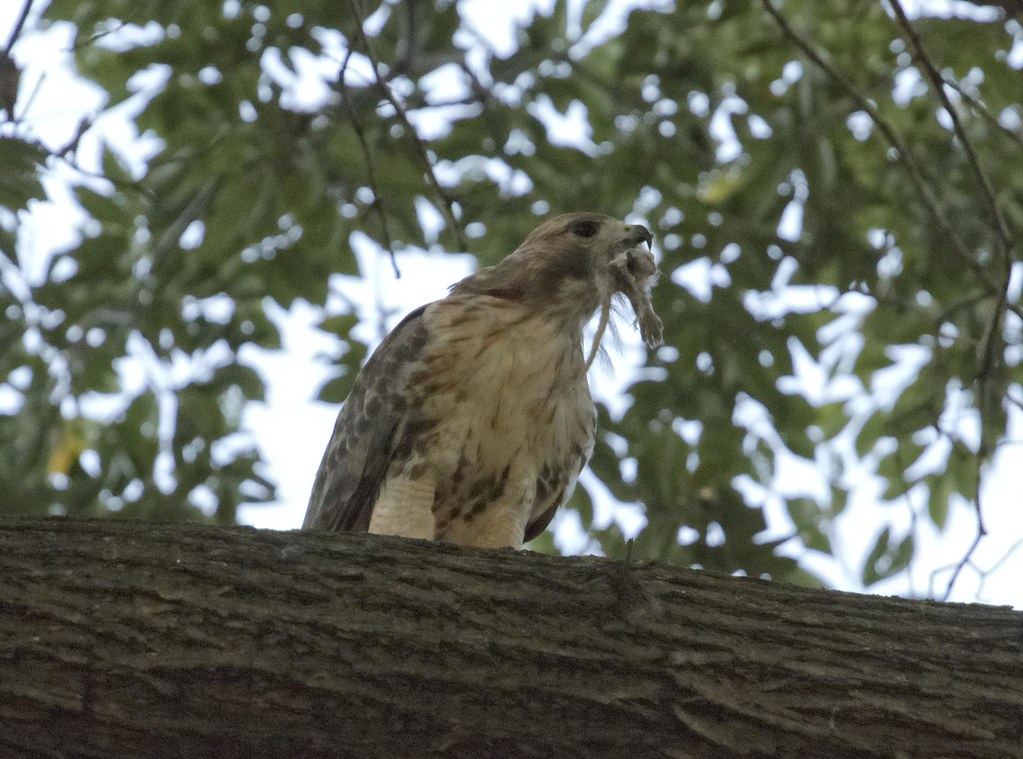
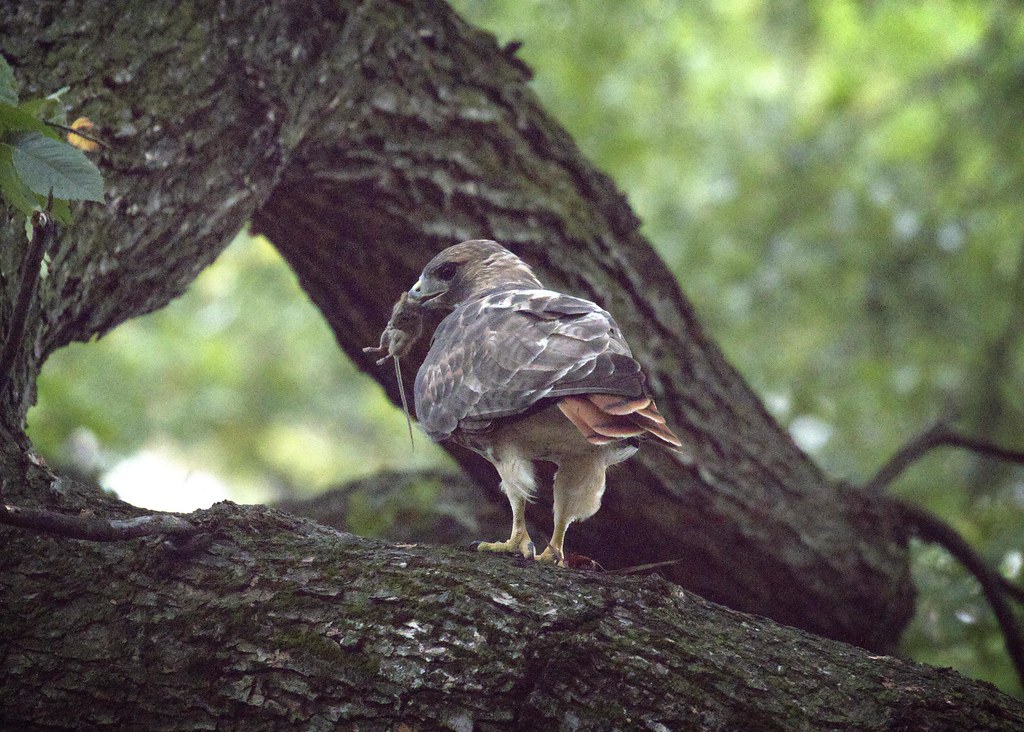
Christo digests a pigeon dinner while watching the sun go down.
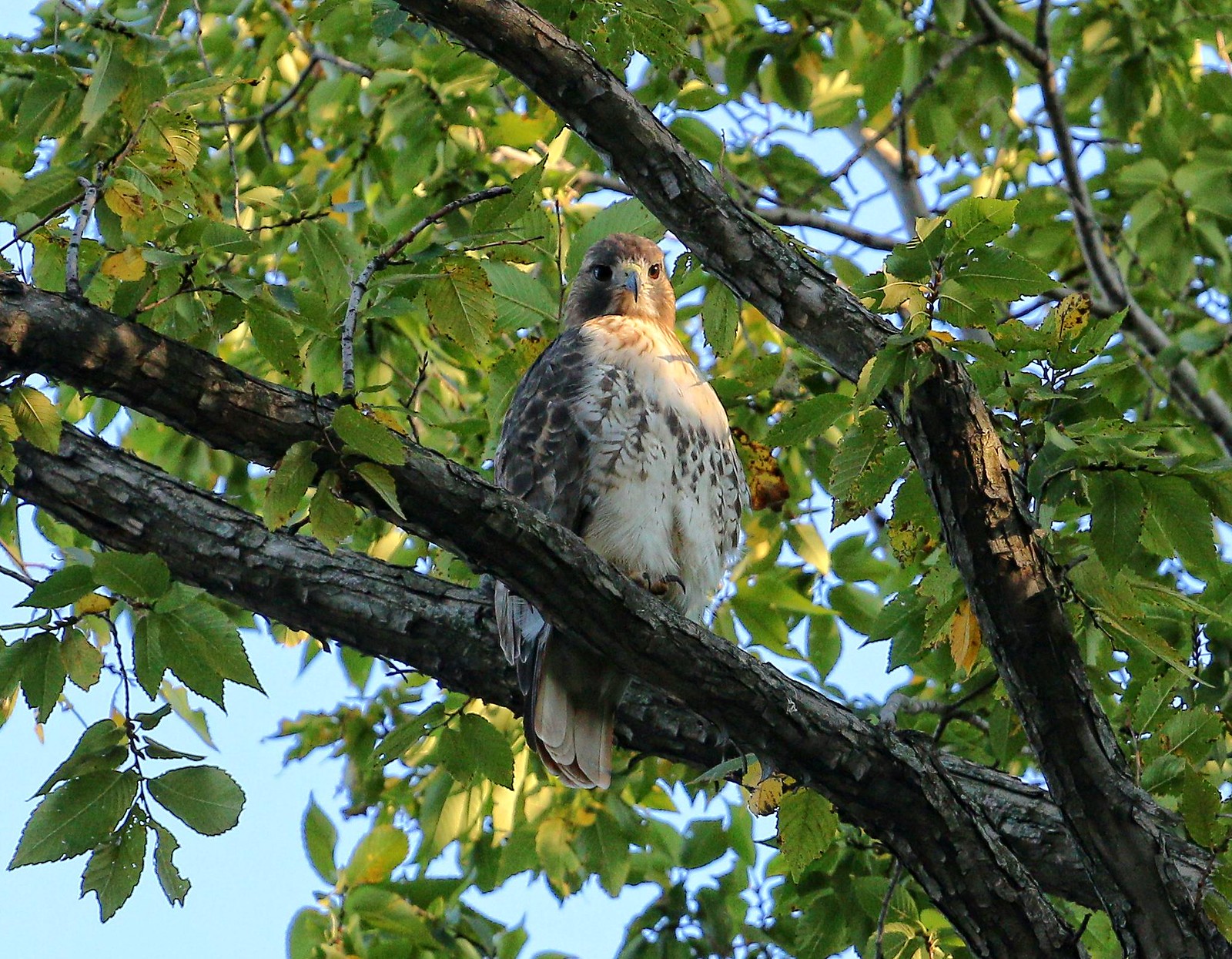
Christo

After sunset, Christo attempted another dinner run, making his signature move by diving straight over my head.  He gets so close, I lose focus with the camera.  My theory is he uses me as a shield to sneak up on prey.  I think he knows I will stand still, so works that into his plan of attack.  I've seen him do this with other people as well.  It can be a little unnerving.
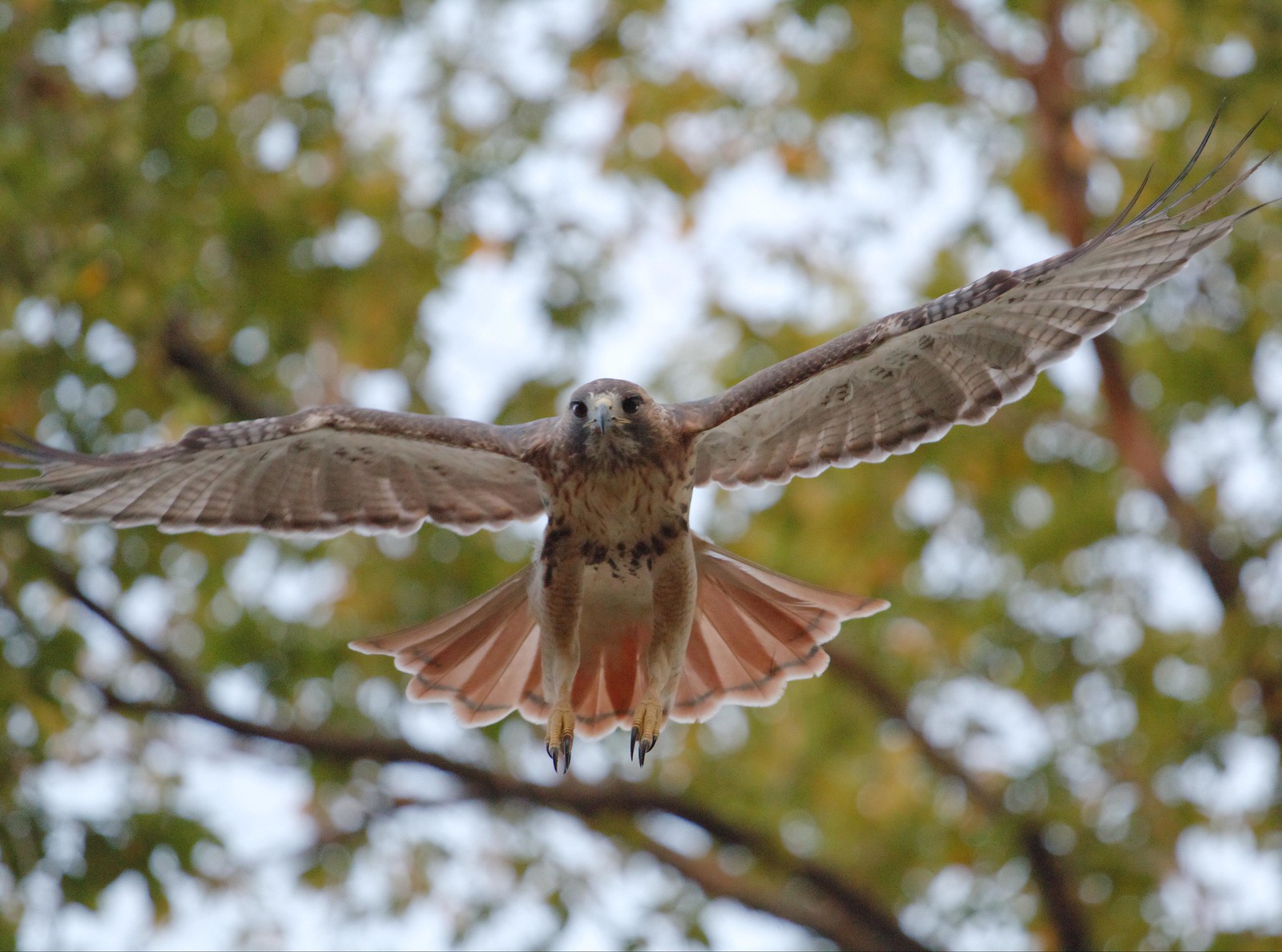
Christo coming at me 

I will update on the nest situation as I know more.

Wednesday, October 12, 2016

Intercontinental travelers

Before I took an interest in our local hawks, I didn't know much about birds.  While watching the hawks in Tompkins Square, I couldn't help but notice all the other birds who pass through during spring and fall migration.  As I'm still a novice, I'm learning as I go.  When I see a new bird I don't recognize, I go home and read up on it, so there's something new to learn almost every day.  And there are so many cool birds!

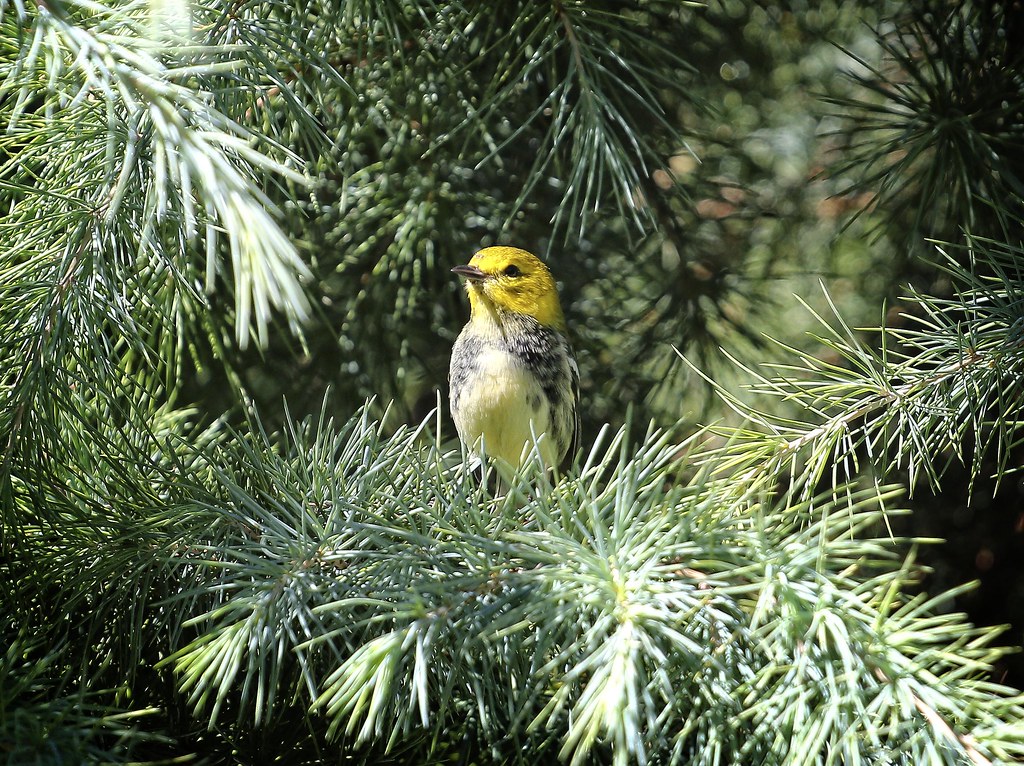
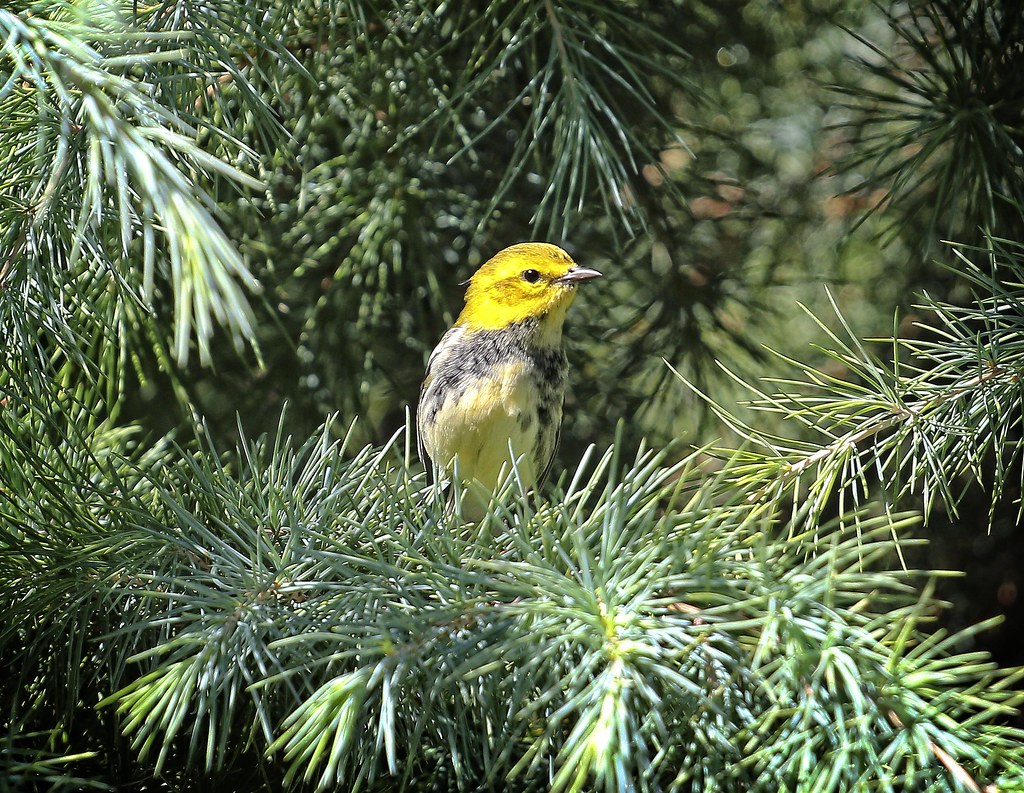
For instance, here is a Black-throated Green Warbler.  They are supposedly one of the most common warblers to be seen during migration, yet I'd never seen one before this week. 

Black-throated green warbler

Thanks to the hawks, a whole new wild world has opened up for me, and I've really been enjoying the educational treasure hunt of seeking out and identifying as many birds as I can right here in the city.  I love that, in this extremely urban environment, Nature still exists.

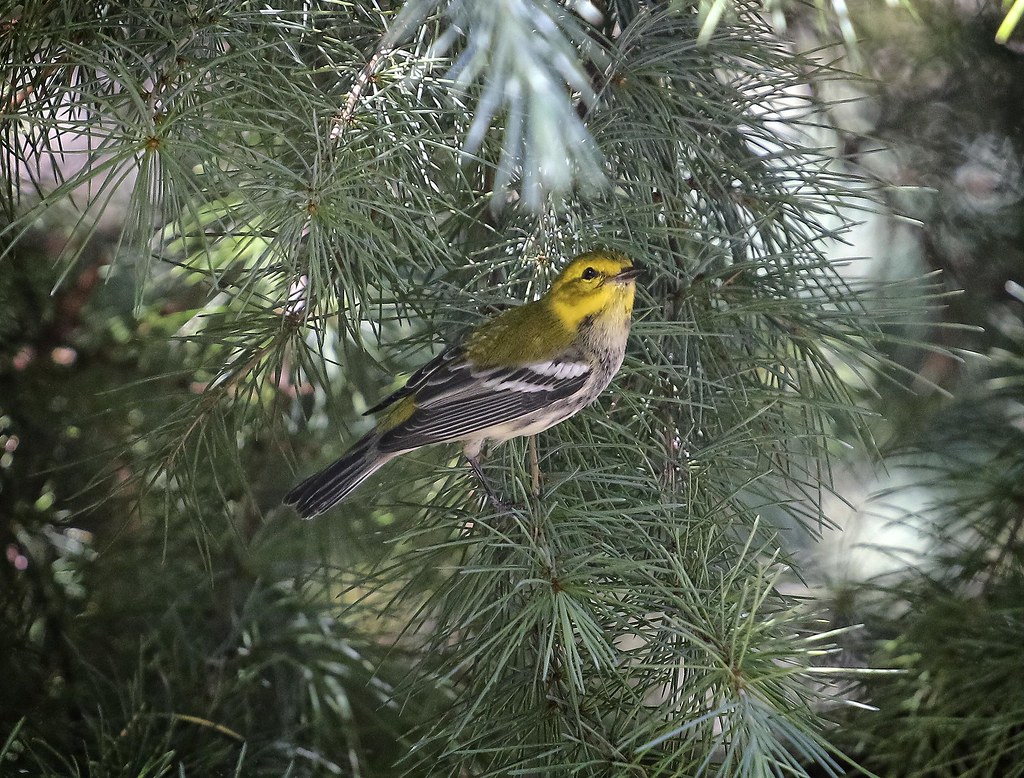
How beautiful is this?

Black-throated green warbler

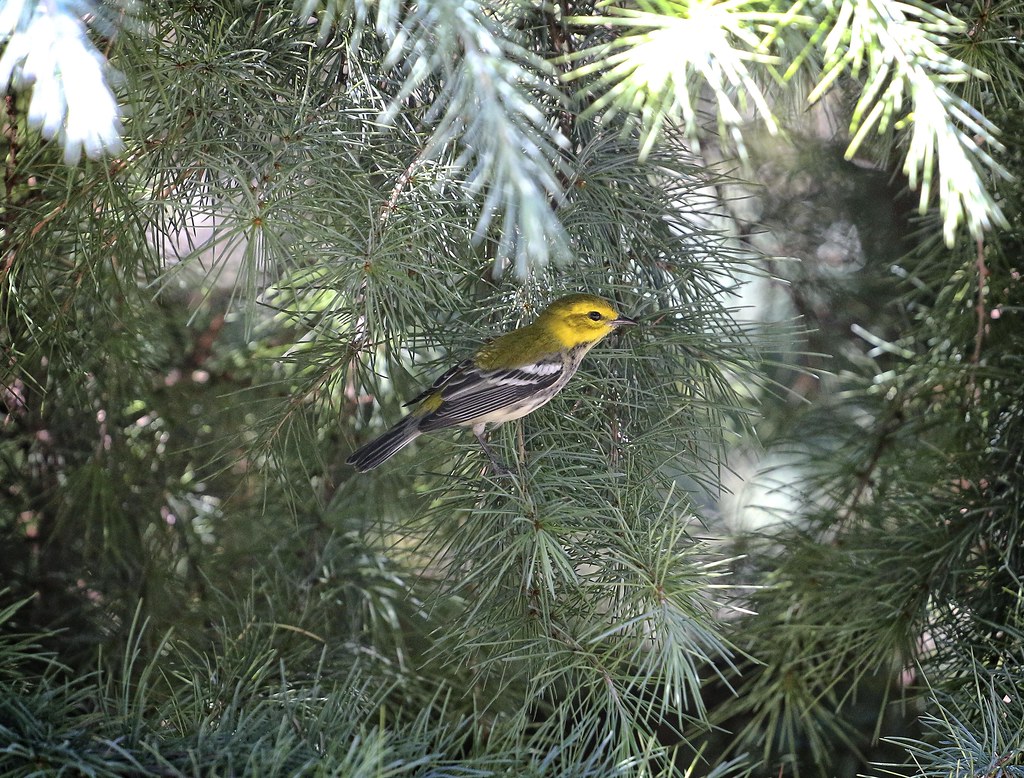
This bright yellow bird is on its way to Mexico or Central America.  How nice of it to take a rest stop in Tompkins.

Black-throated green warbler

Black-throated green warbler

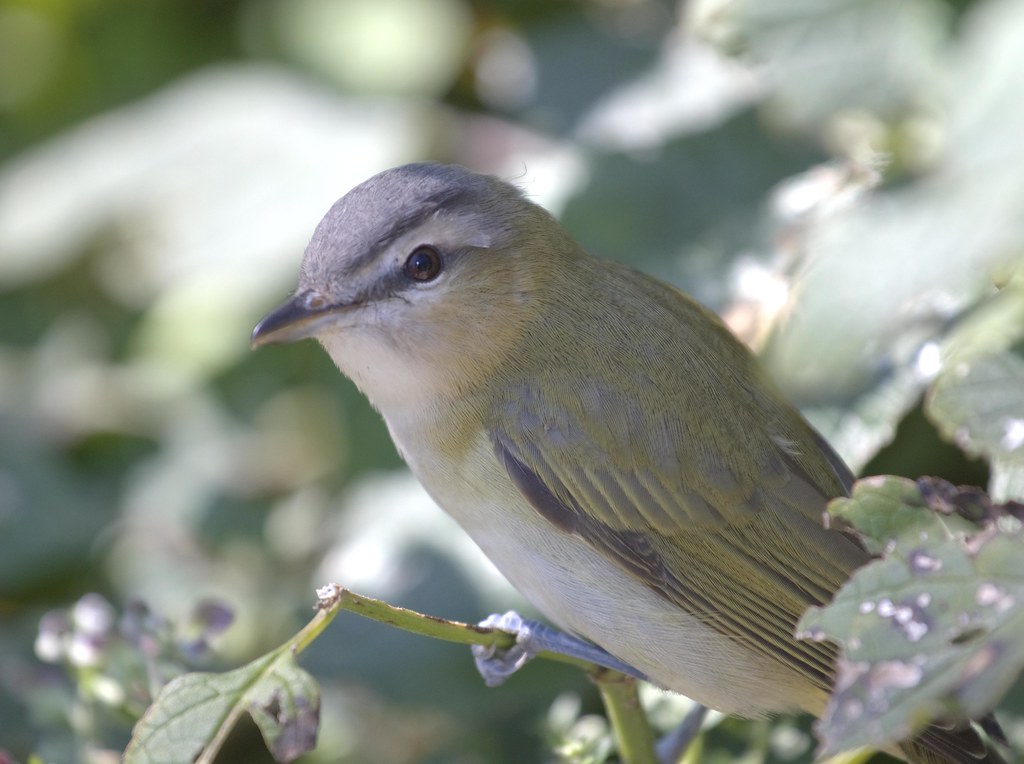
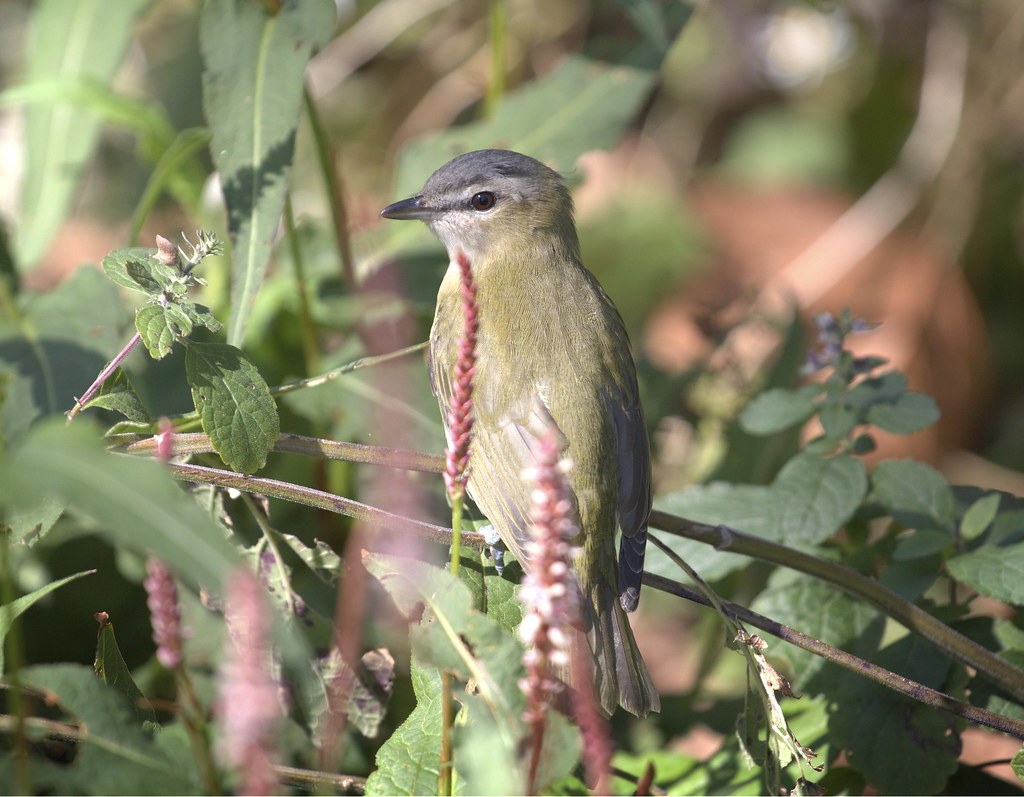
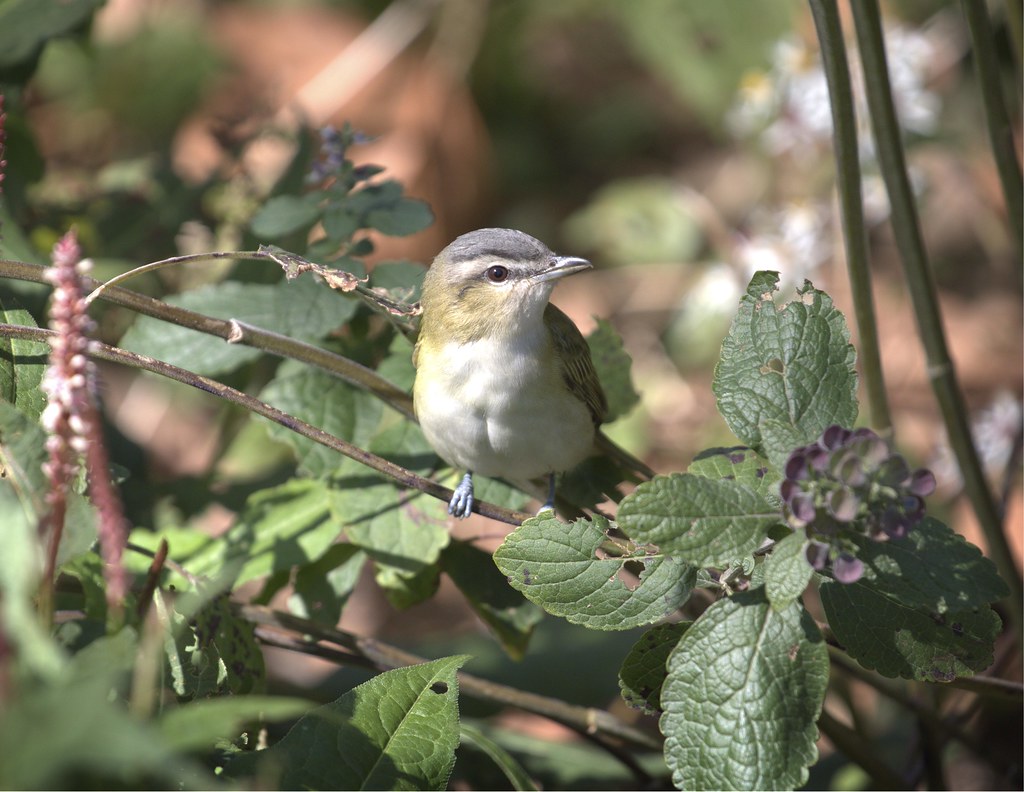
Meanwhile, this week down in Battery Park, I came across this Red-eyed Vireo.  It's tiny, and I might not have noticed it if I hadn't been looking as it appears kind of drab and blends in with the vegetation.  Up close, though, it's rather colorful and does have reddish brown eyes.

Red-eyed vireo

I knew nothing about this bird before I saw it, so was really impressed to find out it is a prolific singer.  According to the Cornell Lab of Ornithology, over 12,500 different Red-eyed Vireo song types have been recorded.  And, there's this -
On May 27, 1952, Louise de Kiriline Lawrence counted the number of songs sung by a single Red-eyed Vireo seeking a mate on his territory 180 miles north of Toronto. He sang 22,197 songs in the 14 hours from just before dawn to evening, singing for 10 of those hours.
Wow!  You can hear some of the vireo's songs here.
Red-eyed vireo

And check out its little blue feet!

Red-eyed vireo

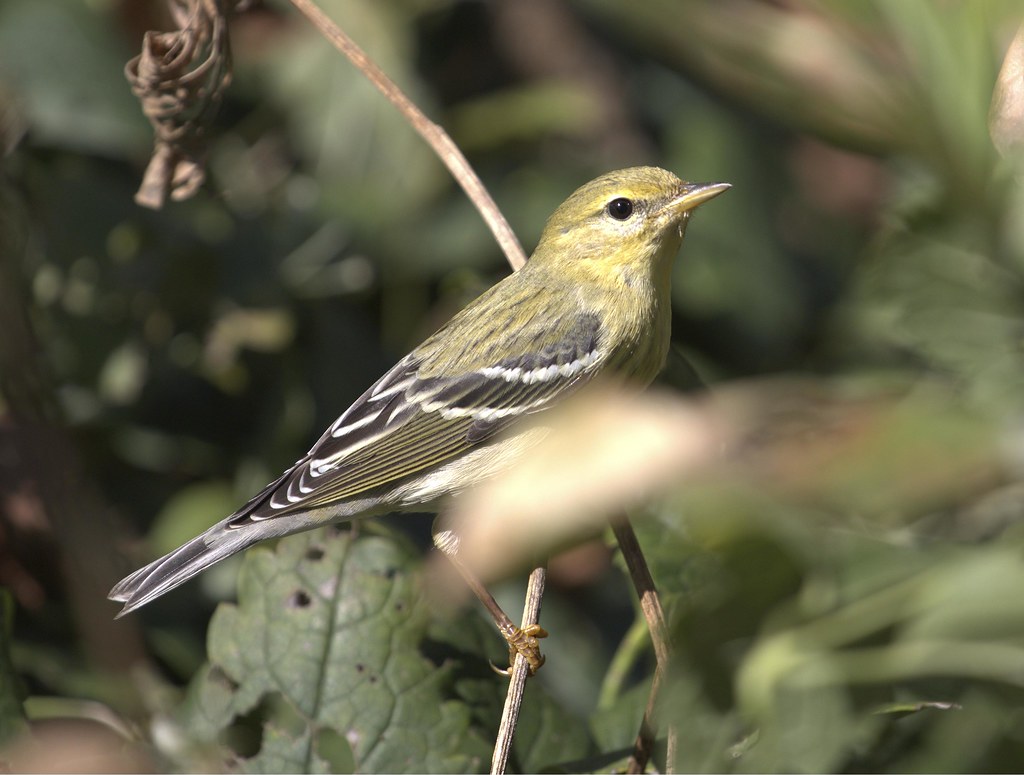
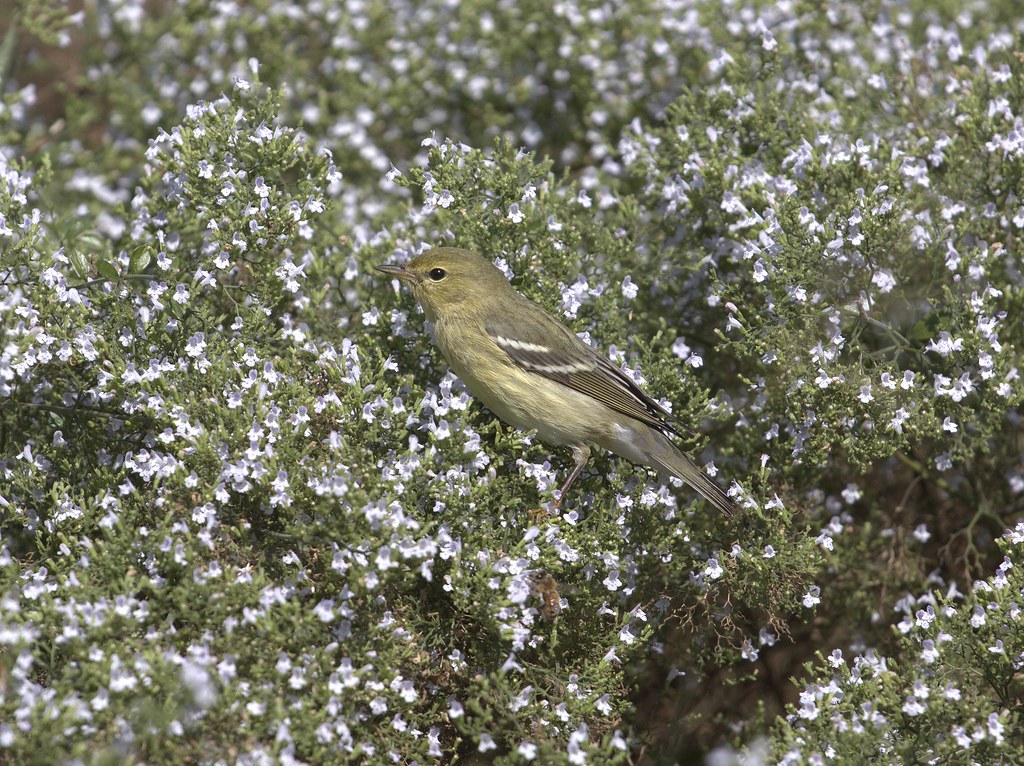
Also in Battery Park, this Blackpoll Warbler paid me a visit.

Blackpoll warbler

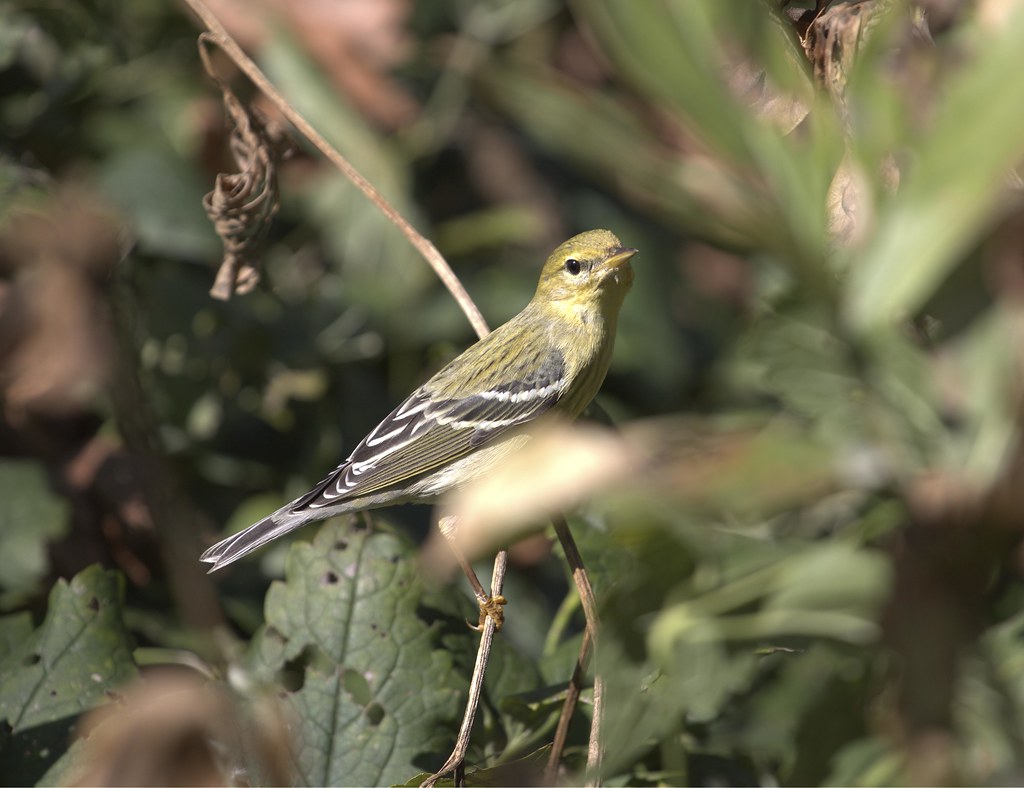
This bird is a good example of one whose plumage changes color with the season.  This is something I'm only recently learning about and it makes identifying birds in spring and fall challenging.

Blackpoll warbler

This warbler is on its way to South America.  I like to cite Cornell Labs as it's an excellent resource for bird information, and they have this to say about the Blackpoll's journey -
Part of the fall migratory route of the Blackpoll Warbler is over the Atlantic Ocean from the northeastern United States to Puerto Rico, the Lesser Antilles, or northern South America. This route averages 3,000 km (1,864 mi) over water, requiring a potentially nonstop flight of up to 88 hours. To accomplish this flight, the Blackpoll Warbler nearly doubles its body mass and takes advantage of a shift in prevailing wind direction to direct it to its destination.
I hope it found plenty of good things to eat during its visit to NYC!

Blackpoll warbler 

After reading up on this remarkable traveler, I was dismayed to see the Blackpoll listed on the latest list of common birds in steep decline.  According to the report, these are common birds who have "lost more than half their global population over the past four decades."
This article is from 2001, but it explains the Blackpoll's preference to nest in spruce trees, which are also decreasing in number.
You can read the full State of the Birds report here, and learn more about the North American Bird Conservation Initiative here.

Thursday, October 6, 2016

Dinner after dark

Over the last several days, I've been able to catch up with Christo and Dora in Tompkins Square, but it's been mostly after sunset.  I've lightened up all the photos below as they were shot in near darkness.

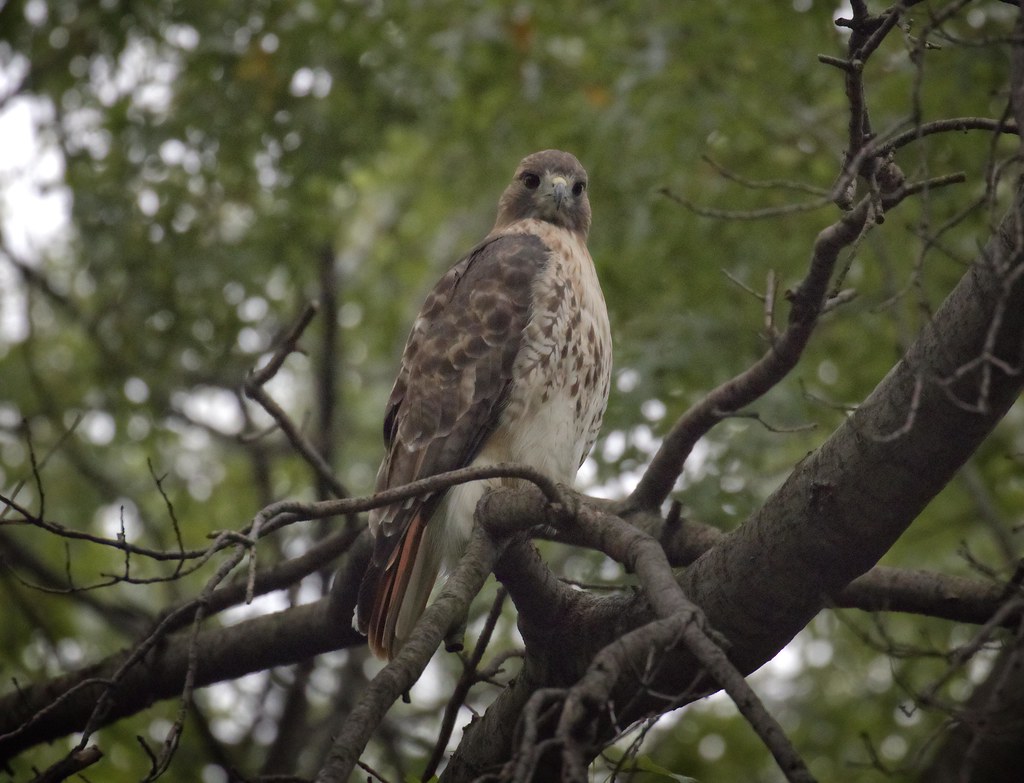
Christo
Christo stretching his leg.

That's when Christo goes hunting for dinner.  This is not the first time I've seen him hunting so late - almost two years ago, I caught him getting a late-night snack near the chess tables.

Christo in the evening
Christo on the prowl.

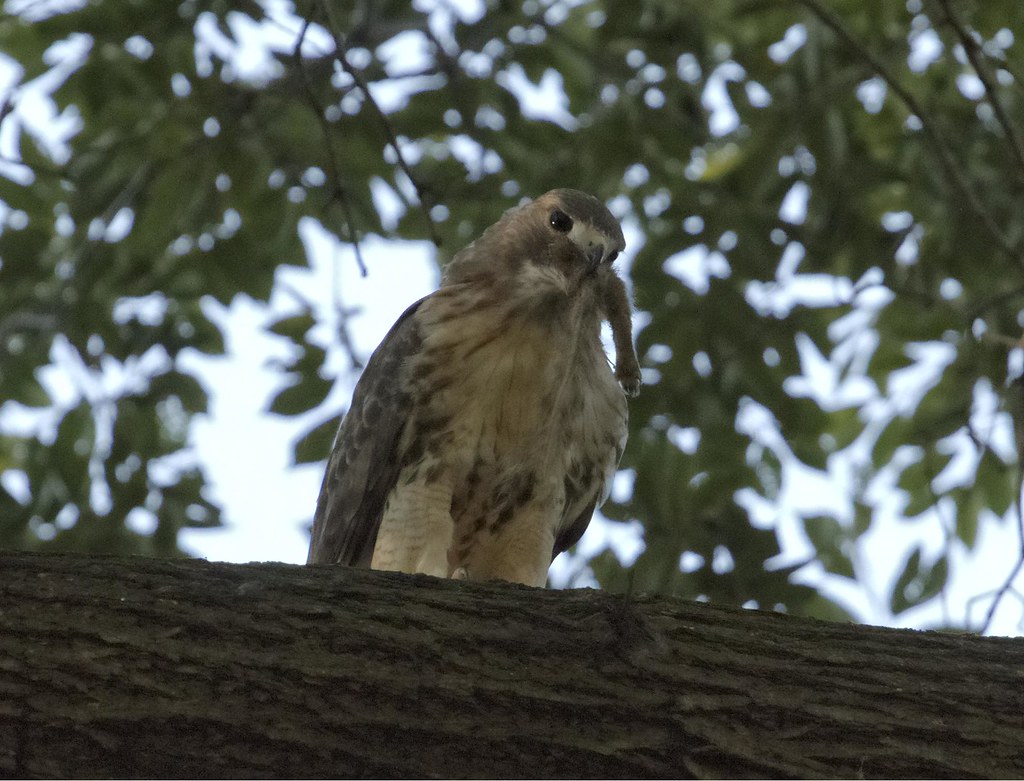
One night, he flew into a tree just in time for me to see him chomping down on a squirrel leg.

Christo eats a squirrel leg

Note the tail of the prey which, at first, appears to be a bare rat tail.  If you look closely, you can see it is covered with long hairs.  I didn't see Christo catch the squirrel, but when I've seen him do it in the past, the first thing he does is scrape the fur off the tail.

Christo eats a squirrel leg

Another evening, another hunting mission...

Christo hunting in the evening

This time Christo caught a mouse.  The meal was so small, he downed it in about two bites, then continued hunting.

Christo with a mouse

After a few minutes, he caught another mouse, but that still wasn't enough!  The third course was a rat.

Christo with a rat after dark

Christo caught two mice and a rat in the span of 10-15 minutes after dark.  Pretty amazing.

Christo with a rat after dark

In the photo below, you can just barely make out a short tail feather that's growing in.  Christo started molting back in late July, and he still has yet to get all his new feathers.  He currently has 8.5 of 12 tail feathers.

Christo

Meanwhile, Dora has been quietly lurking.

Dora in the evening

Back to Christo, who doesn't mind posing for admirers.

Christo

Christo in the evening

With a full crop, he flies off to roost for the night.

Christo after dark

Tuesday, October 4, 2016

More fall migrants in Tompkins Square

Following my post last week on fall bird migration in Tompkins Square, below are a few more photos of the colorful little travelers making their way south.  These were all taken this last weekend.

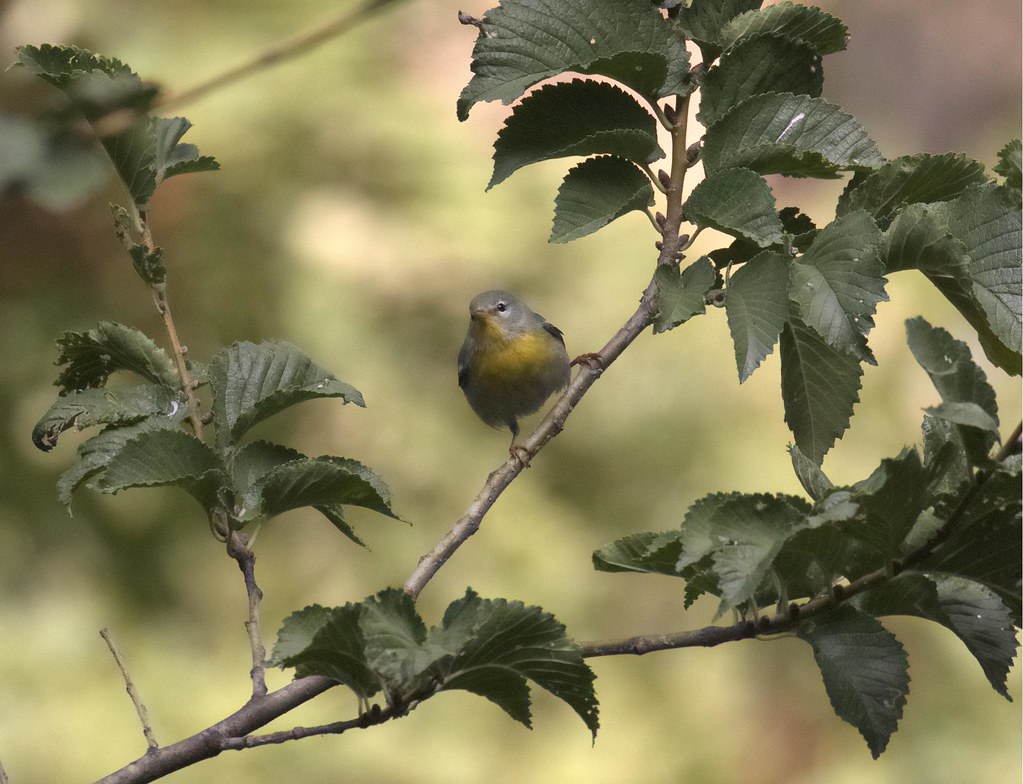
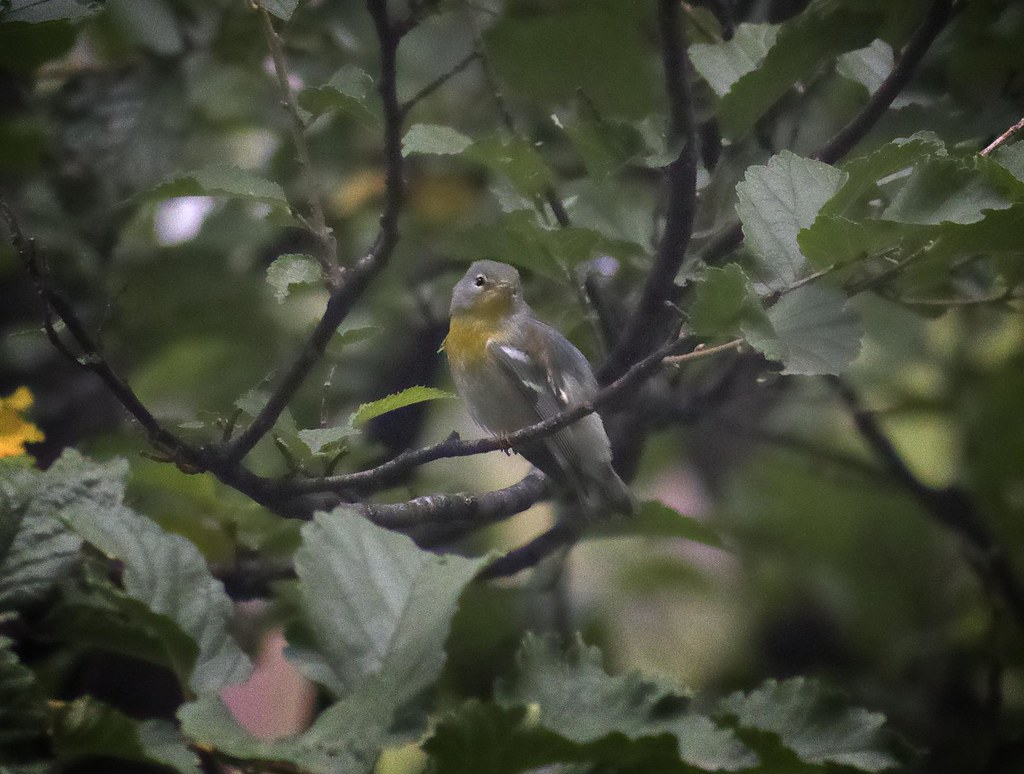
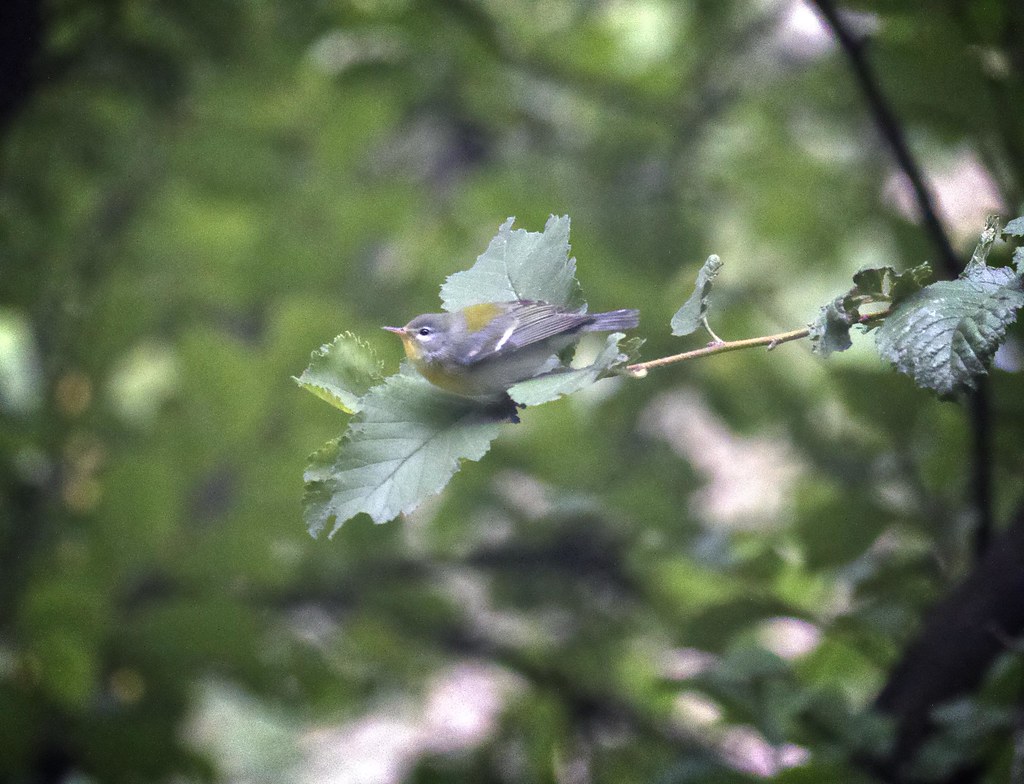
This is a Northern Parula.  The photos don't do it justice as this bird is striking in person.  It is gray-blue with bright yellow patches on its back and throat.

Northern Parula

Northern Parula

Northern Parula

The Parula is really tiny - about half the size of a sparrow.

Northern Parula

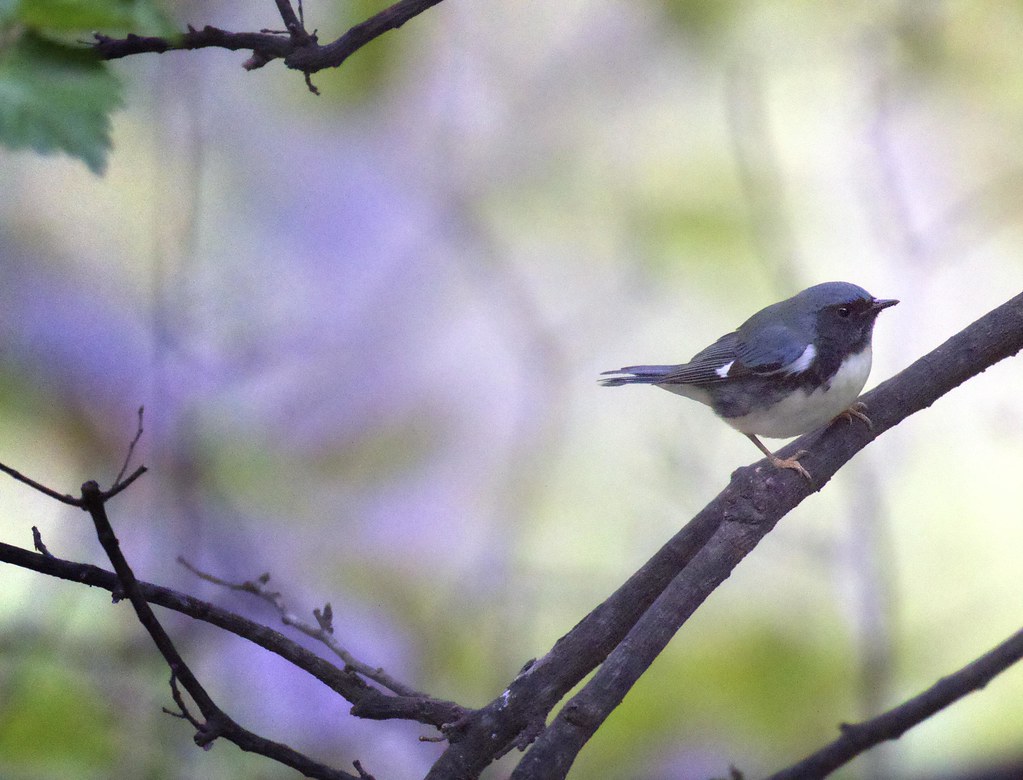
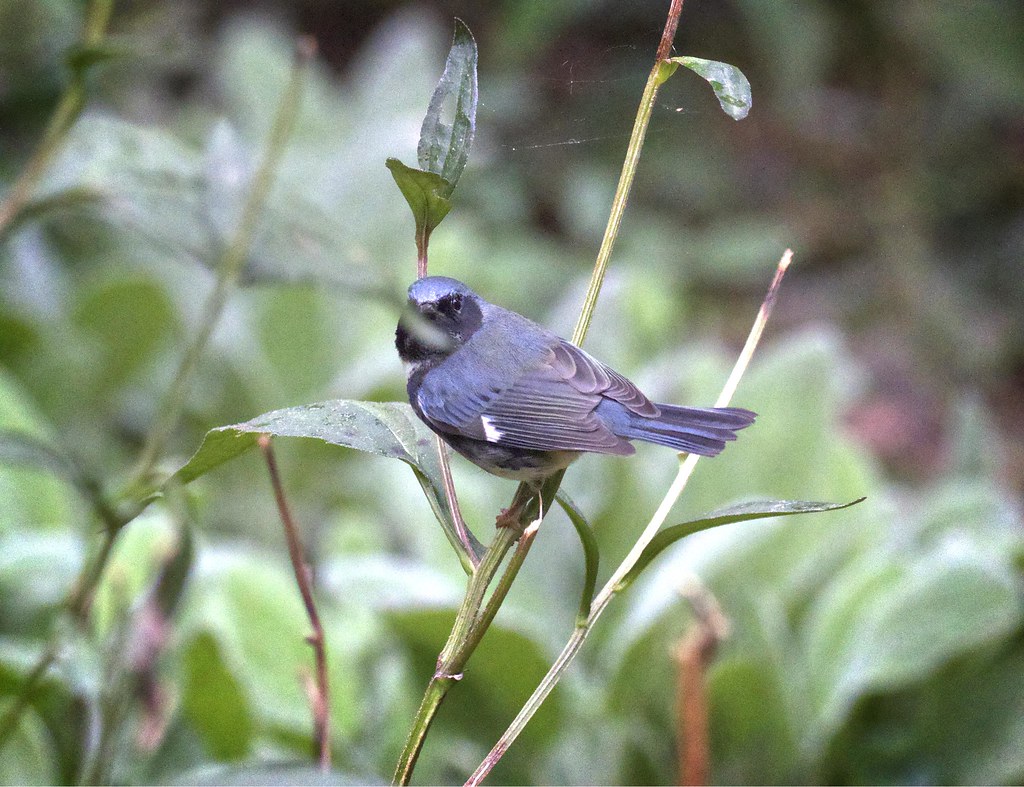
I was very excited to see this Black-throated Blue Warbler darting around the east side of the park.

Black-throated blue warbler

Black-throated blue warbler

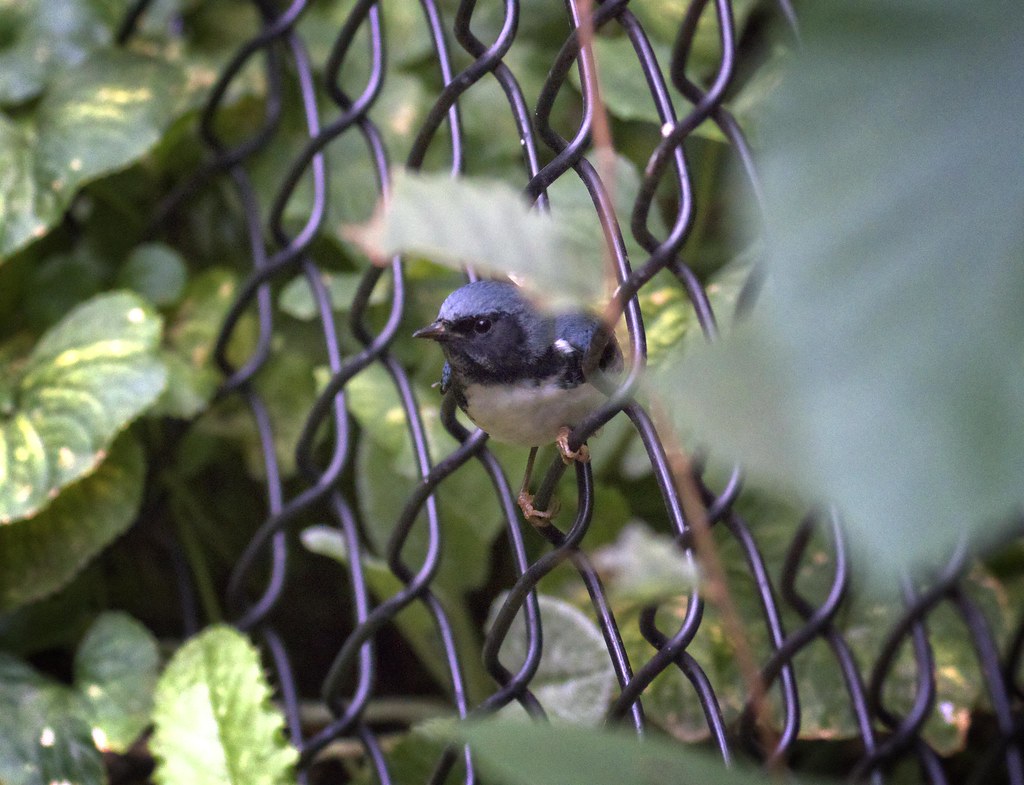
This one moved so fast, I had a challenging time getting a shot of it.

Black-throated blue warbler and strategically-placed leaf

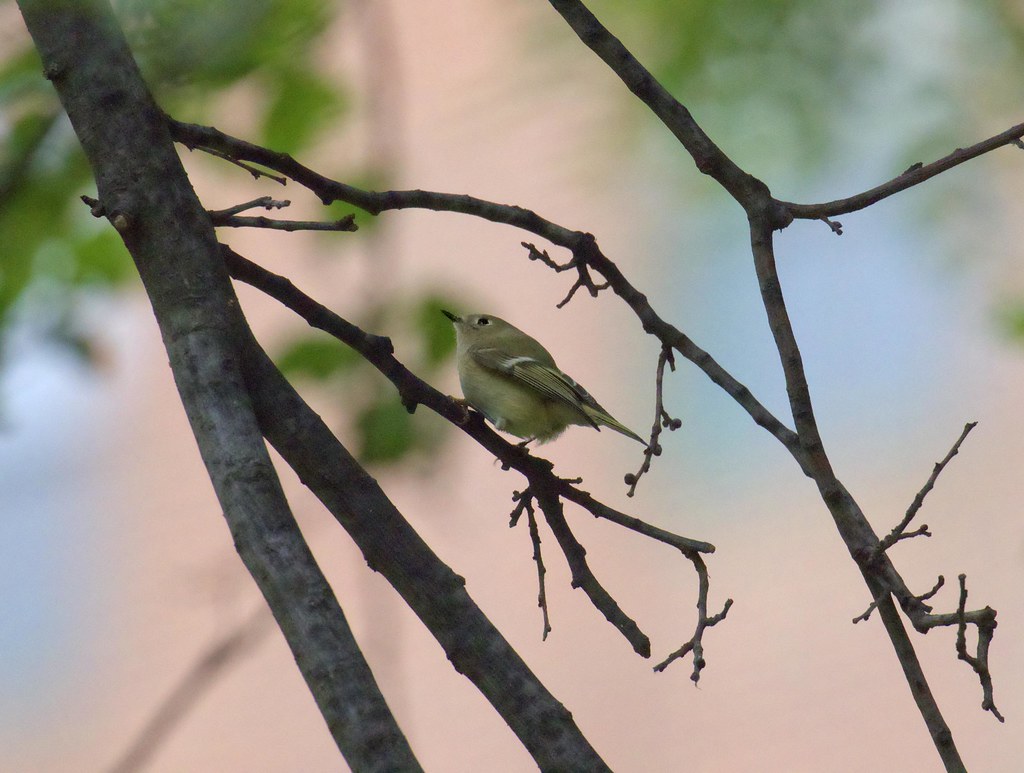
A Ruby-crowned Kinglet made a brief appearance in one of the Siberian Elm trees.

Ruby-crowned kinglet

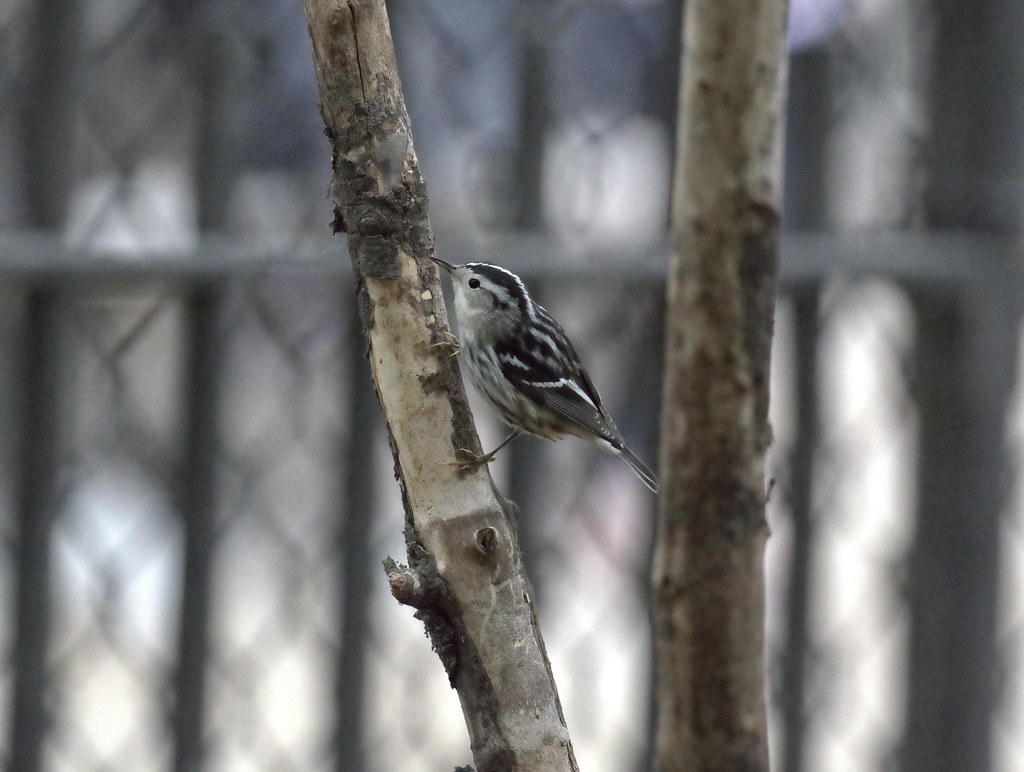
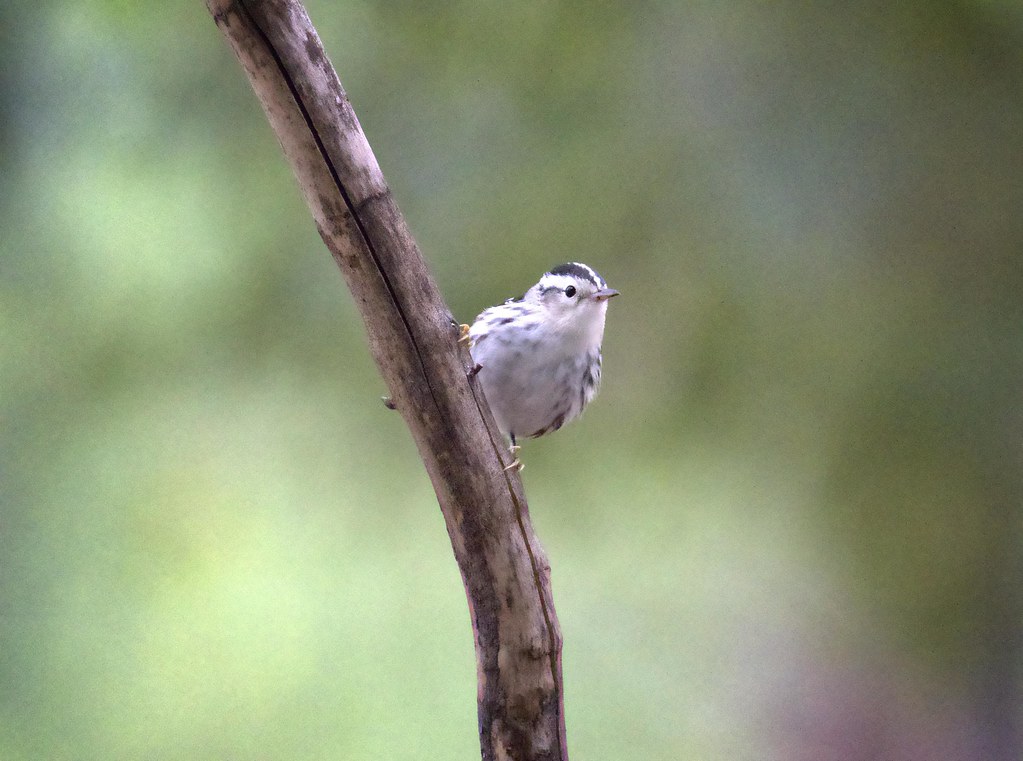
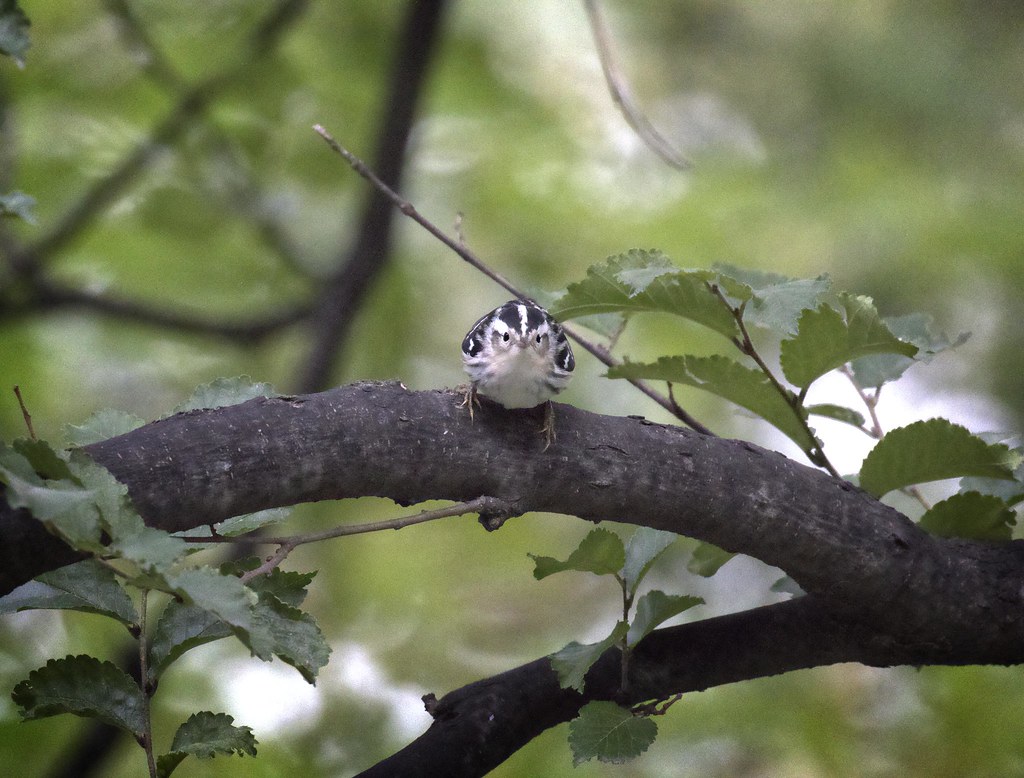
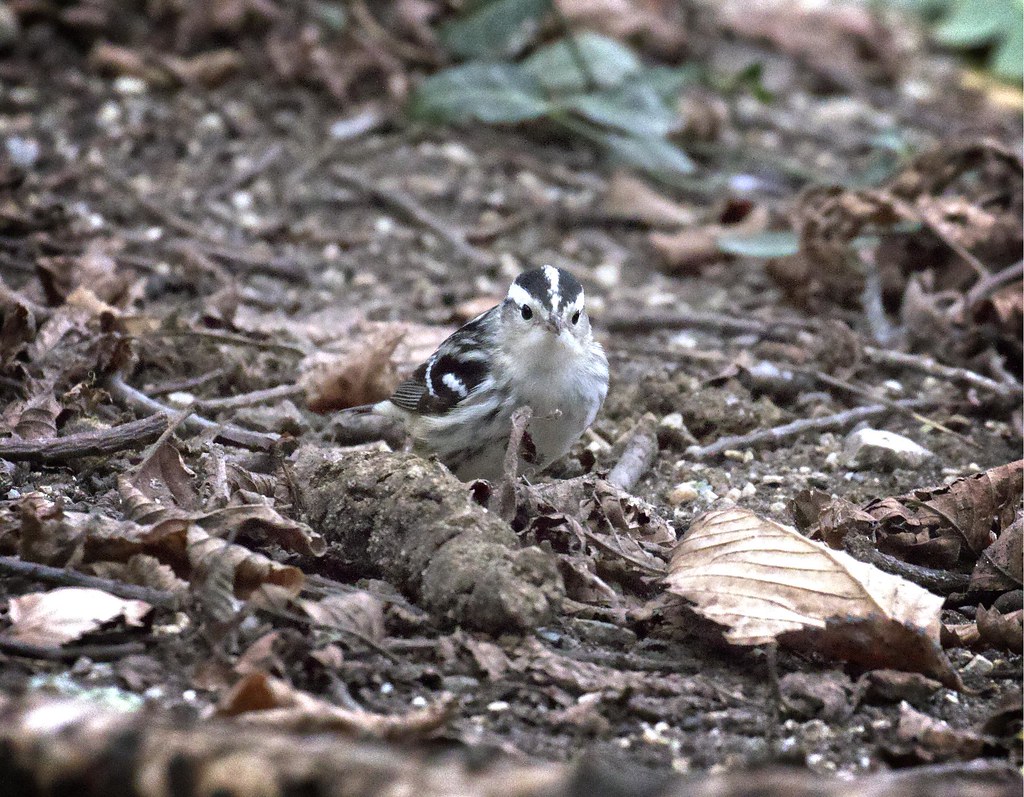
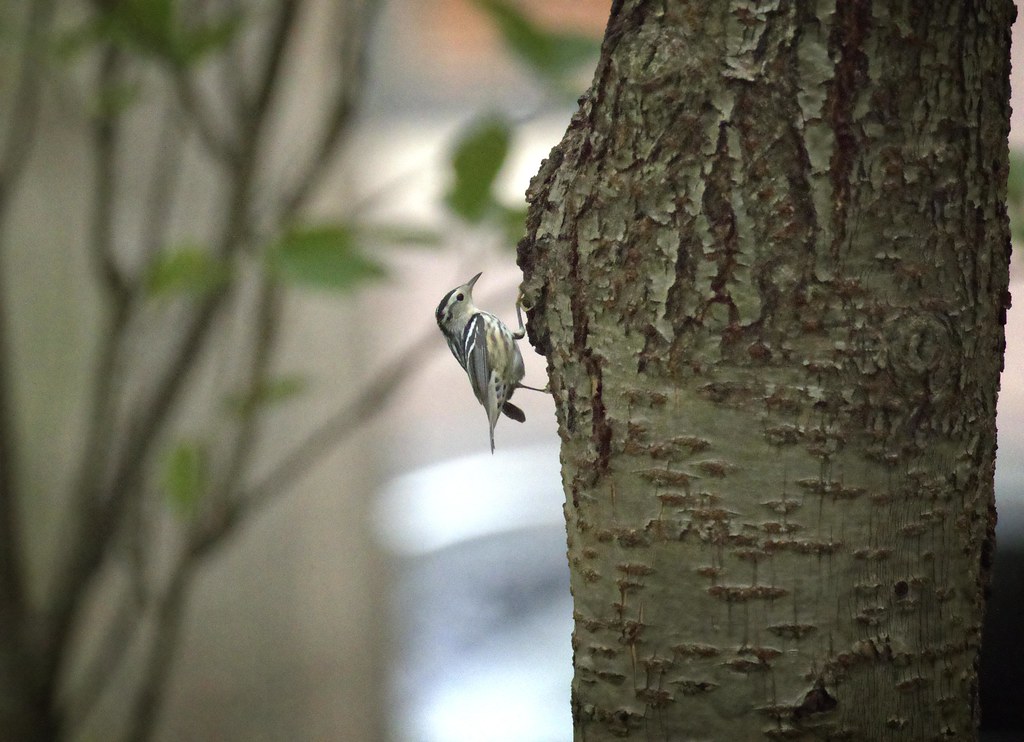
More of the Black-and-white Warbler.

Black and white warbler

Black and white warbler

Black and white warbler

Black and white warbler

Black and white warbler

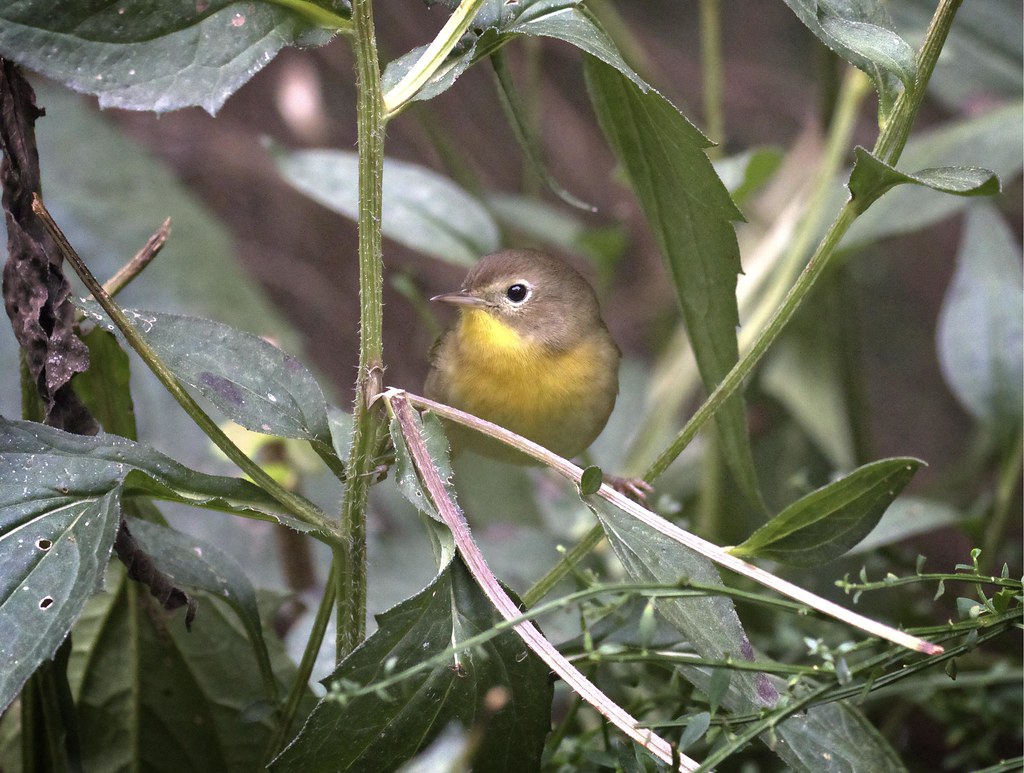
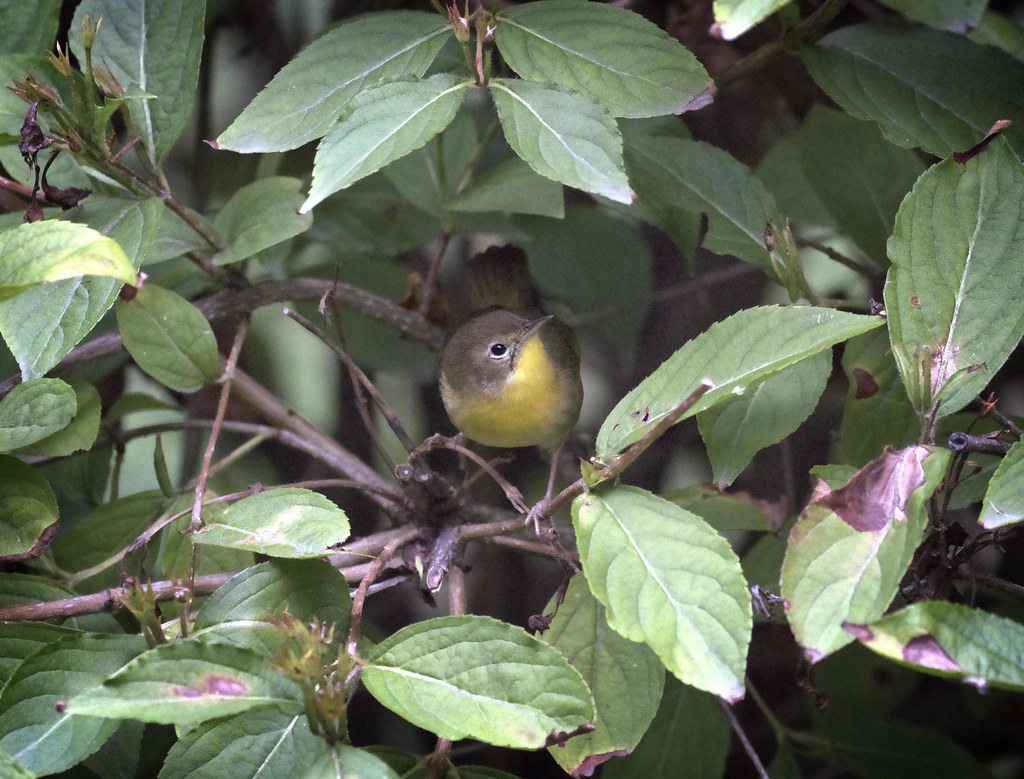
A female Common Yellowthroat.

Common yellowthroat

Common yellowthroat

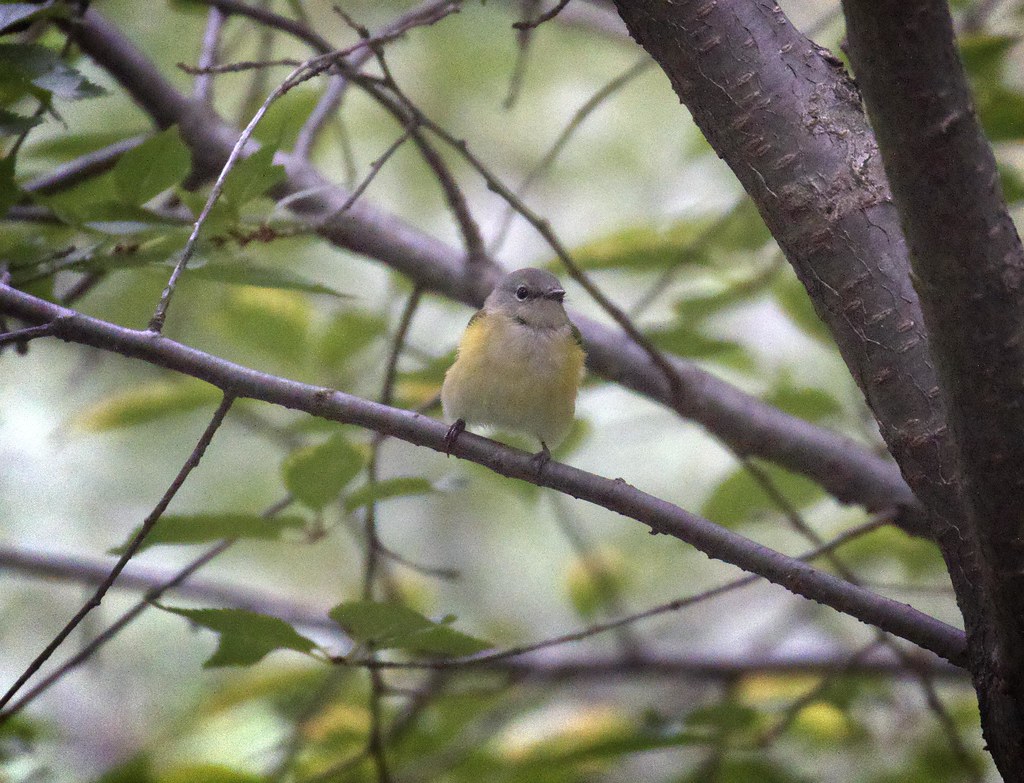
A female American Redstart.  They've been a common sight in the park this migration season.

Female redstart

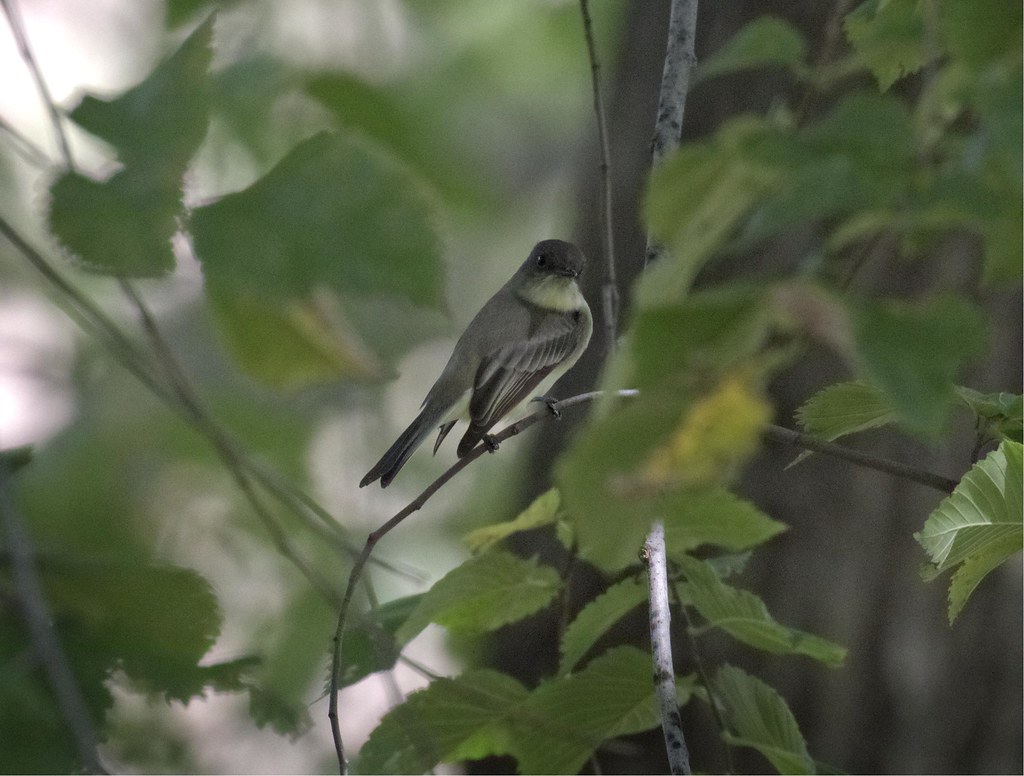
There were at least two Eastern Phoebes spotted near the hawk nest.  The coloring on the one below made me wonder if it could be an Eastern Kingbird, but it lacked the telltale white band on the tail.

Eastern Phoebe

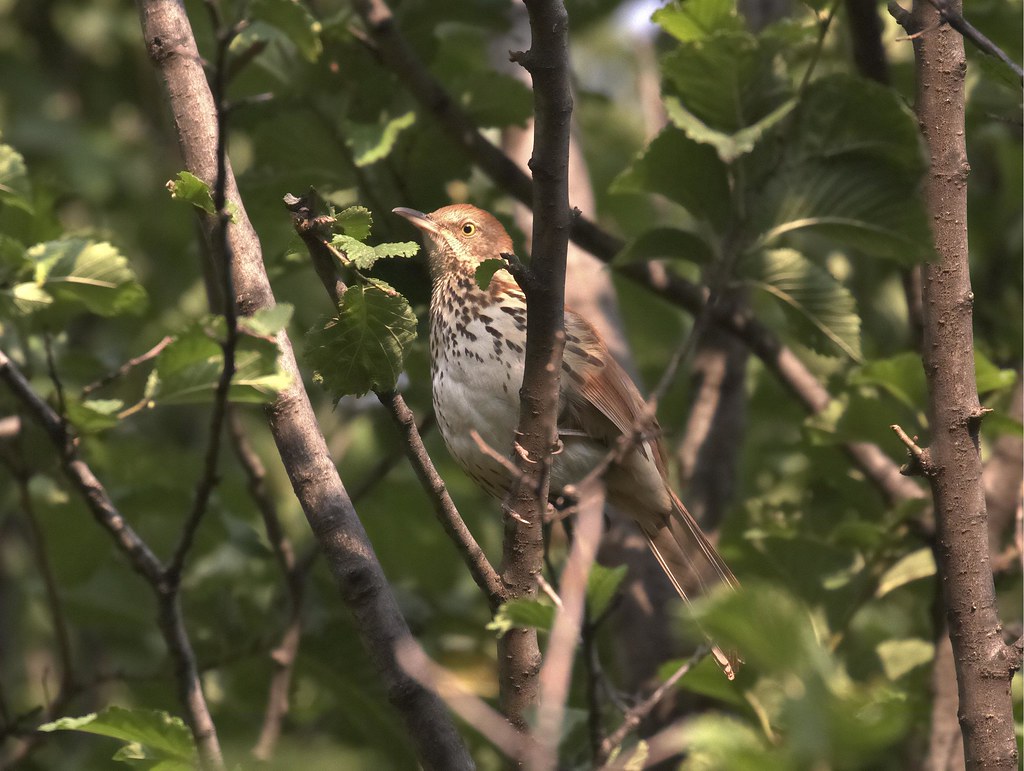
And this is a new one for me: a Brown Thrasher.  I've never seen one before, so it was really cool to find one in the park.  It mostly stayed hidden high up in the trees, but it took a break to rest and preen and let its admirers get a good look at it.

Brown Thrasher