Thursday, February 2, 2017

Hawk-o-rama weekend - Part 3

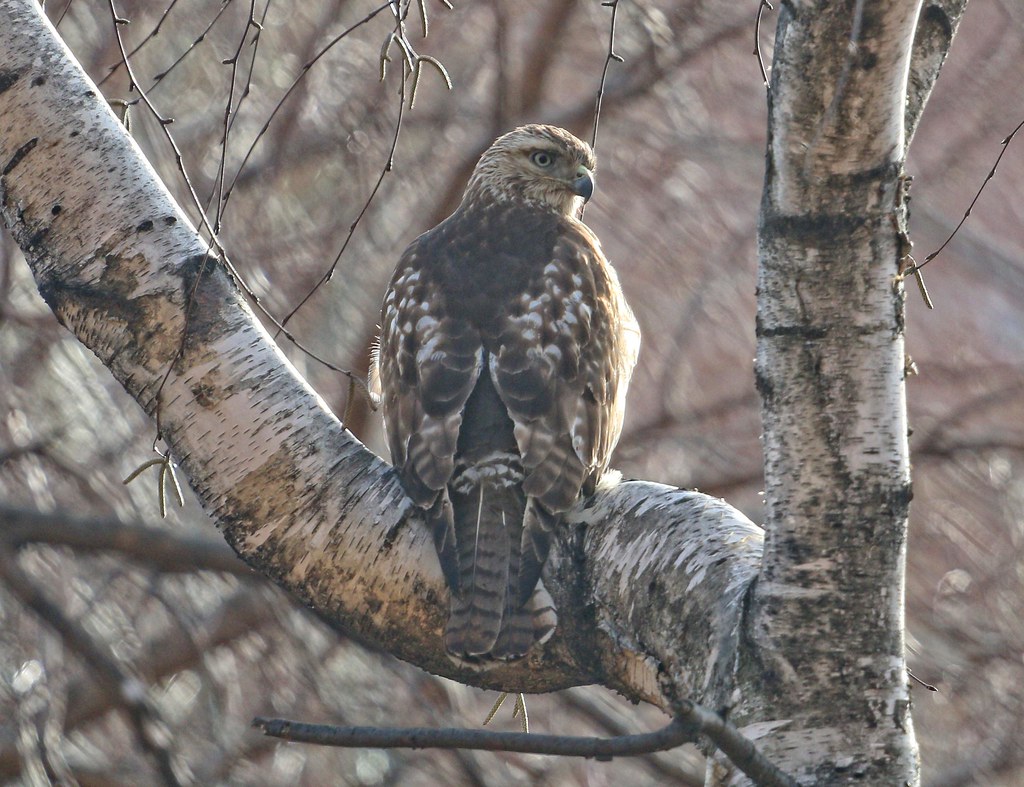
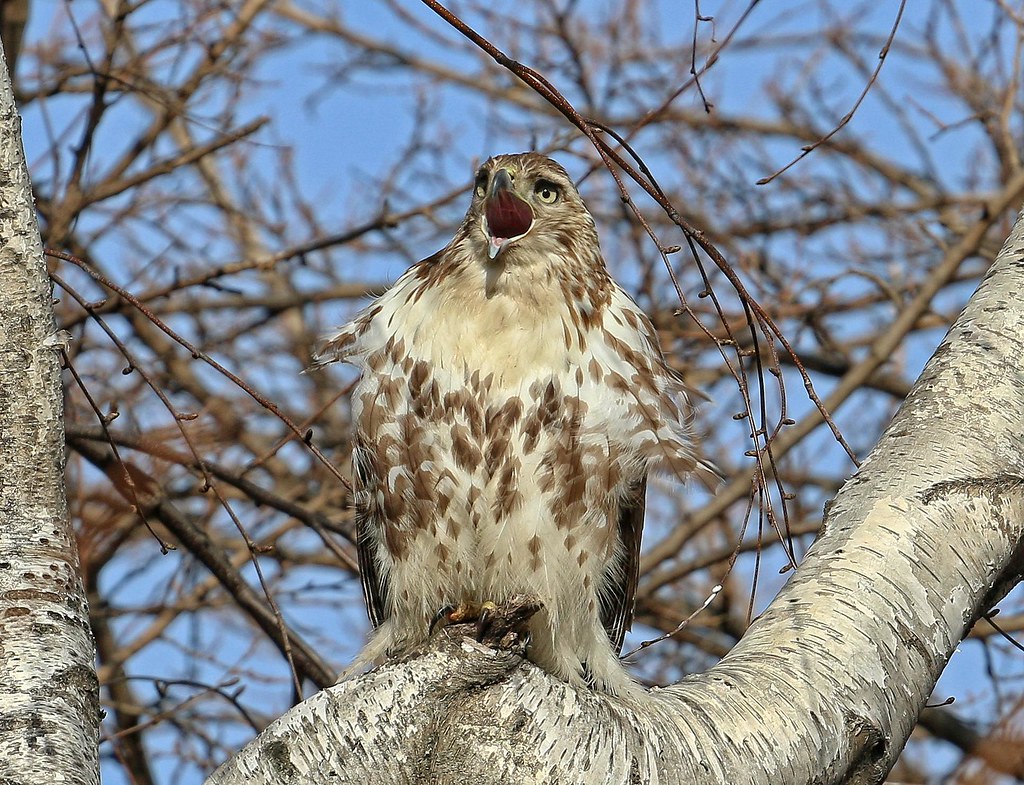
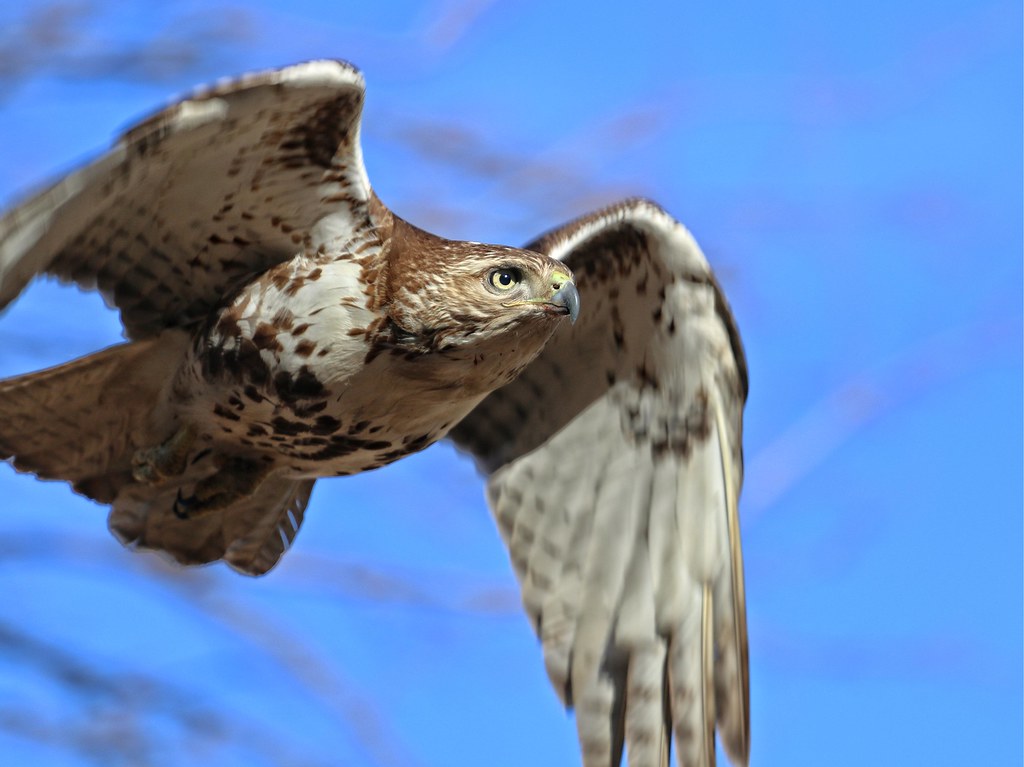
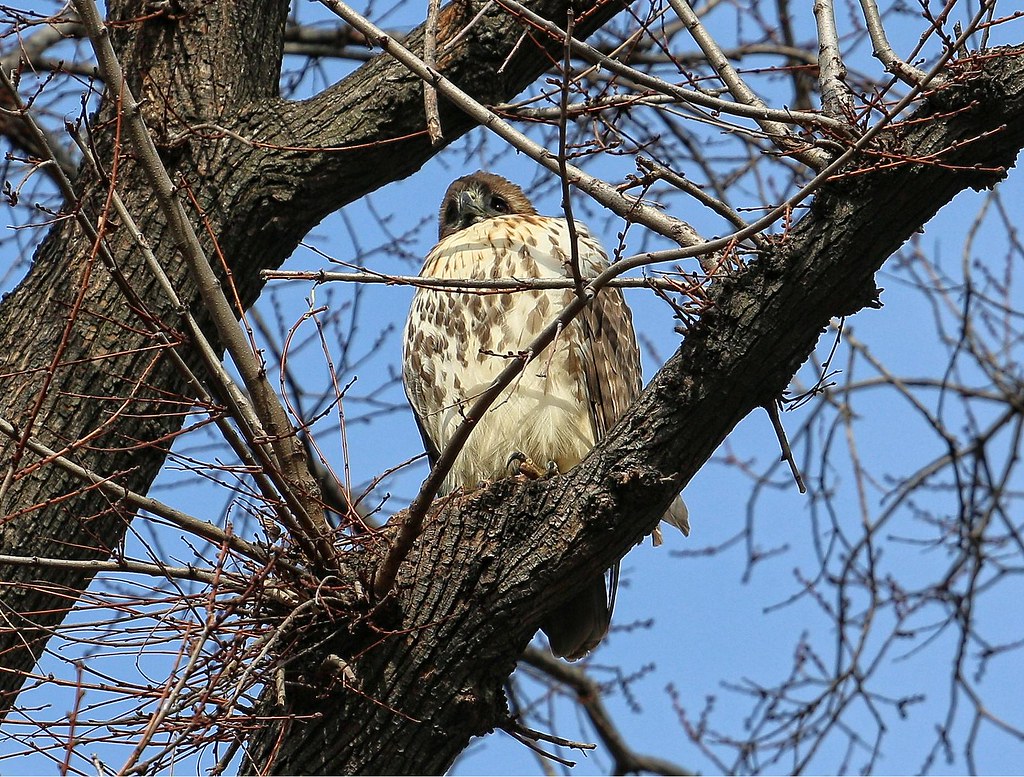
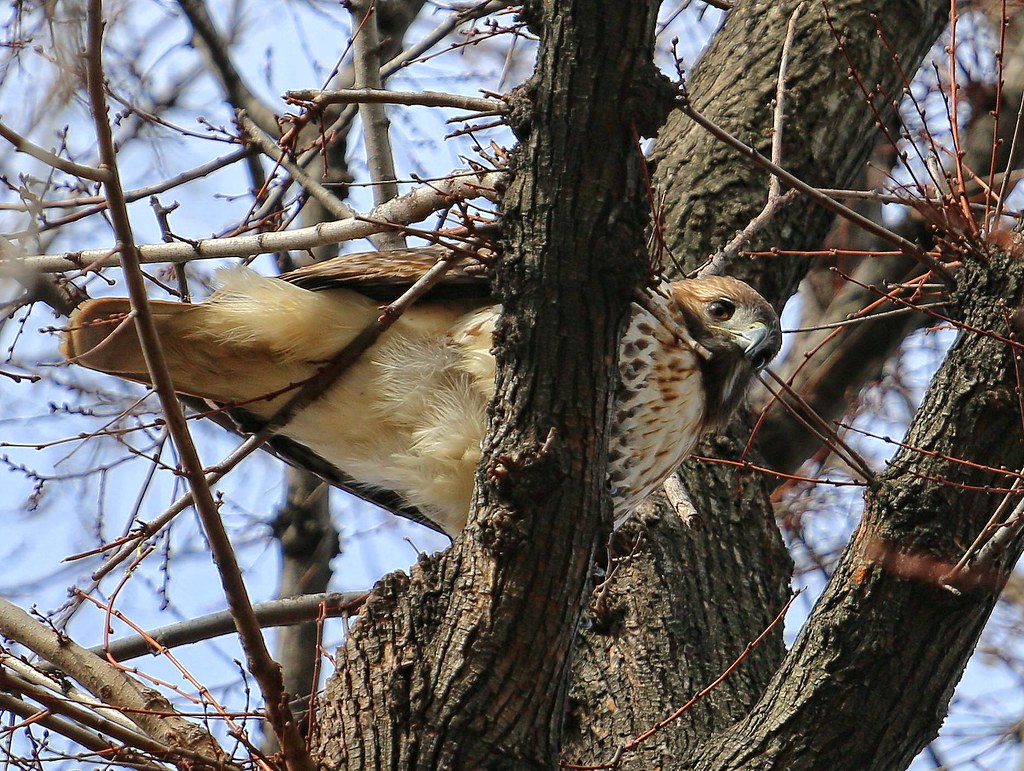
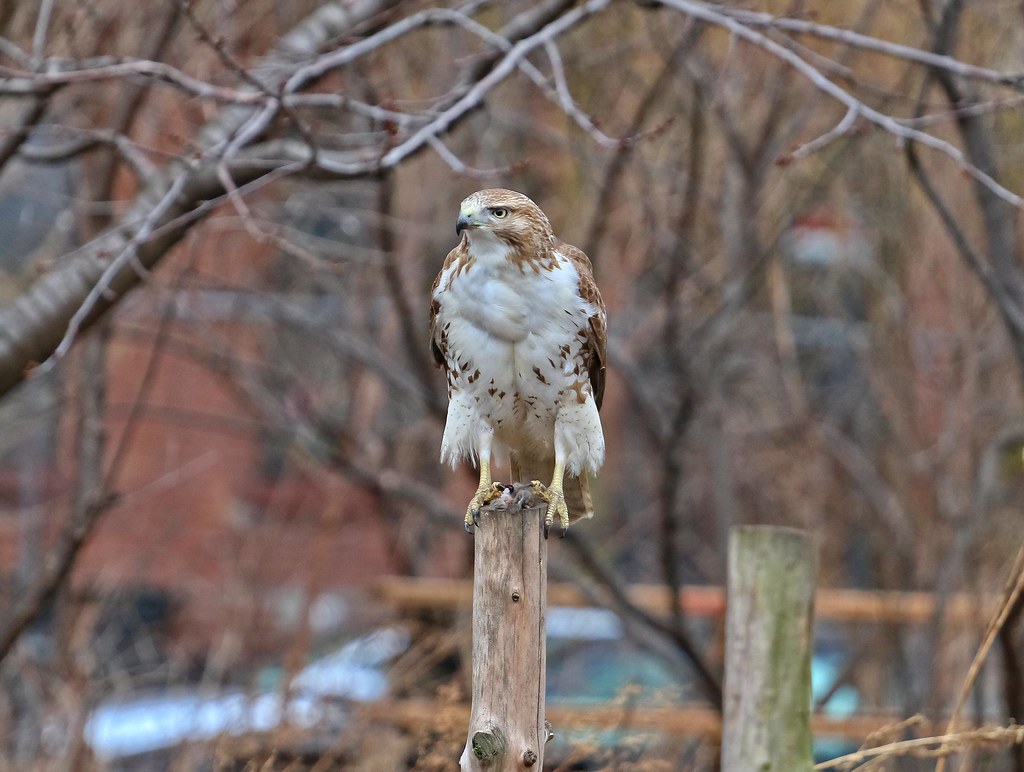
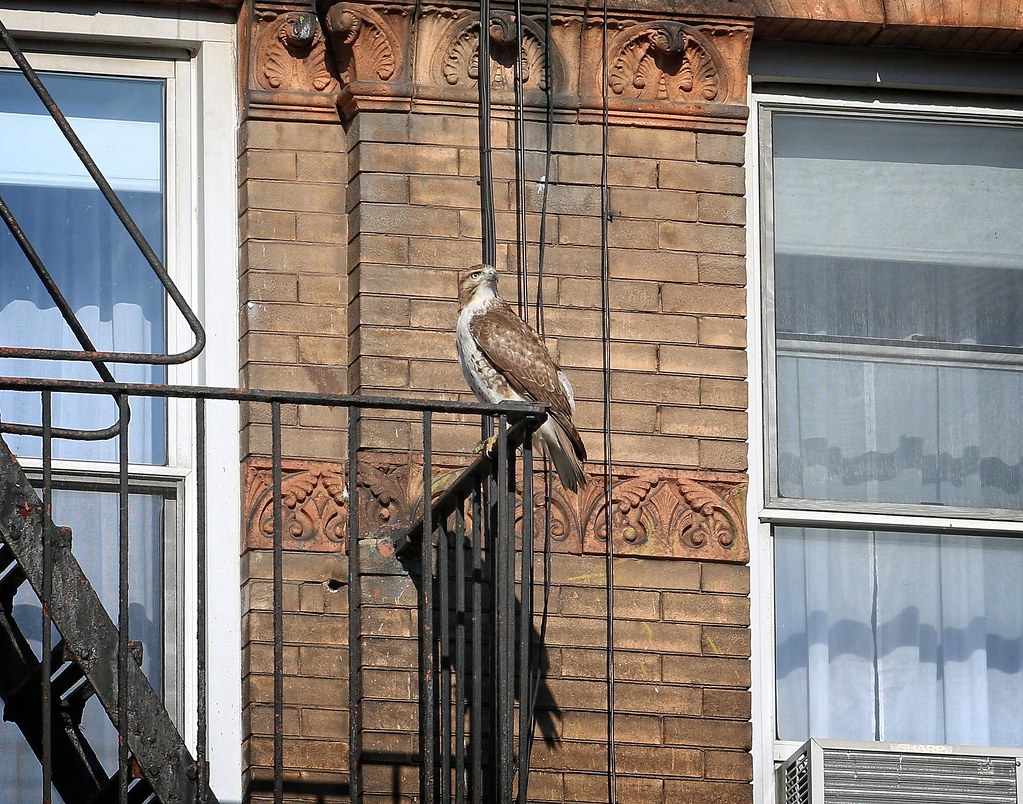
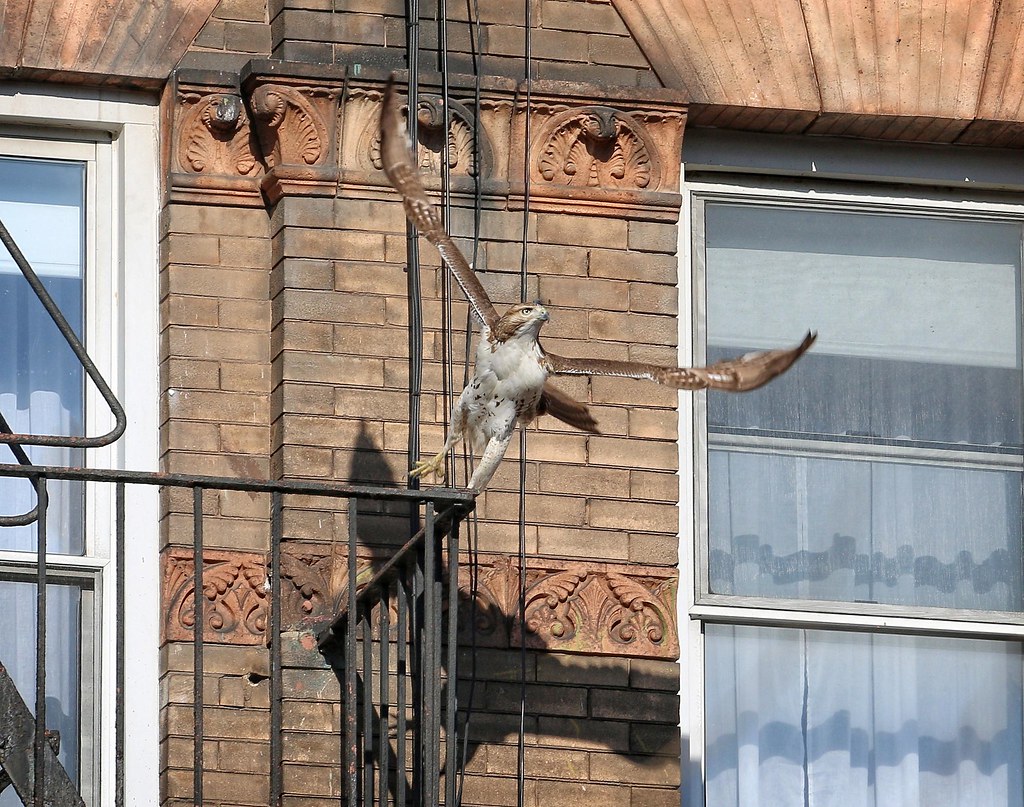
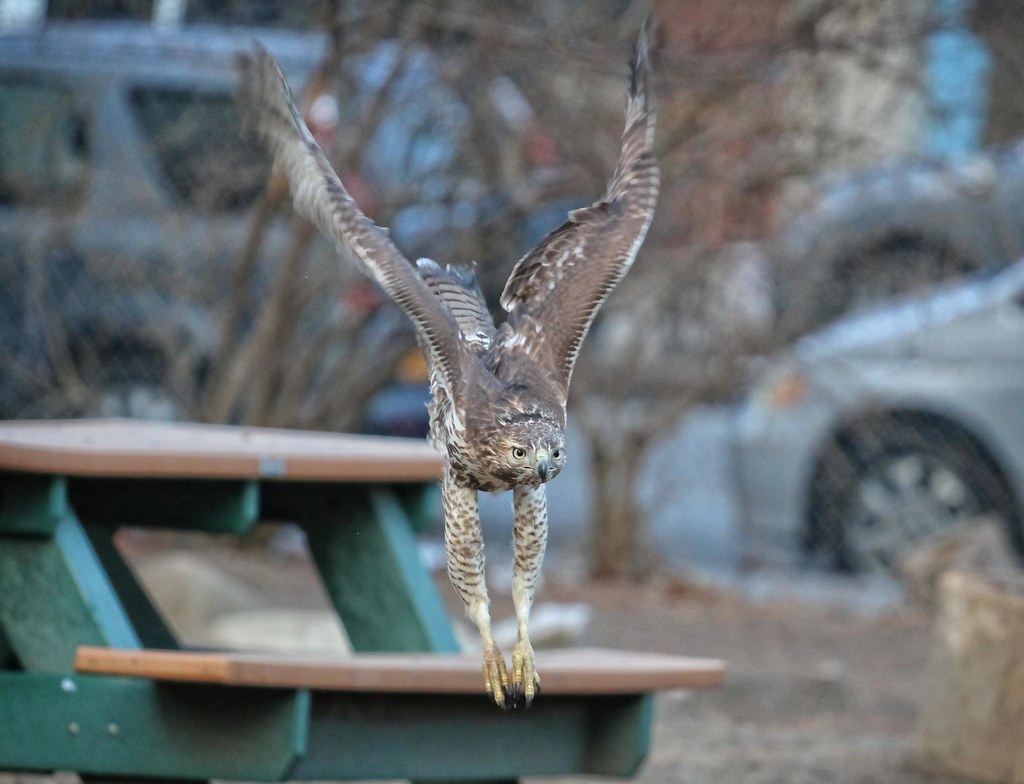
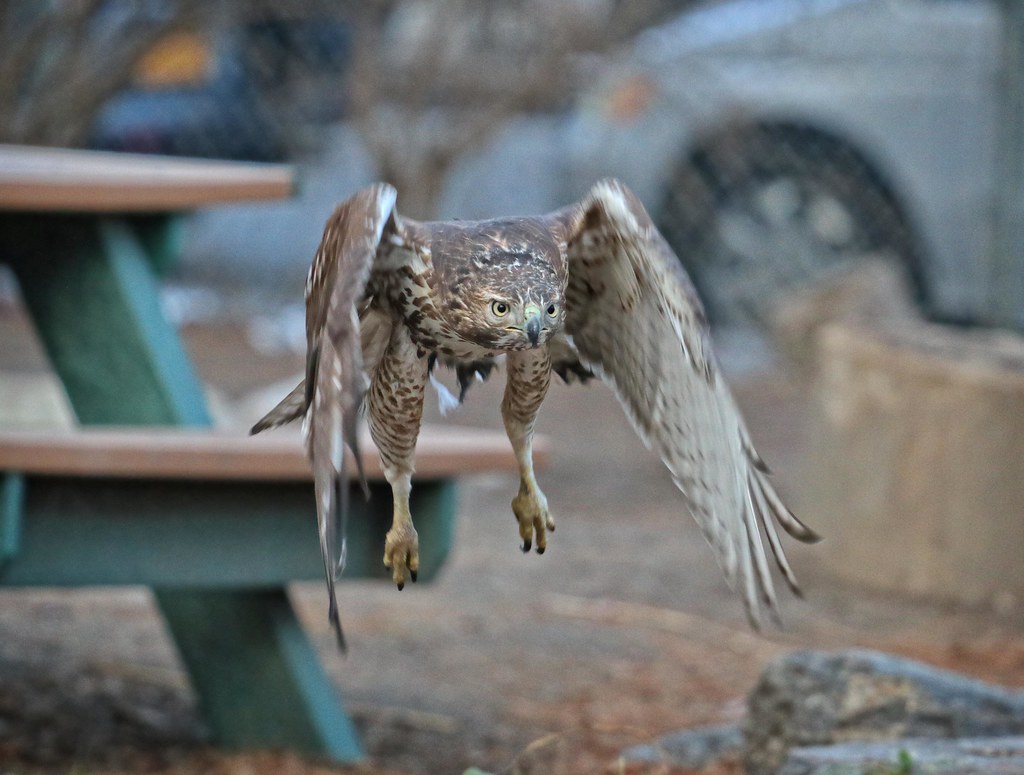
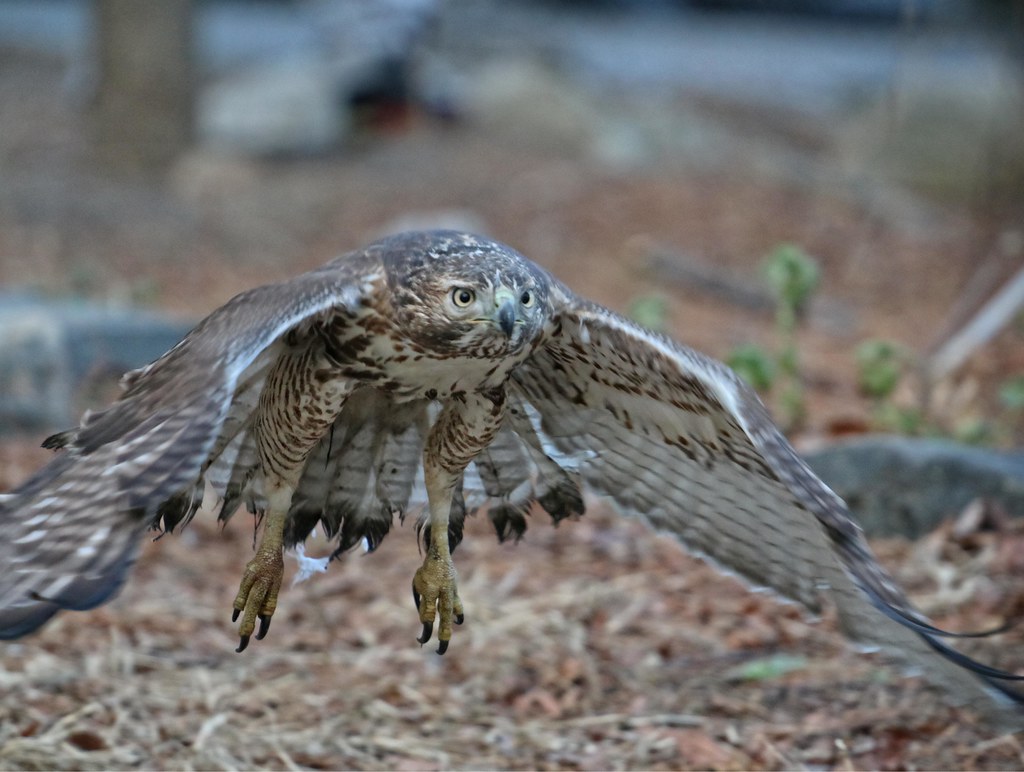
In this last installment of Hawk-o-Rama Weekend, meet another juvenile red-tailed hawk on the Lower East Side:

Juvenile red-tail

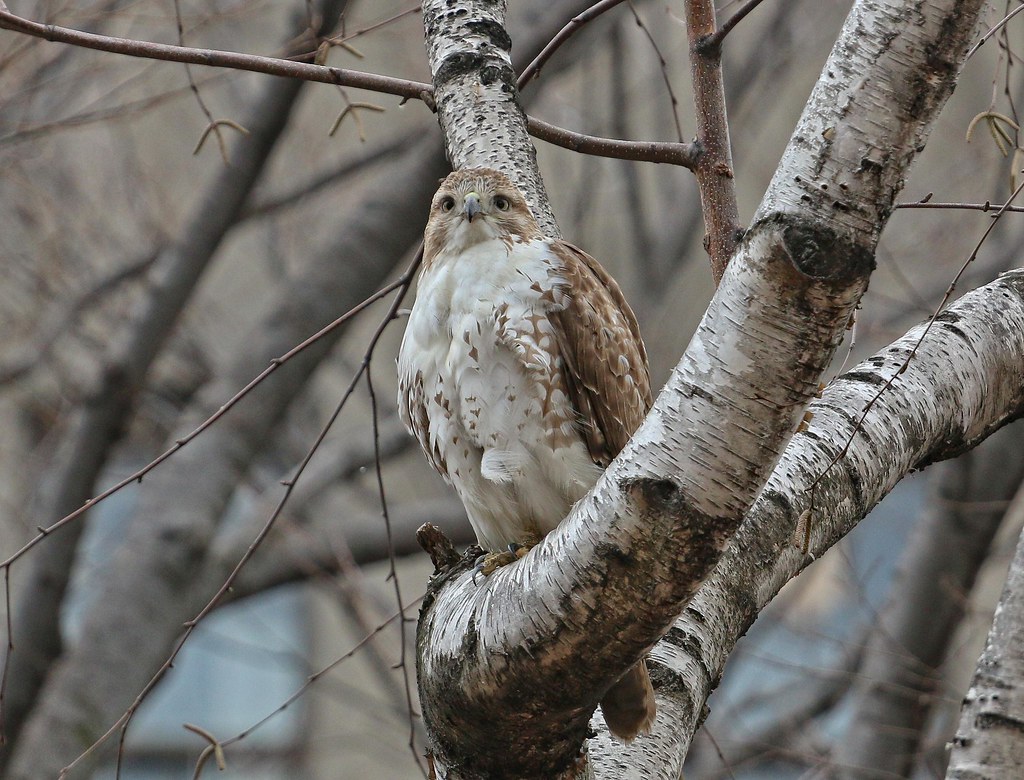
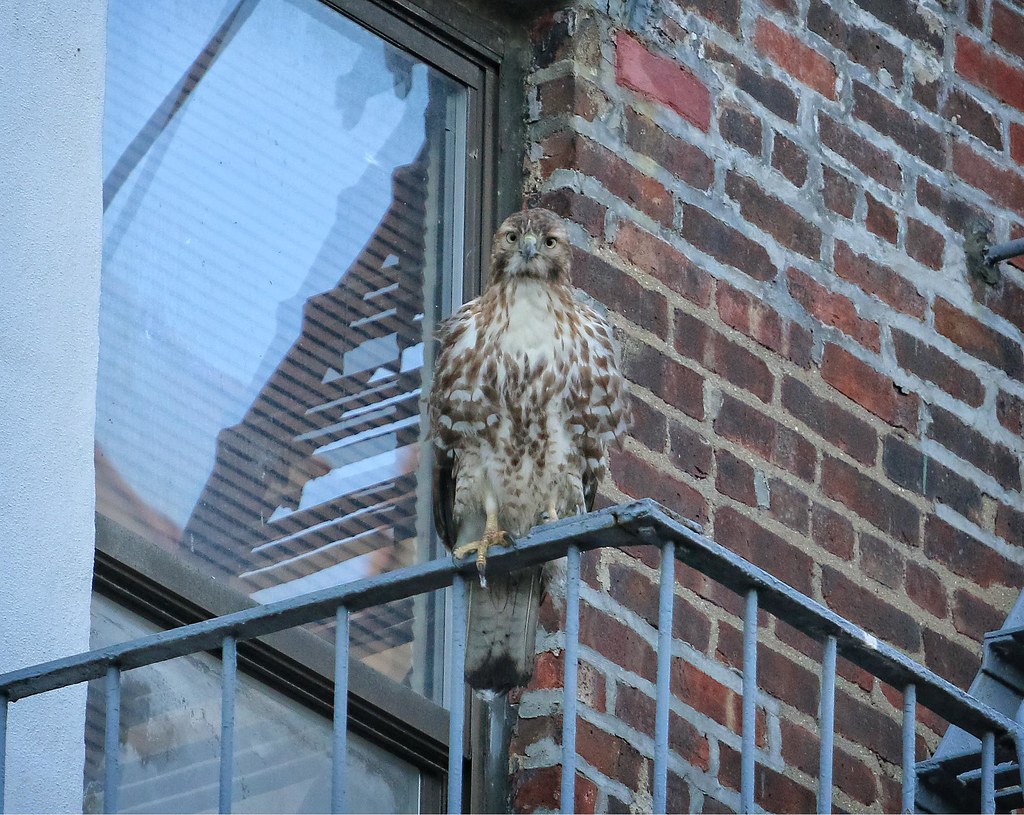
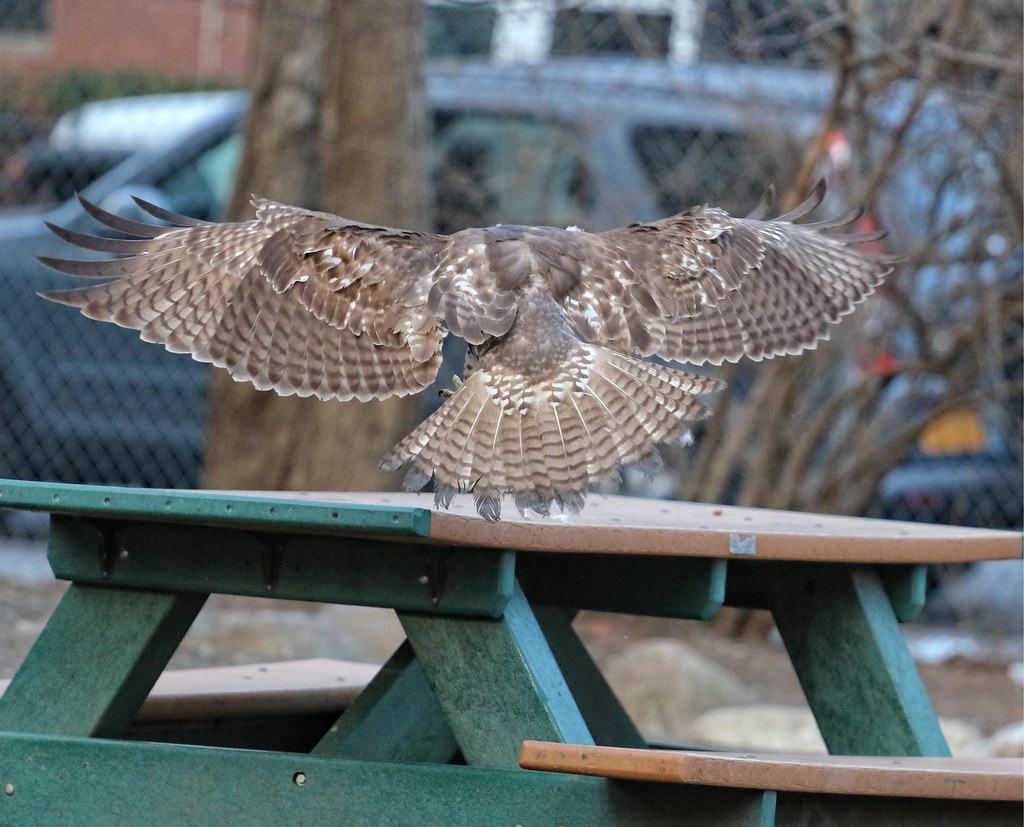
From a distance, I thought it was White Chest, but this hawk has a lot more brown markings.  Inspection of the tail (see below), confirmed it is not Speckles.

Juvenile red-tail

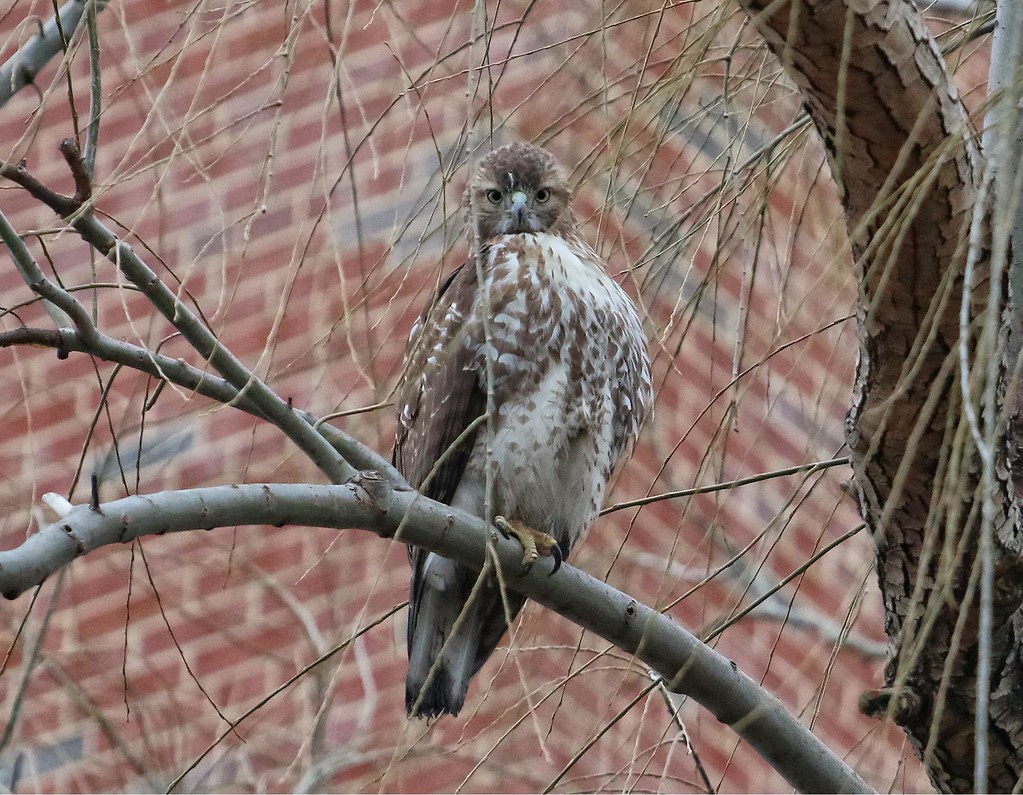
Could this be the third juvenile I previously saw flying around with the other two hawks?  It's possible, but I'm not certain.

Juvenile red-tail

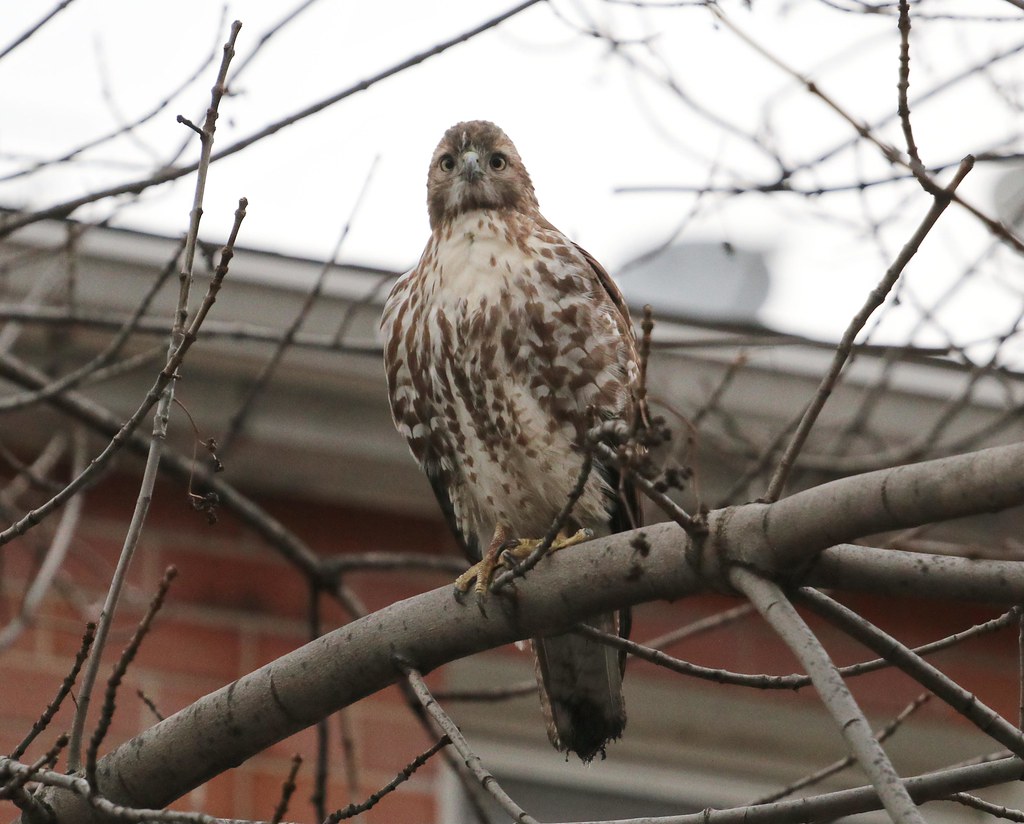
This hawk leisurely rested in the sun for a couple of hours before flying off towards the East River.

Juvenile red-tail

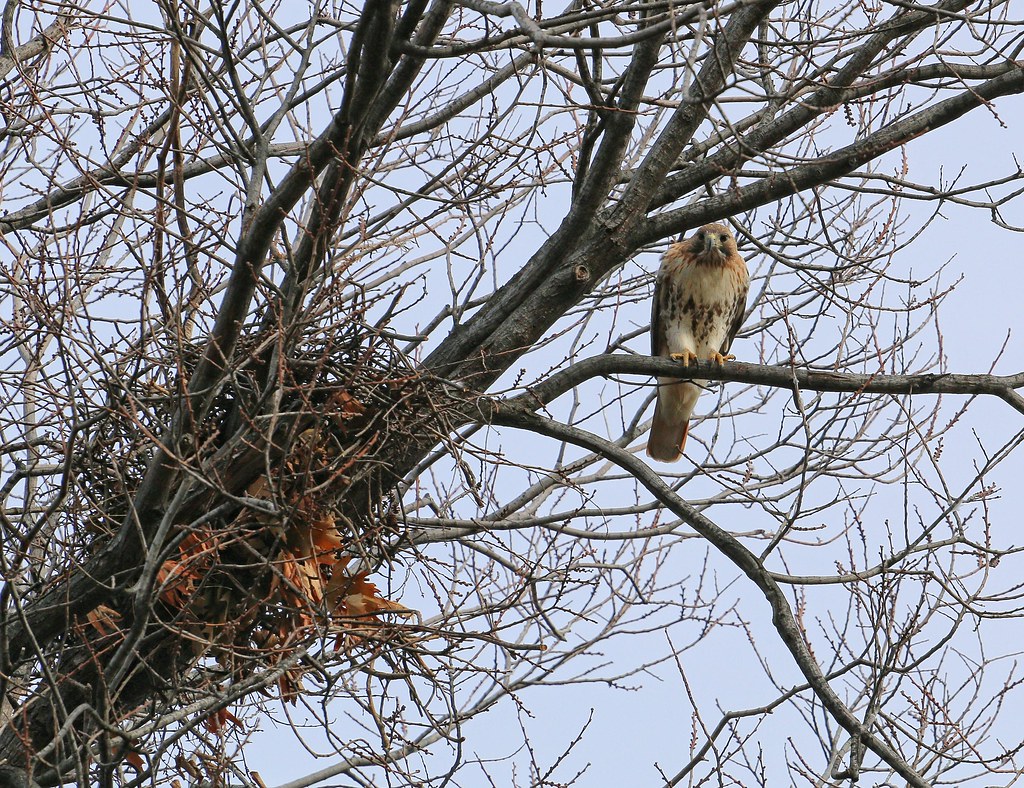
Back in Tompkins Square Park, Christo and Dora were working on their nest.  Below, Christo poses next to it.

Christo next to his nest

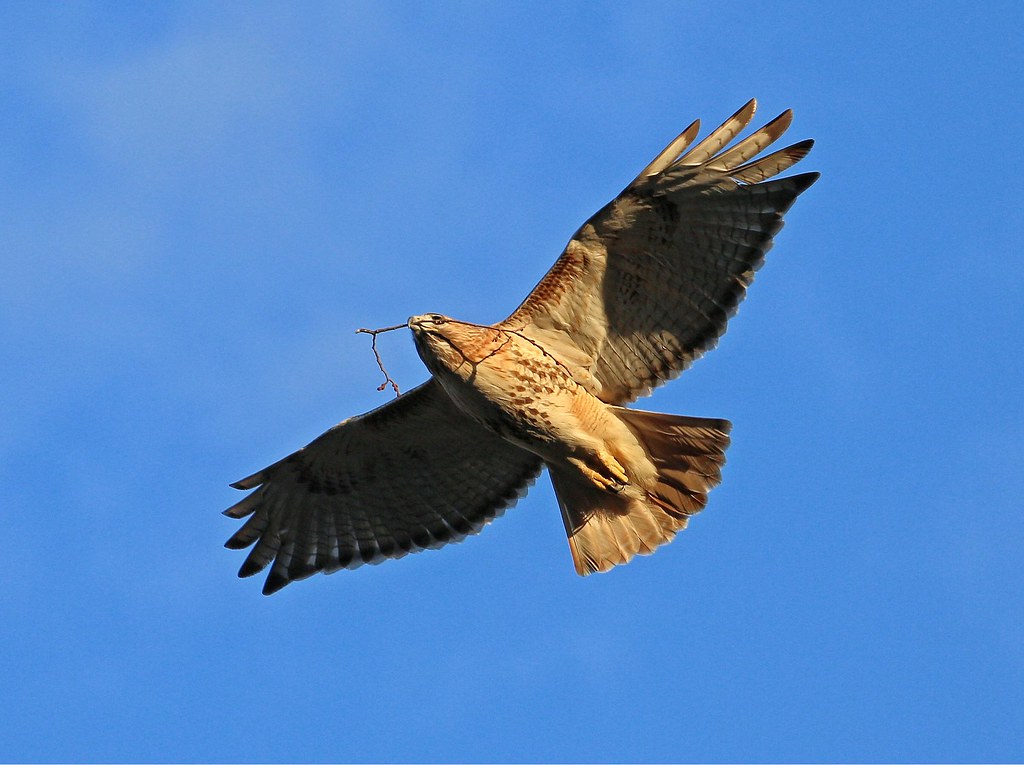
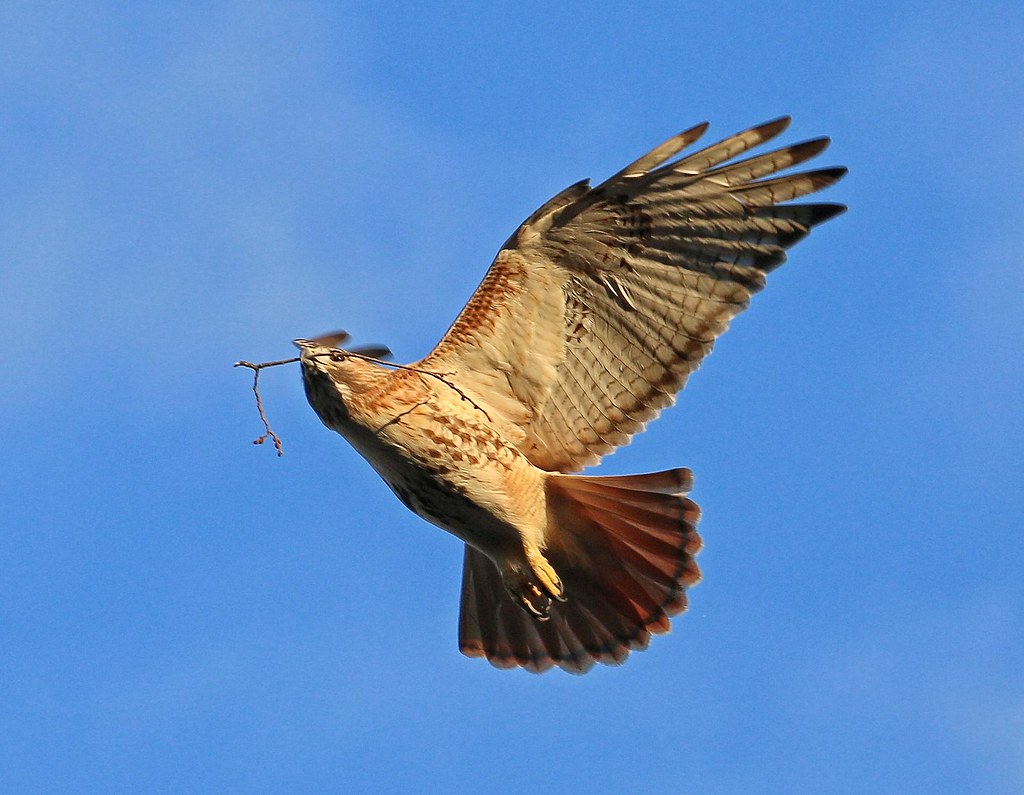
I watched him fly all the way across the park to get this one particular stick, then fly it all the way back. 

Christo taking a stick to his nest

It seemed like an awfully long way to go to fetch a little twig.

Christo taking a stick to his nest

While Christo did chores, Dora quietly kept an eye on things from the SE corner of the park.

Dora

I don't often see her in odd positions like the one below - she's usually a no-nonsense gal.

Dora in a funky position 

Note Dora's rich brown eye color compared to the bright yellow eyes of the juvenile hawk up above.  It's one easy way to tell the difference between the juveniles and adults.

It's been a good winter for seeing migrating hawks in the city, so I hope to see more before spring arrives and nesting season begins.

Wednesday, February 1, 2017

Hawk-o-rama weekend - Part 2

In my previous post, I described the physical differences between a couple of local juvenile red-tails.  These two have an interesting relationship.  Are they siblings?  Migration companions?  Future mates?  One of them - the one I call Speckles (other people call it Bad Boy) - seems to be the dominant of the two.  Although I've seen both hawks catch prey, they also share food, and Speckles eats first.

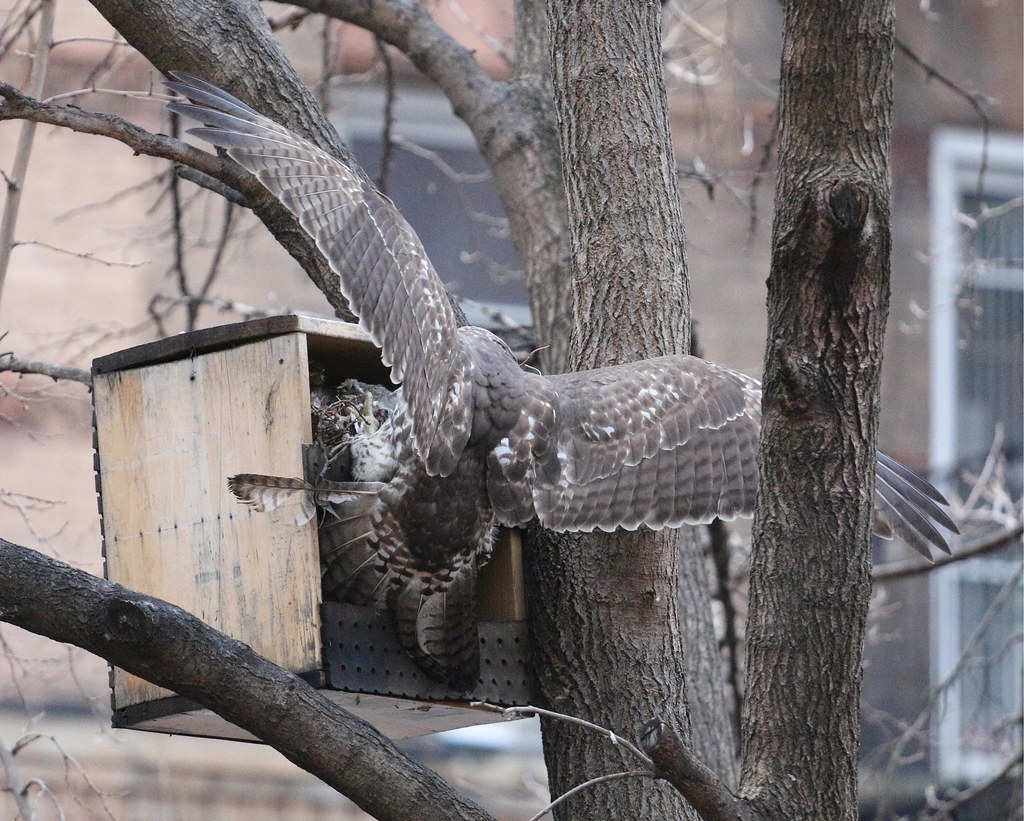
On Saturday, I came upon White Chest, who was just finishing off a mouse.  The hawk then went and caught a second mouse, which it gulped down in just a few bites.  White Chest then perched in a tree to digest lunch.  That's when Speckles showed up and perched in a neighboring tree.  After about a minute, it dove past White Chest and landed on a box, pictured below.
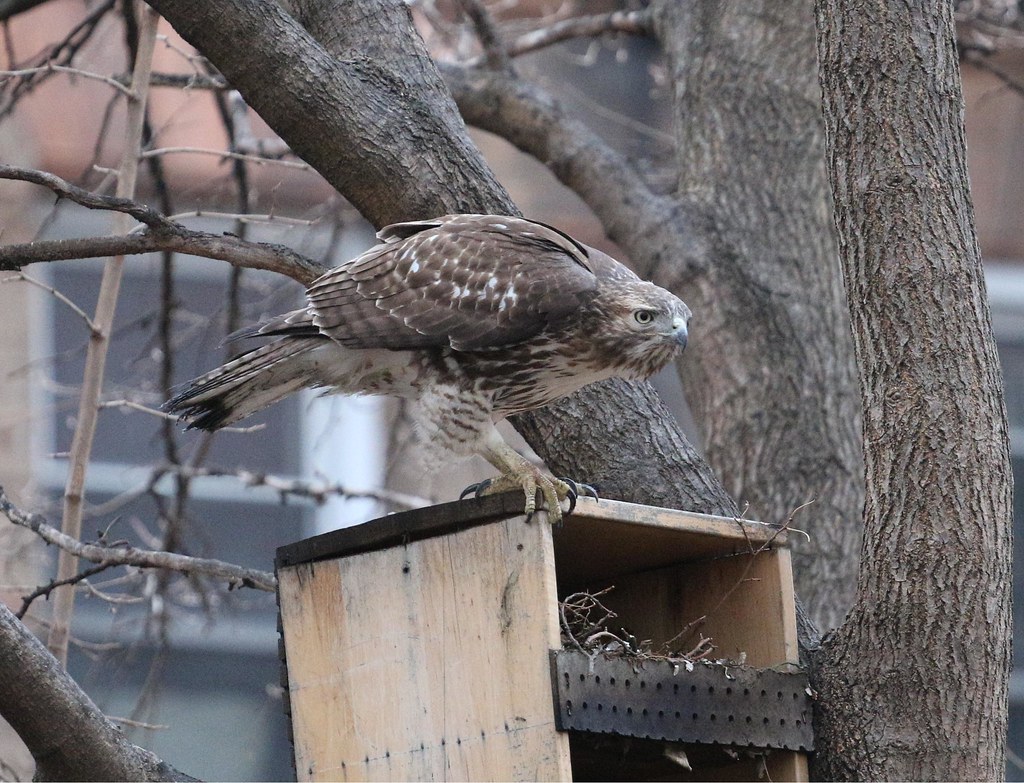
Juvenile red-tail raids a squirrel nest

The hawk stepped down to take a look inside...
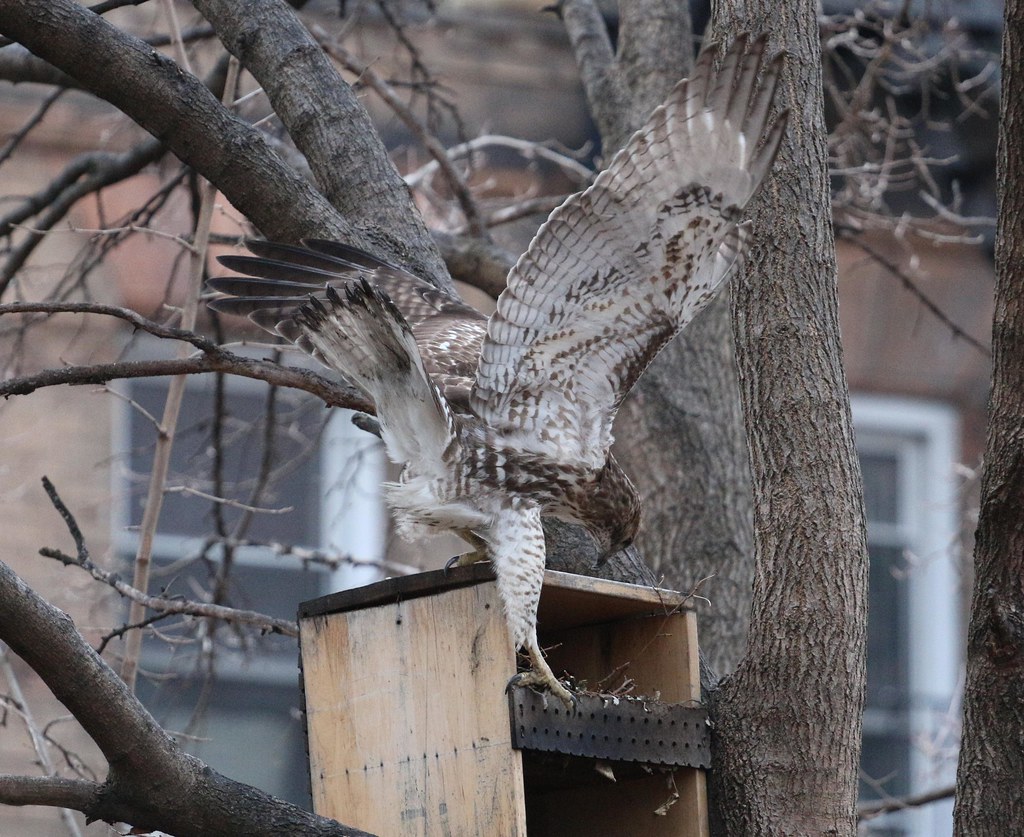
Juvenile red-tail raids a squirrel nest

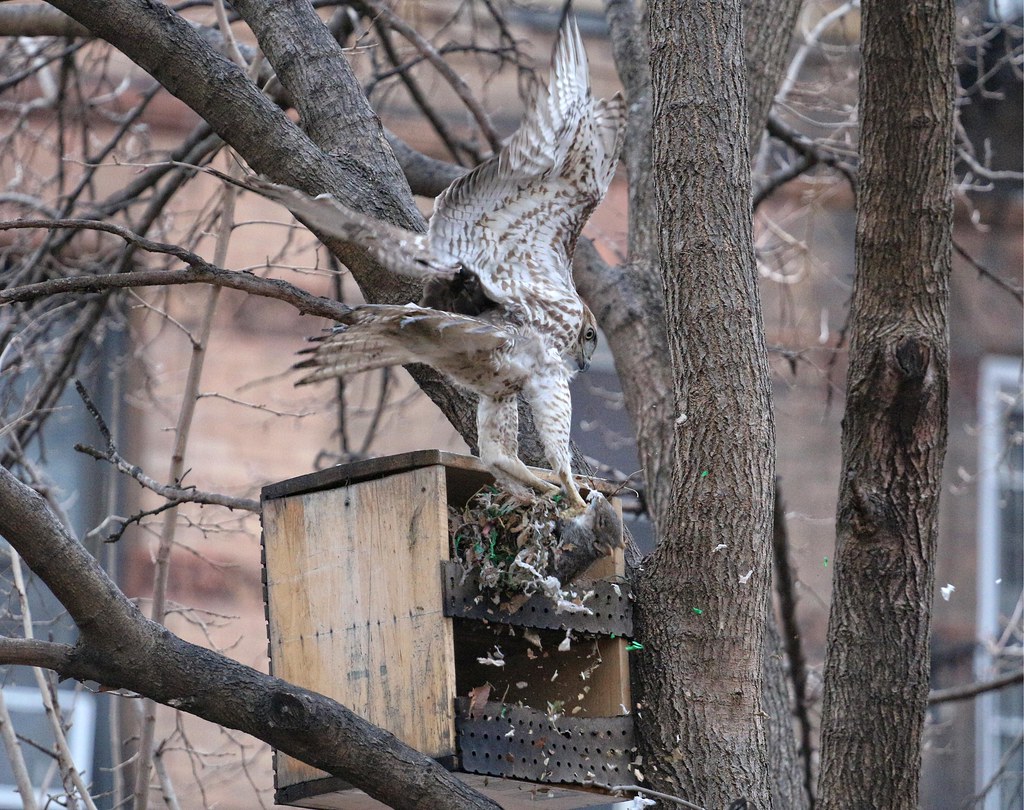
And in a flash...

Juvenile red-tail raids a squirrel nest

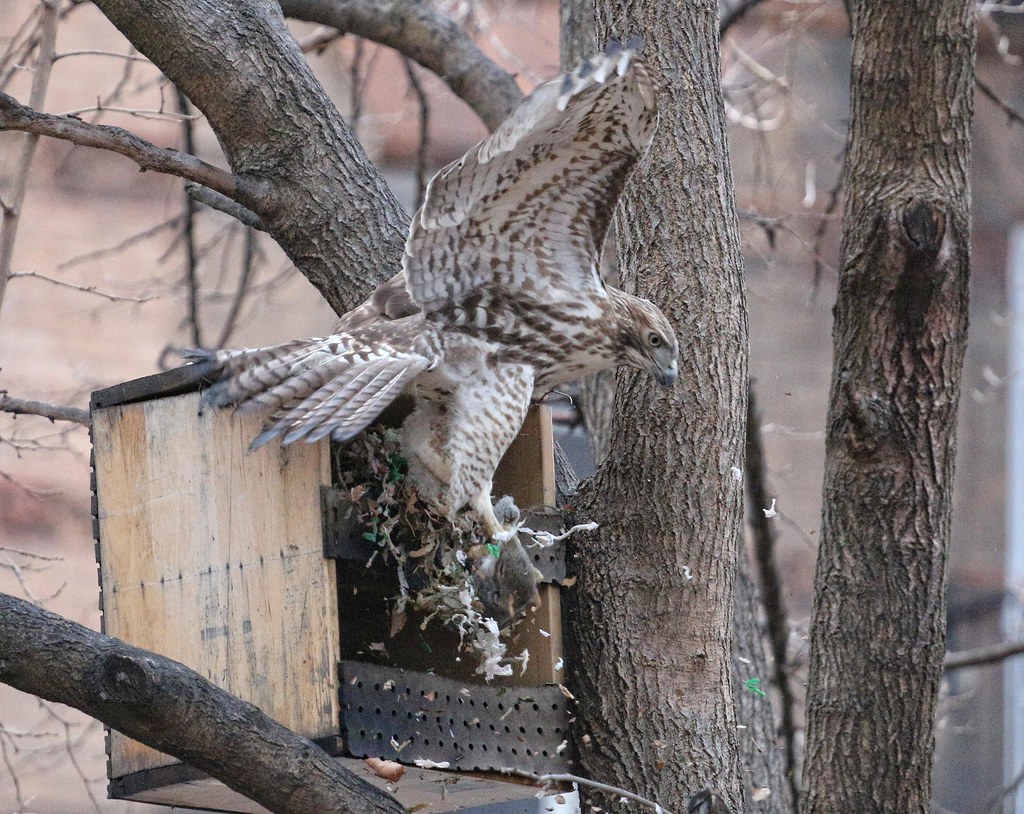
...pulled out a squirrel.

Juvenile red-tail raids a squirrel nest

Juvenile red-tail raids a squirrel nest

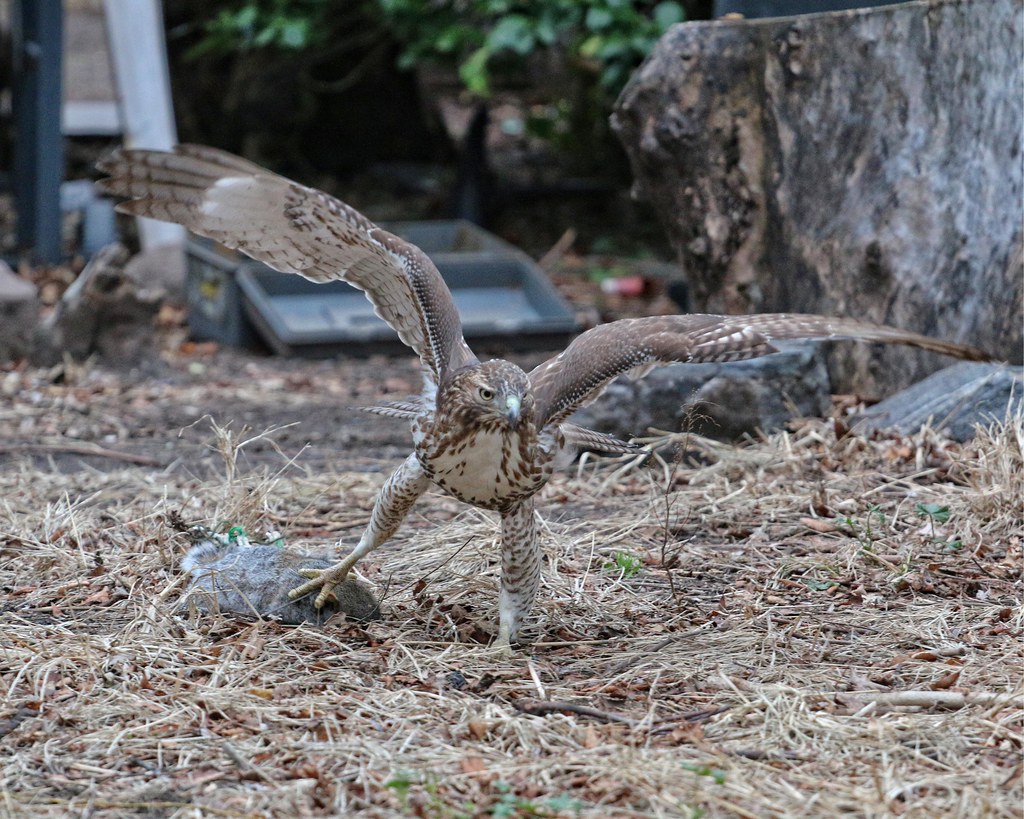
The squirrel seemed too heavy for the hawk, who had difficulty flying and took it to the ground...
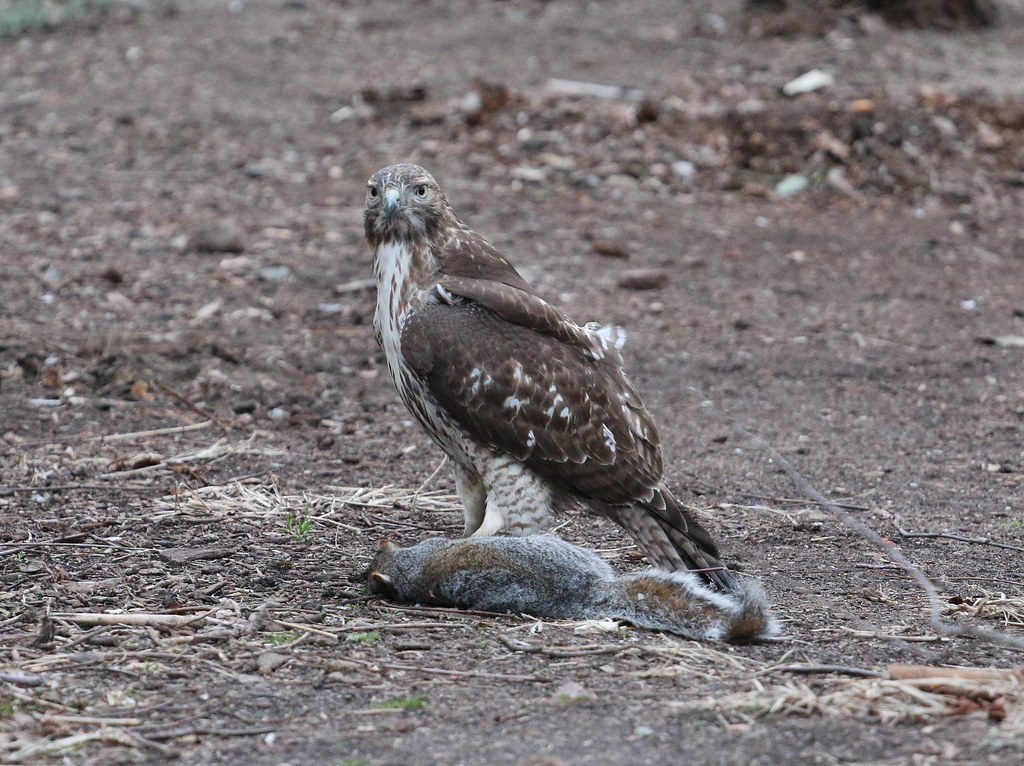
Juvenile with squirrel trophy

...and dragged it around.

Juvenile red-tail dragging squirrel

The squirrel was definitely dead when it left the box, and the hawk had moved on it so fast, I wasn't sure if the squirrel might have already been dead before the hawk grabbed it.  The squirrel seemed a little stiff, which also made me wonder if it had been stashed.

Speckles spent about half an hour eating half the squirrel before moving off to the side and seemingly inviting White Chest to come down and eat.  The second hawk did come down to the squirrel and mantled the meal (below) while the first hawk perched nearby making squealing sounds.
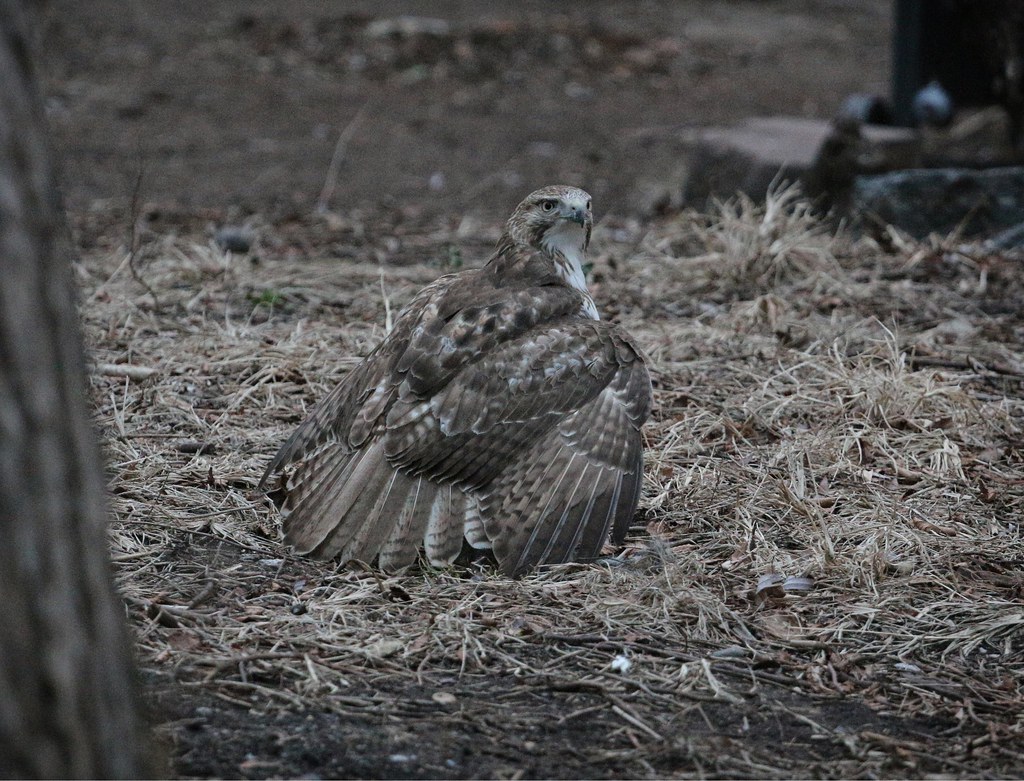
Red-tail mantles meal left by other hawk

I thought Speckles might lunge and push White Chest off the squirrel, but no!  The hawk instead took off in a different direction and came up with a mouse.  Dessert!
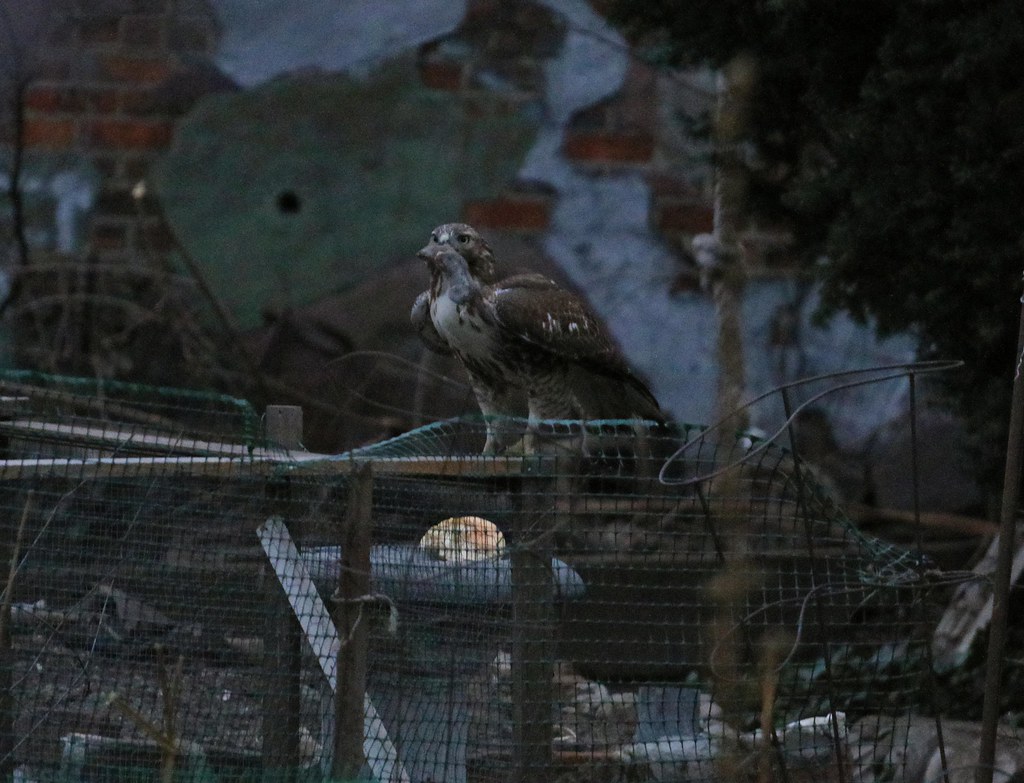
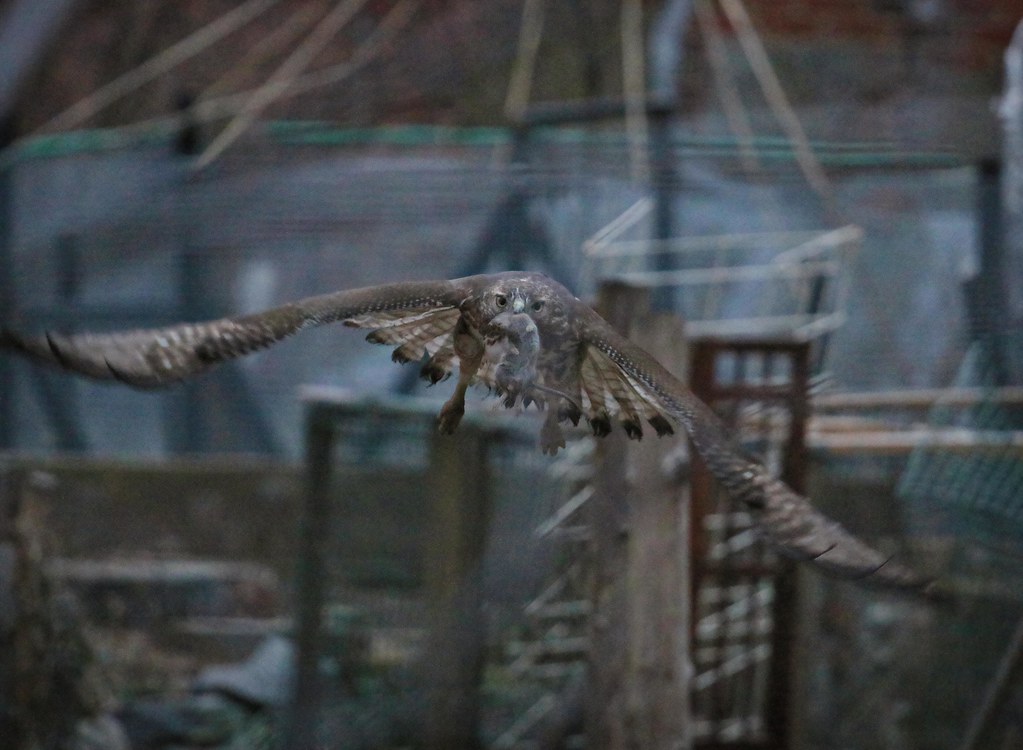
Red-tail catches mouse after sunset

Red-tail catches mouse after sunset

The hawk flew the mouse around a few times, then took it to a place out of my view.  By this time, it was pretty dark, so I left the hawks to eat in peace.
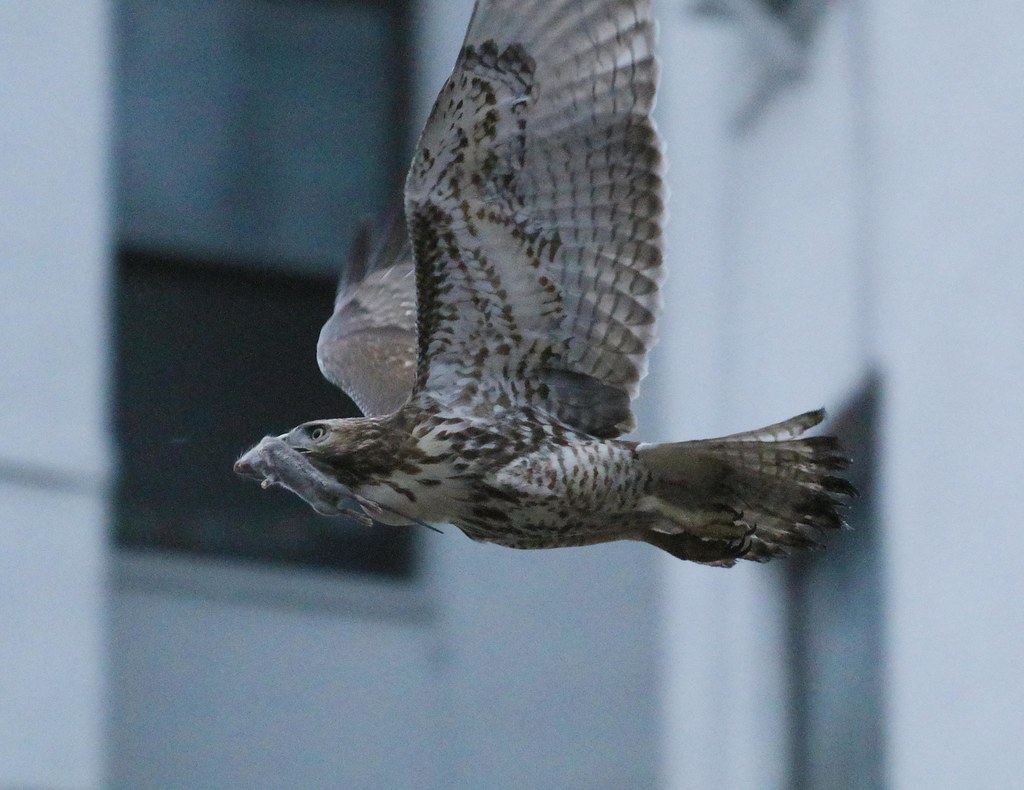
Red-tail with mouse after sunset

The following day, I found Speckles in a tree with a dead squirrel on the ground below.  A man told me he'd seen the hawk catch the squirrel, but a cat scared the hawk off its prey, so the bird retreated to the tree. 

After some time, the hawk dove for a mouse that had come out into an open area.  Just as the hawk reached down to grab it, the cat darted out of a bush and tried to nab the same mouse!  Hawk and Cat scared each other, and they took off in different directions.  However, as soon as the cat was far enough away, the hawk swooped down and snatched the mouse.  No opportunity is wasted.

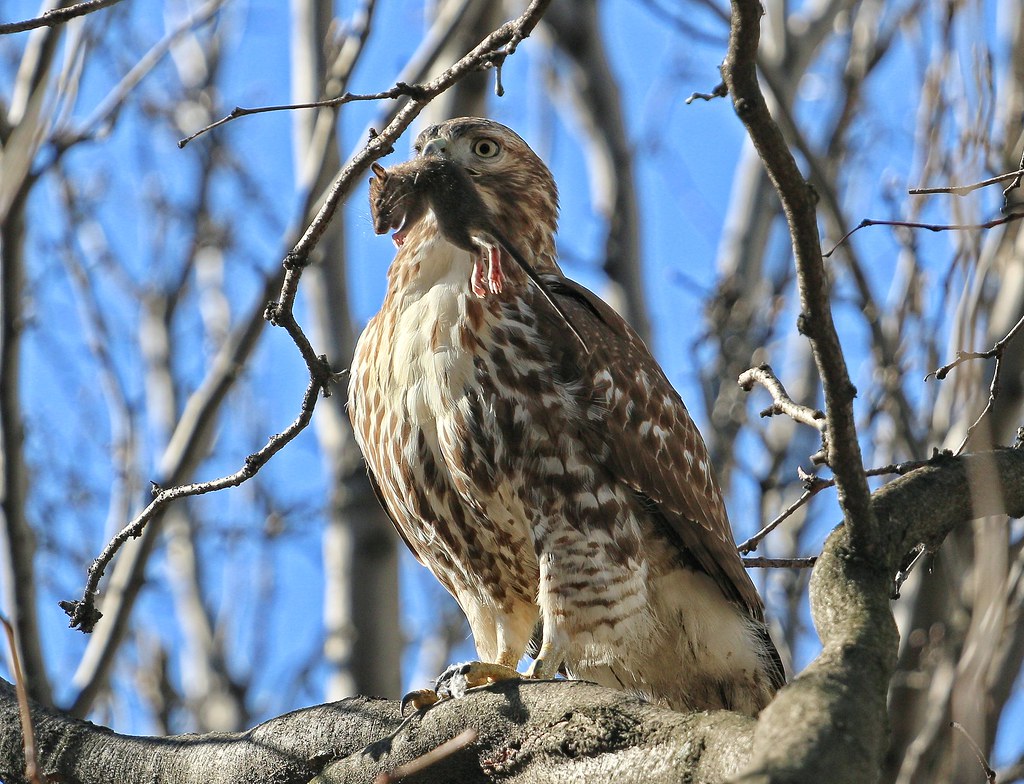
Red-tail with mouse

Red-tail with mouse

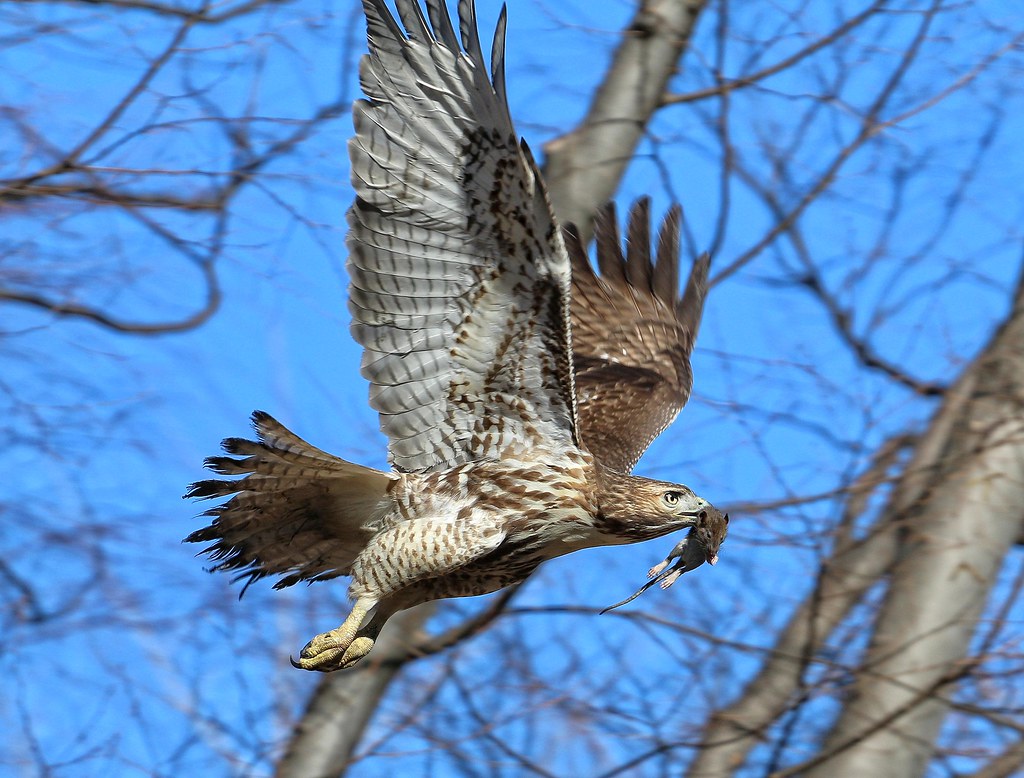
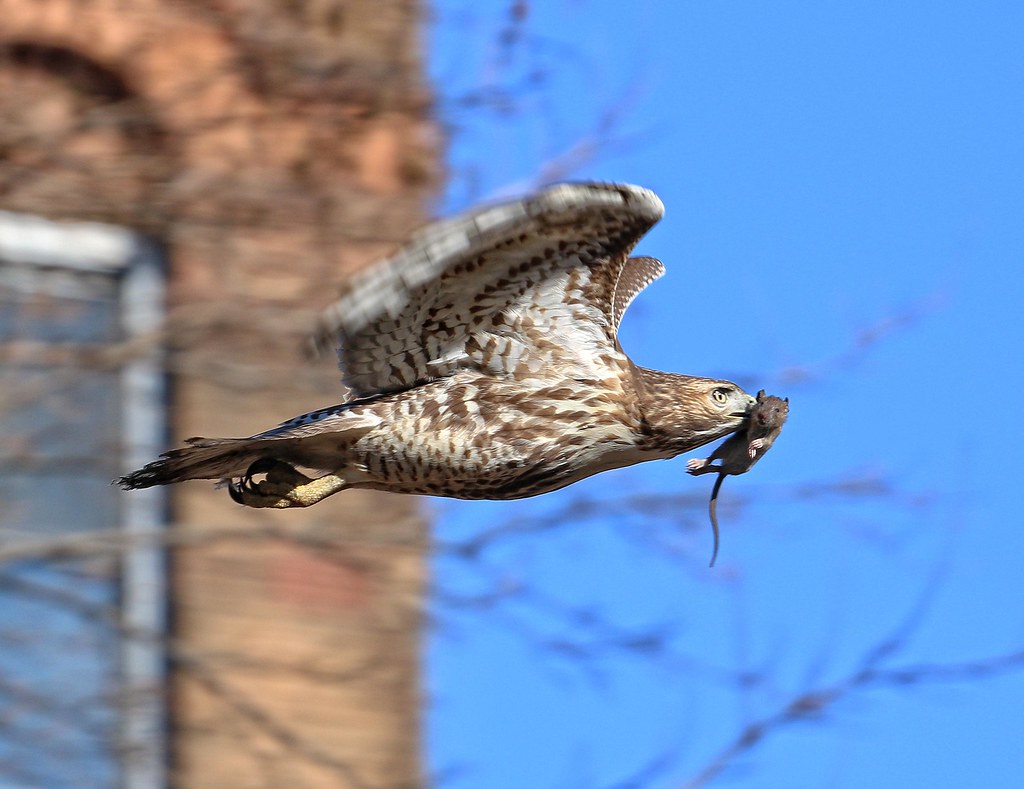
Again, the hawk flew the mouse around for a while.
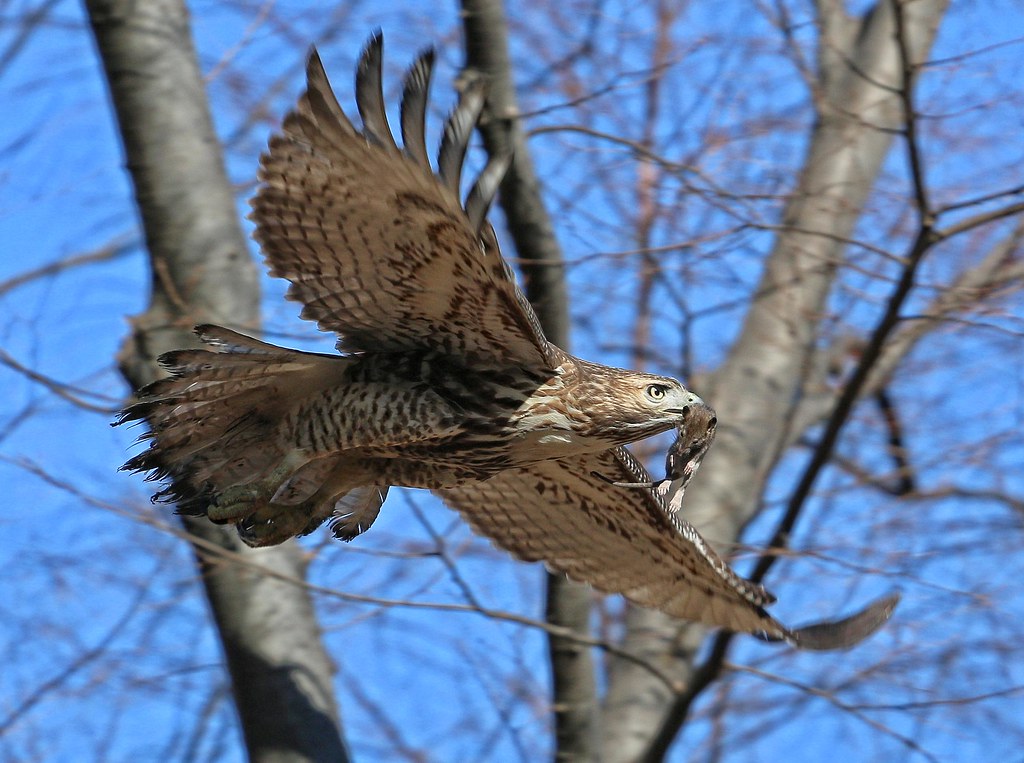
Red-tail with mouse

Red-tail with mouse

Red-tail with mouse 

Several hours later, Speckles returned to the dead squirrel, which was still on the ground.  A small crowd of people had gathered to watch.  Unfortunately, someone got too close and the hawk flew up to a fire escape.  The following day, I returned to the place where the dead squirrel was and it was gone, so I hope the hawk was able to retrieve it.  These young hawks need to learn to take their food up to a safe place to eat rather than being so vulnerable on the ground.


More hawk-o-rama to come... 
Tuesday, January 31, 2017

Hawk-o-rama weekend - Part 1

I spent some quality time this last weekend with some juvenile red-tailed hawks who have been wintering on the Lower East Side.  These are young hawks that the resident adult red-tails, Christo and Dora, prevent from entering Tompkins Square Park.  Instead, they hang around the periphery of Christo and Dora's territory.

This winter, there have been many juvenile red-tails in the city and several in the neighborhood. I can think of at least six individuals, but there are likely more.  I caught up with two, who I wrote about earlier this month.  They are great examples of differing feather patterns.

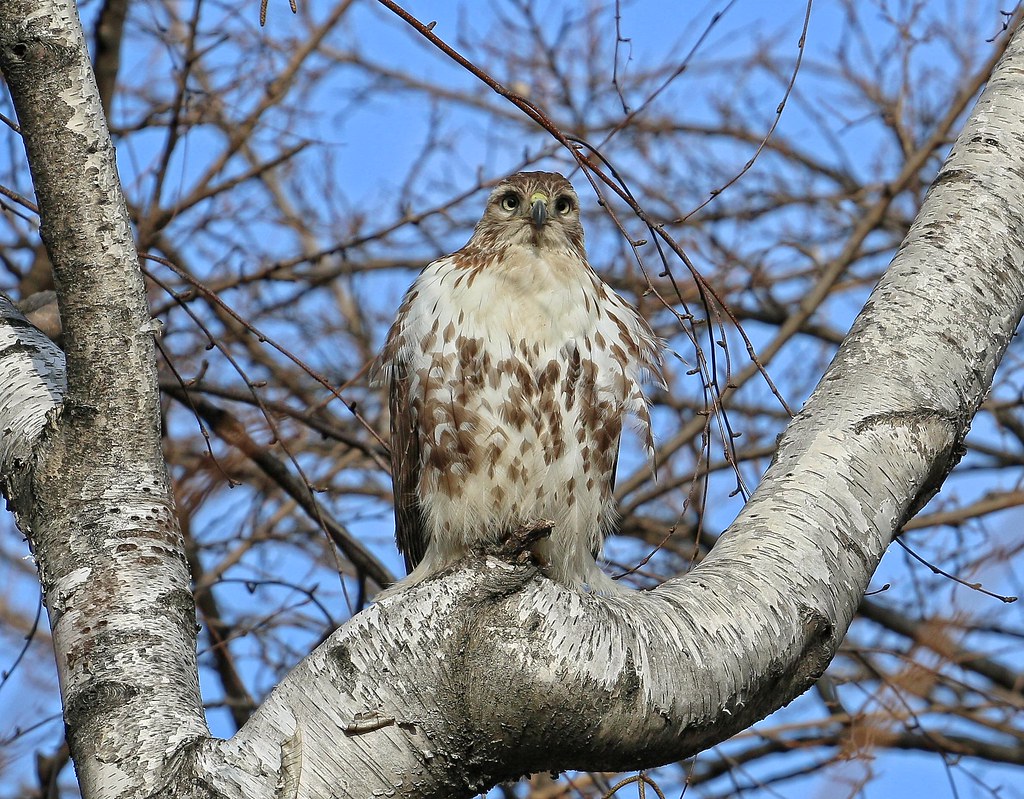
I've been calling this one White Chest because of its broad white chest, pale legs and face.

Juvenile red-tail with prey

Juvenile red-tail

By contrast, the hawk below has a dark head, prominent belly band and heavily speckled legs. I've been calling it Speckles, but other people in the area have been calling it Bad Boy because of its hunting skills.

Juvenile red-tail

Juvenile red-tail

This hawk also has a very distinctive tail.  There is obvious feather damage, possibly from eating prey off the ground, or roosting against a brick wall.  The tips of the tail feathers are a very dark gray that matches the tips of its wings. 

Tail damage

The good news is the ratty tail will be replaced when the hawk molts in summer.  Over at Washington Square, Roger Paw has a shot of Bobby, the resident male red-tail, who also has a ragged tail.

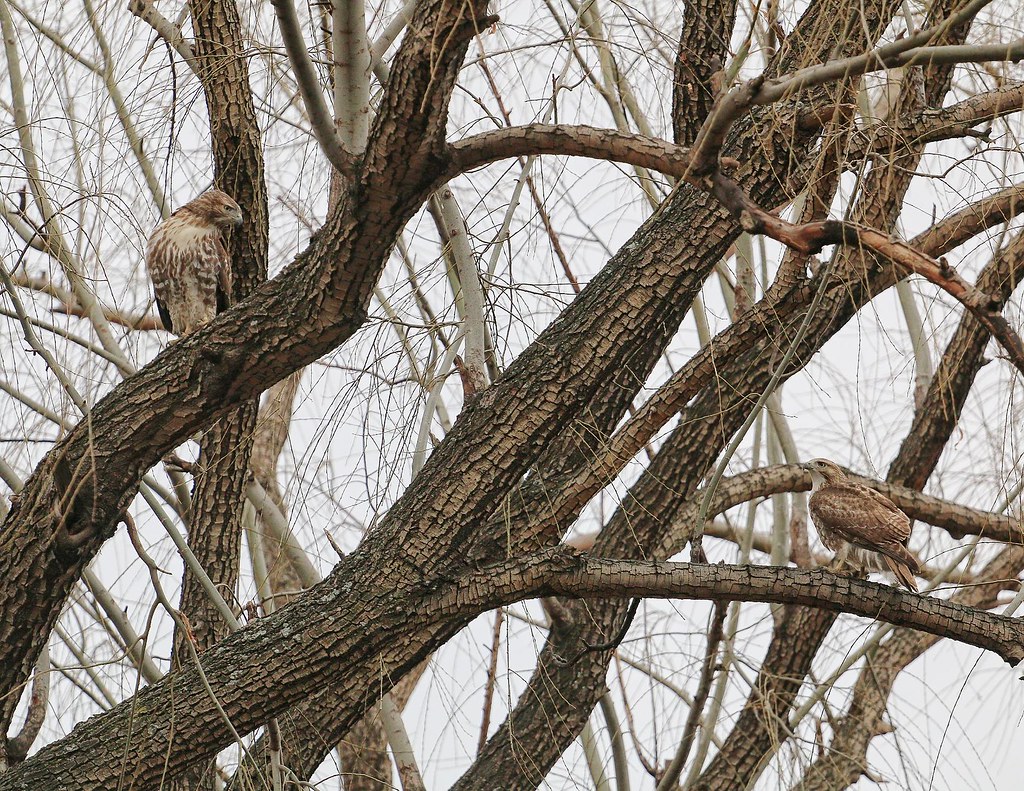
White Chest and Speckles have been hanging out together for some time. I first saw them sharing a meal on January 7, but they've been around much longer than that.  I'm curious about their relationship - could they be siblings or just migration companions?  I've seen them each catch and eat their own food.  However, I've also seen Speckles catch prey, then leave the leftovers for White Chest.

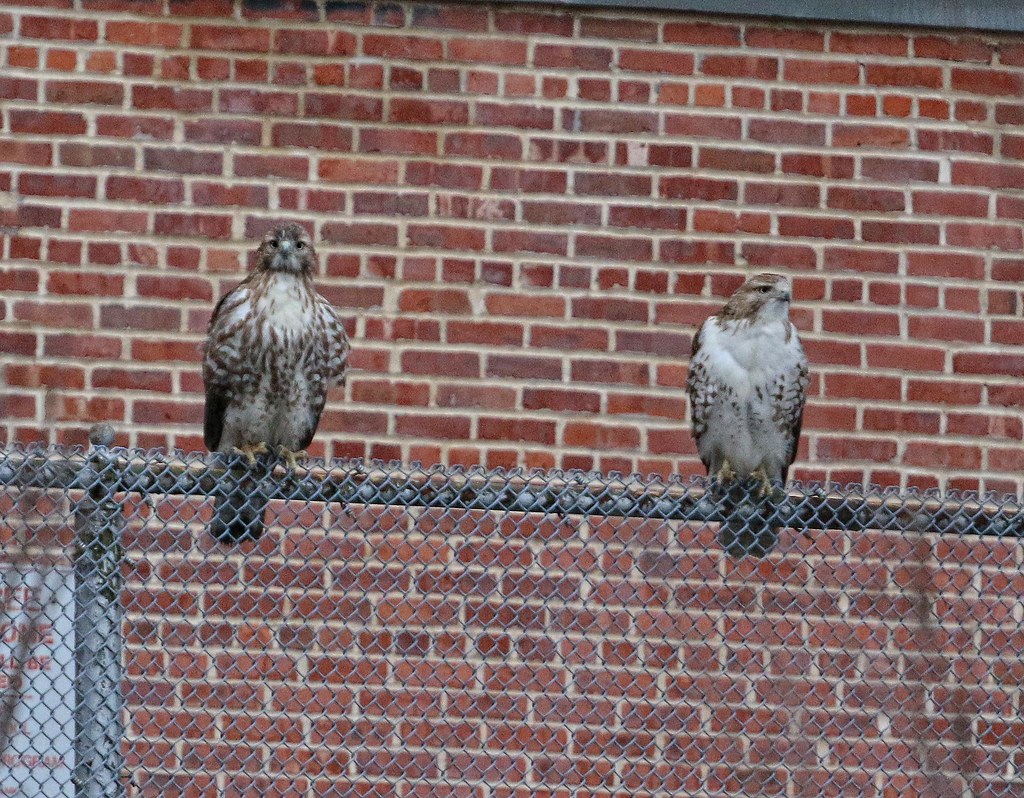
Below, Speckles is on the left and White Chest is on the right.

Two juvenile red-tails

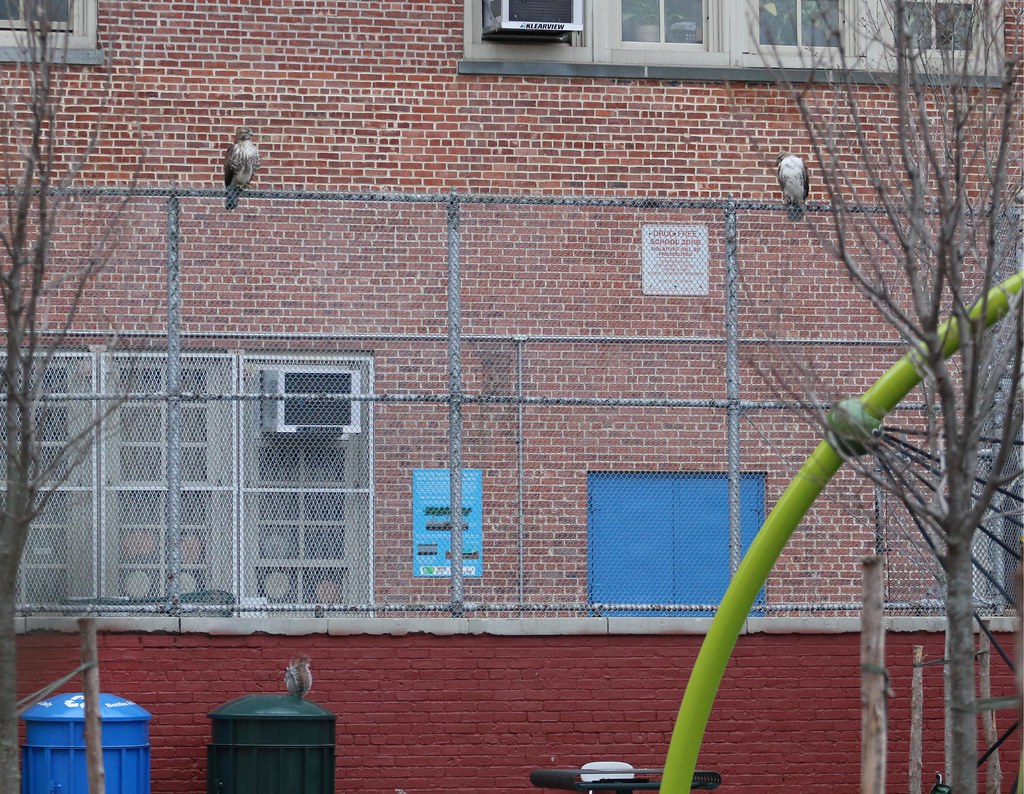
Below, Speckles and White Chest watch a foraging squirrel.  I was hoping to see some hunting teamwork, but the hawks didn't end up going after the squirrel.

Two red-tails and a squirrel

You can really see the difference in their markings in the photo below.  Speckles is fluffed up in the cold, otherwise White Chest appears to be the larger of the two.

Juvenile red-tail pair

White Chest on a fire escape.

Juvenile red-tail

Juvenile red-tail

Speckles on a fire escape.

Juvenile red-tail

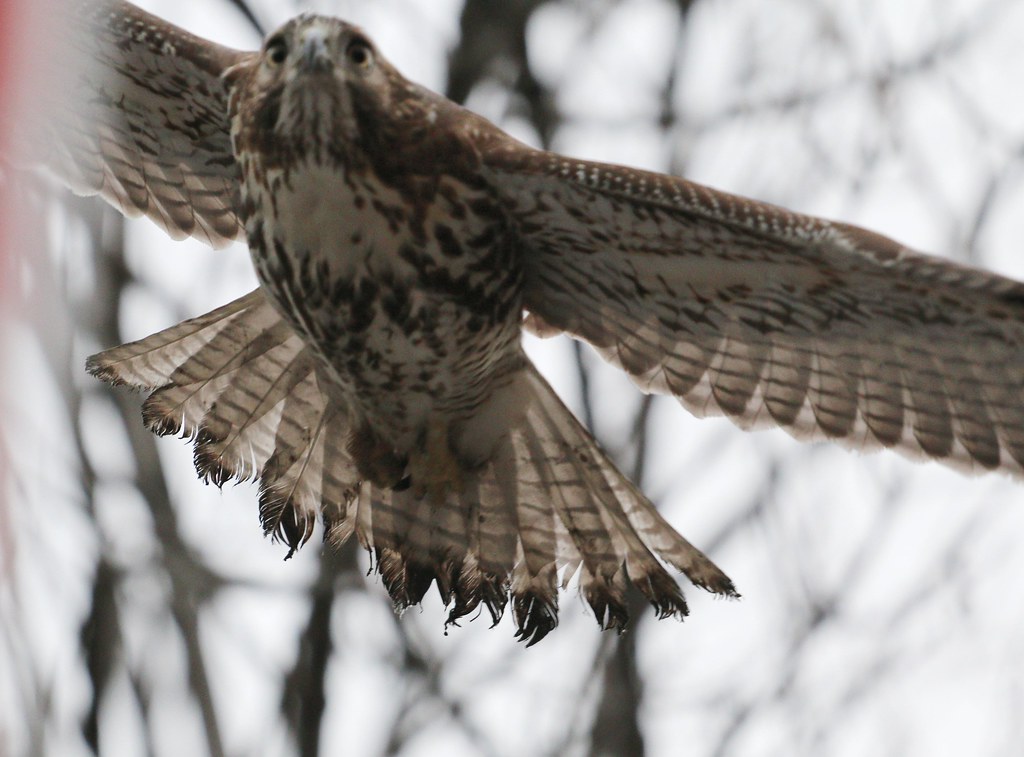
Here is another view of that funky tail.  You can also see the dark primary feathers on the left wing.  That color matches the edges of the tail feathers.

Juvenile red-tail with tail damage

And here are those speckled legs.

Juvenile red-tail

Juvenile red-tail

Coming at me...

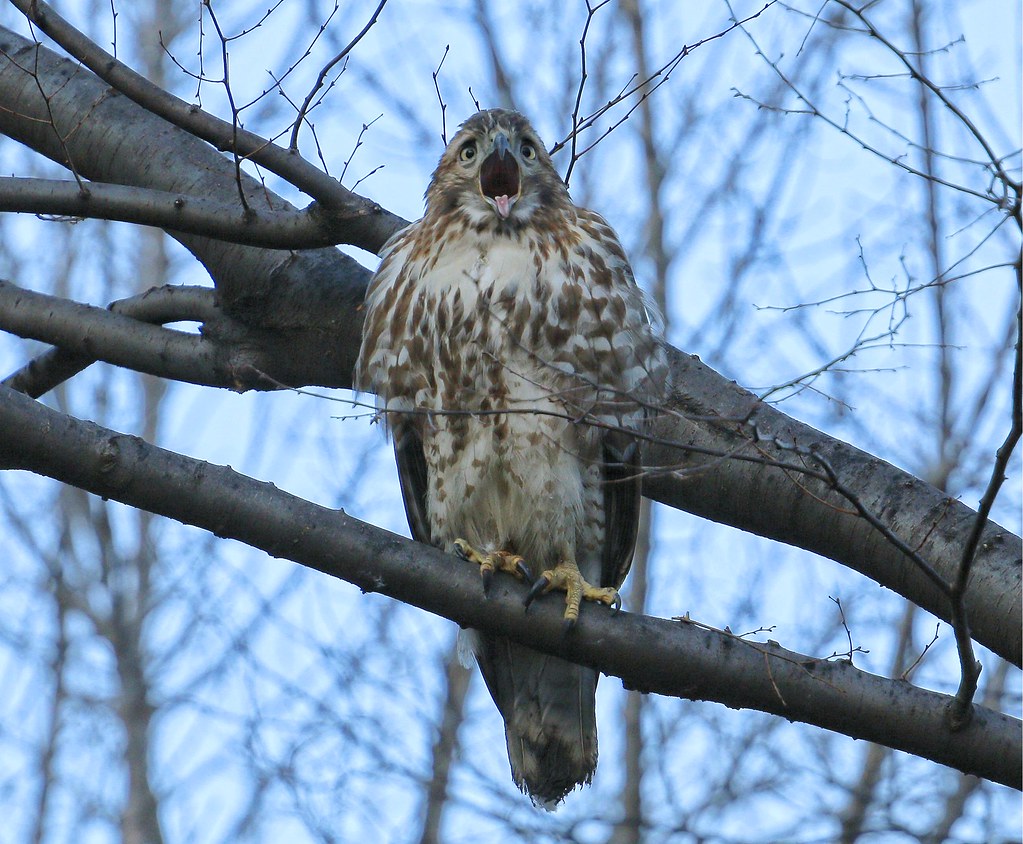
A big yawn at the end of a busy day.

Yaaawwwwn!

More fun hawk posts to come...
Monday, January 30, 2017

Sapsucker in action

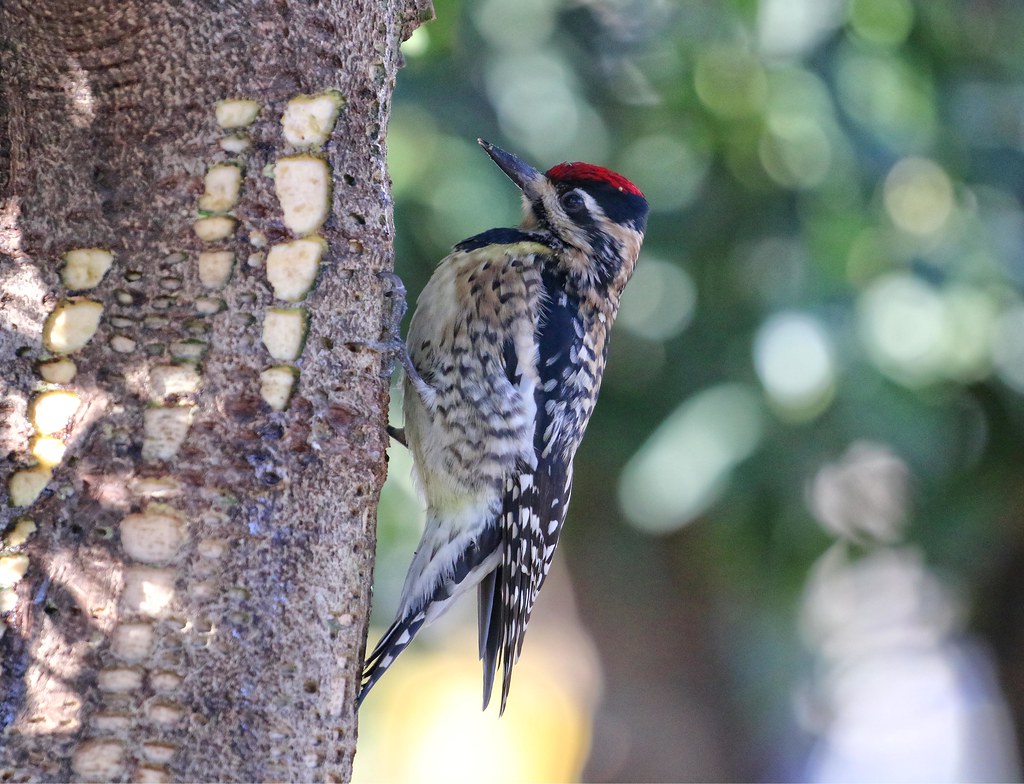
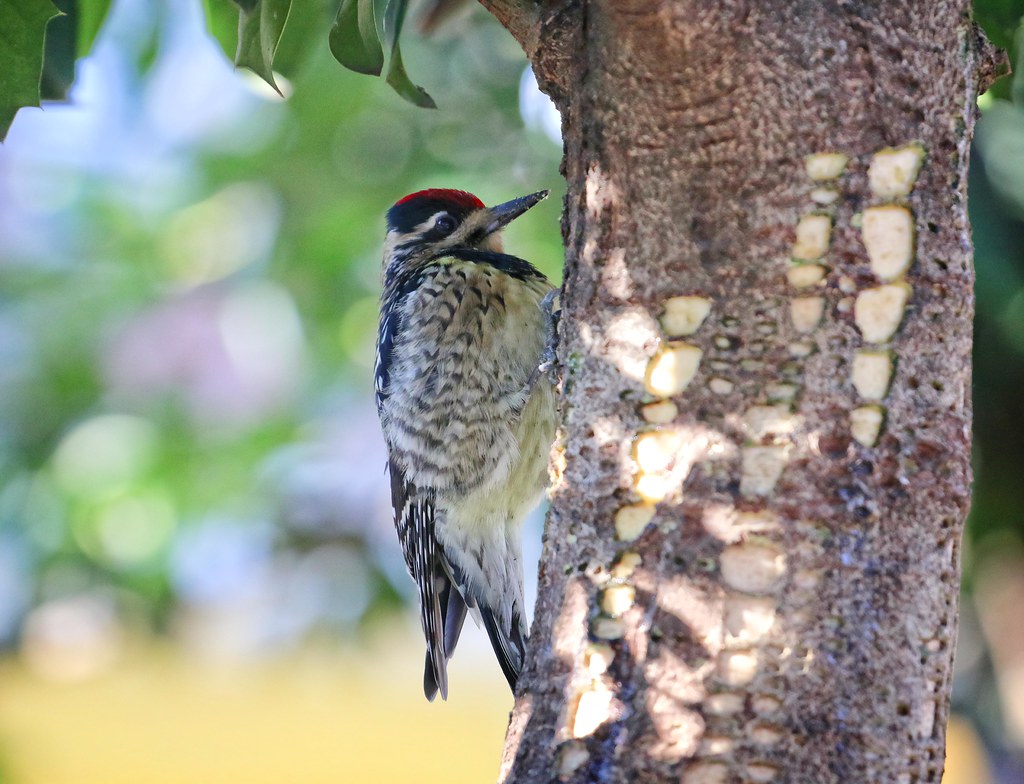
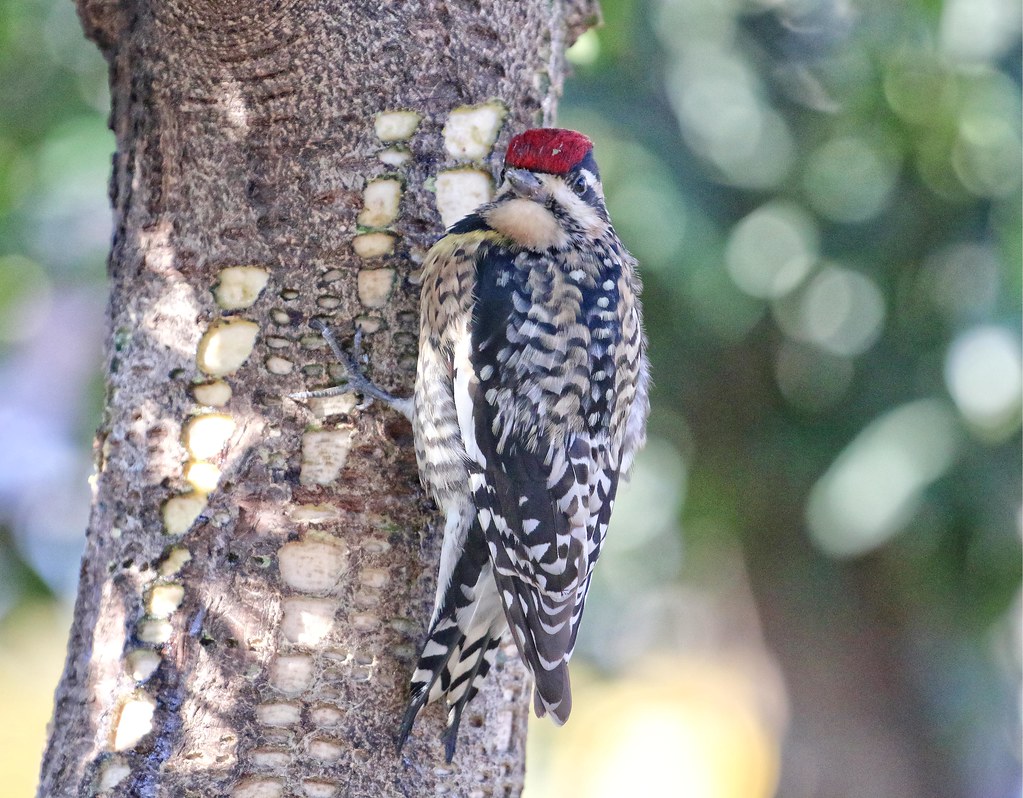
At the end of my previous post, I showed a photo of sap wells in a holly tree made by a Yellow-bellied Sapsucker.  I returned to the holly yesterday and found the artist in action.

Here she is:

Sapsucker

Sapsucker

This time, I took a little video:


The artist poses with her handiwork:

Sapsucker

Thursday, January 26, 2017

Seeing red

In the dreary heart of winter, it's nice to see a pop of color.

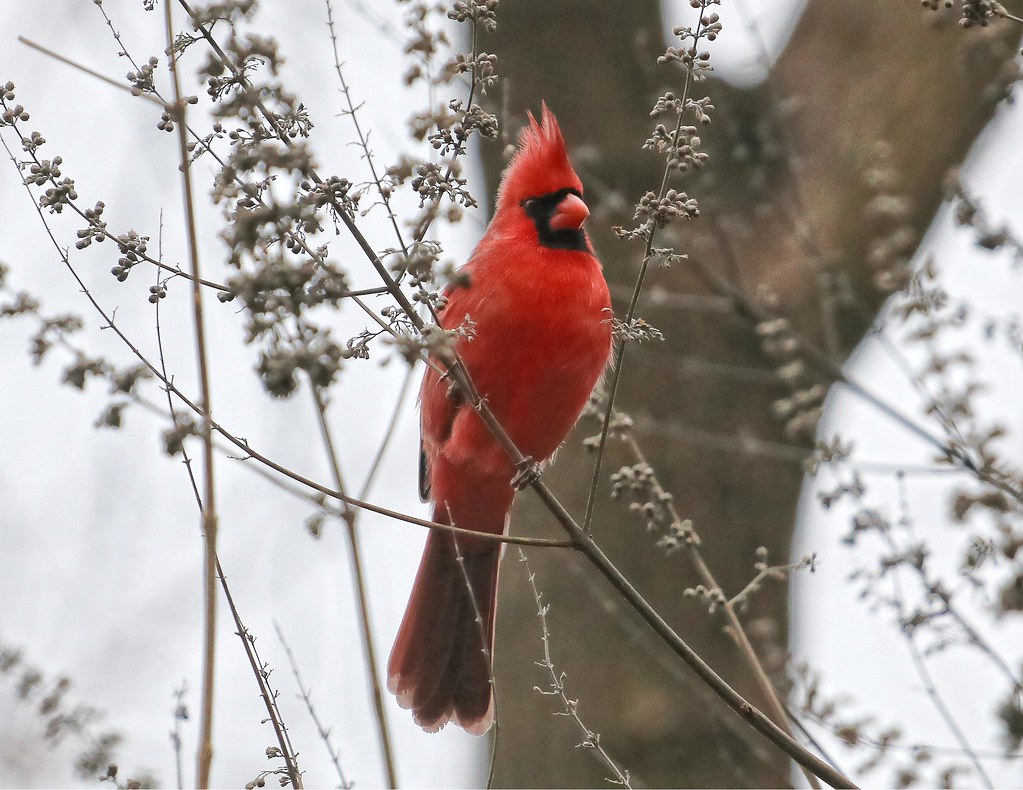
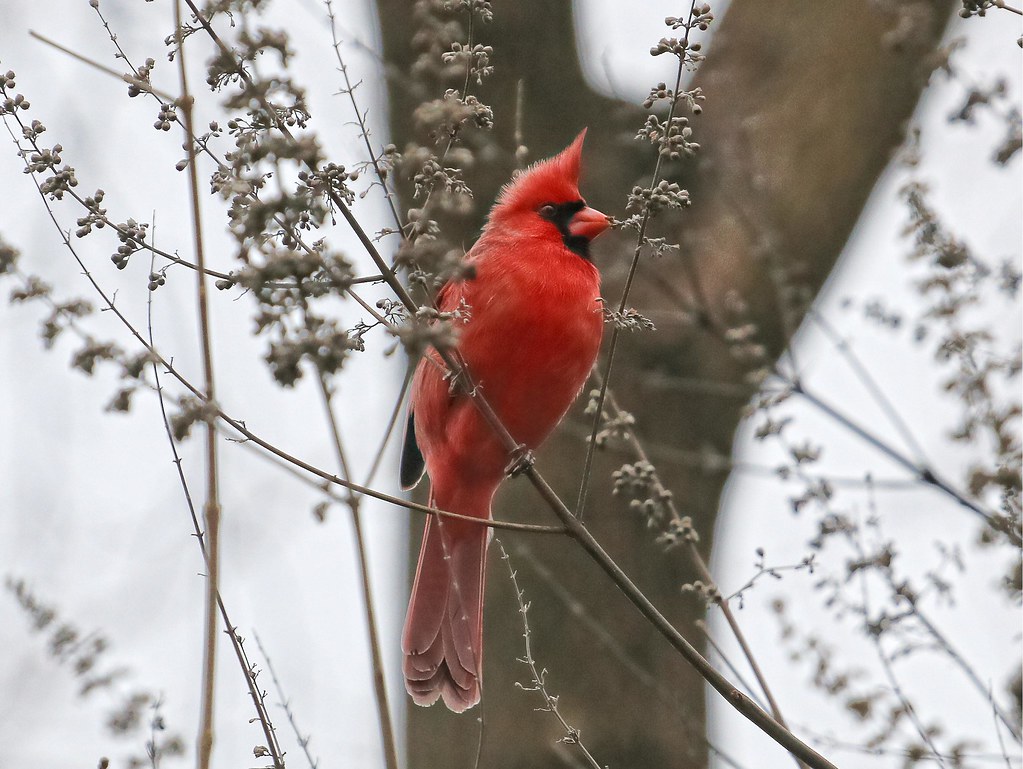
This brilliant red male cardinal was foraging in a local community garden when I heard his chipping call.

Cardinal

He's got quite the Mohawk!

Cardinal

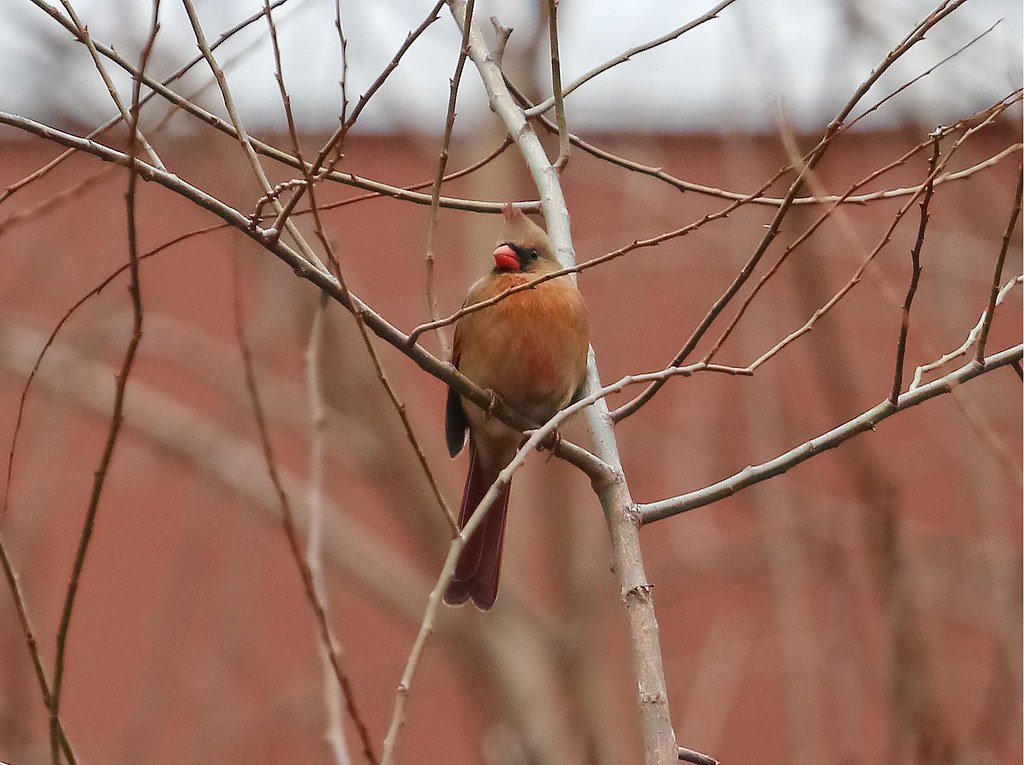
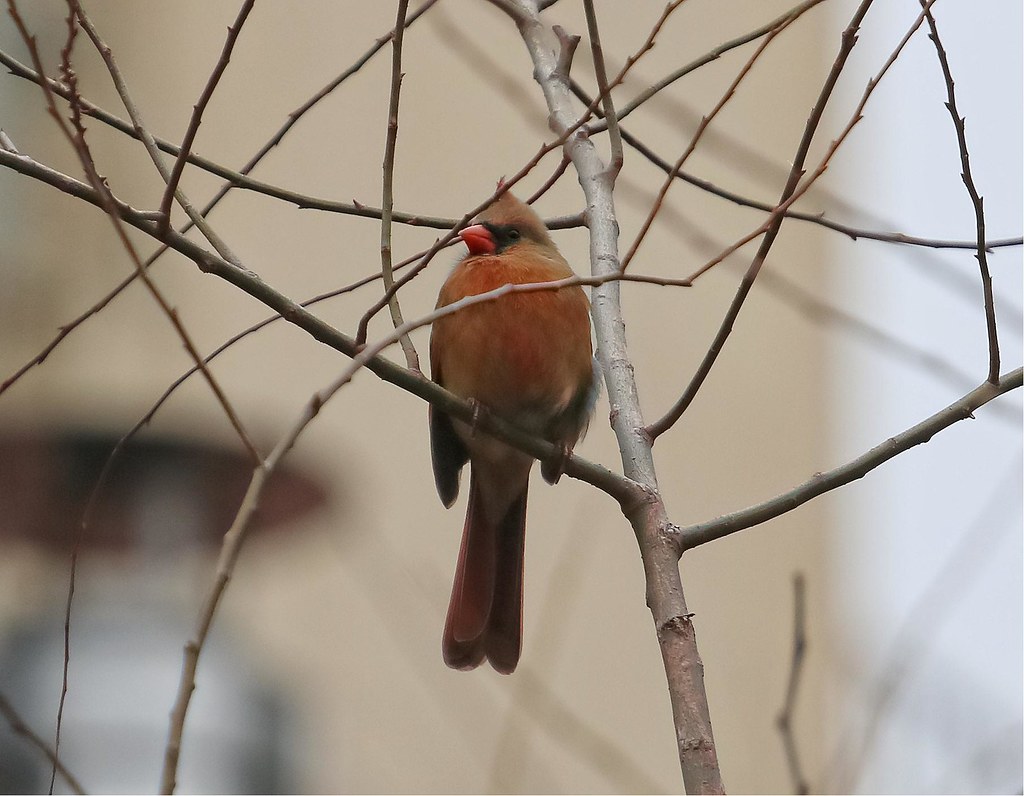
In a nearby tree, a radiant orange female responded with her own calls. They might not have liked me stumbling into their little bit of paradise.

Cardinal

Cardinal

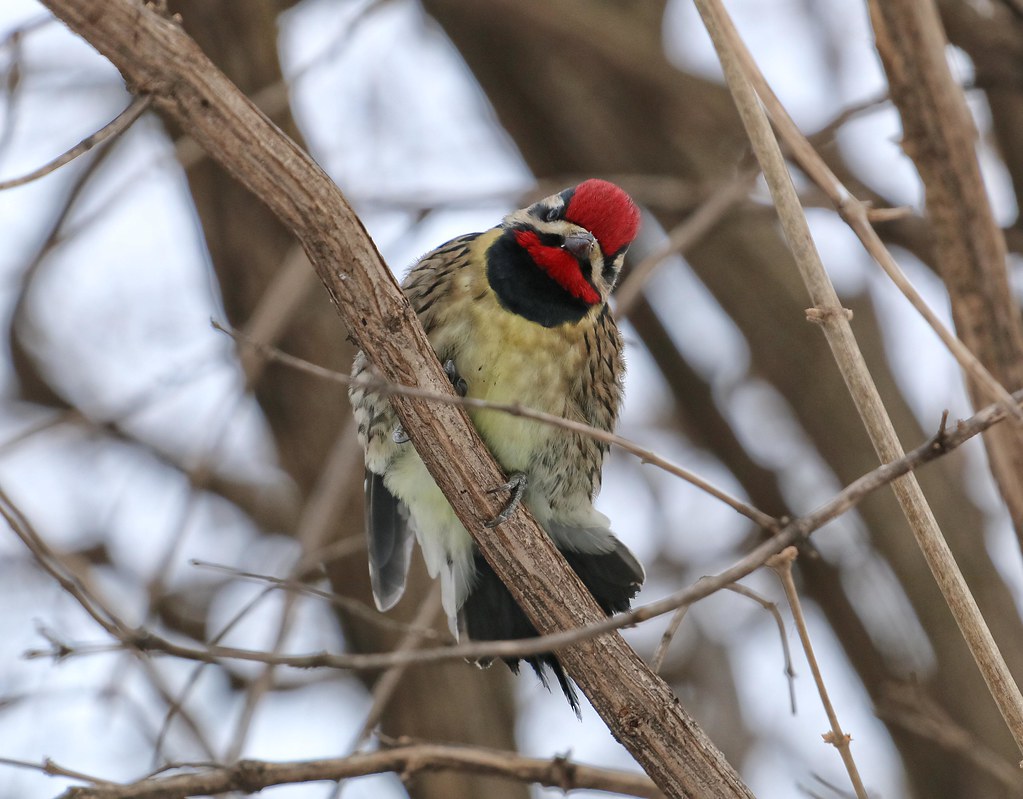
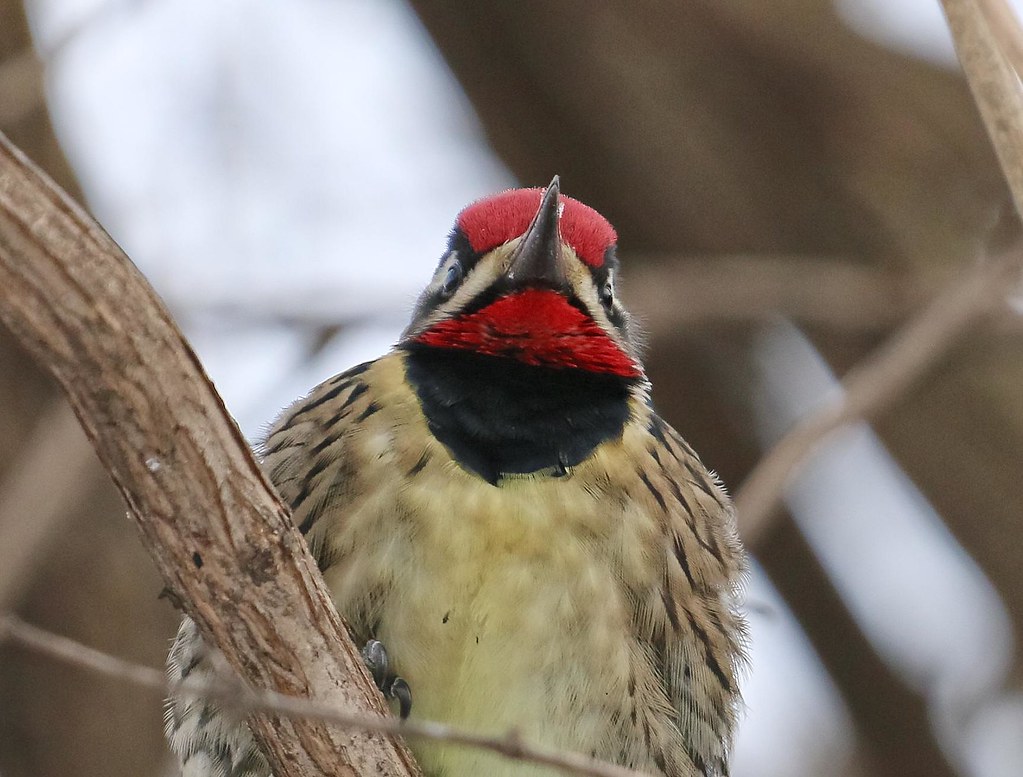
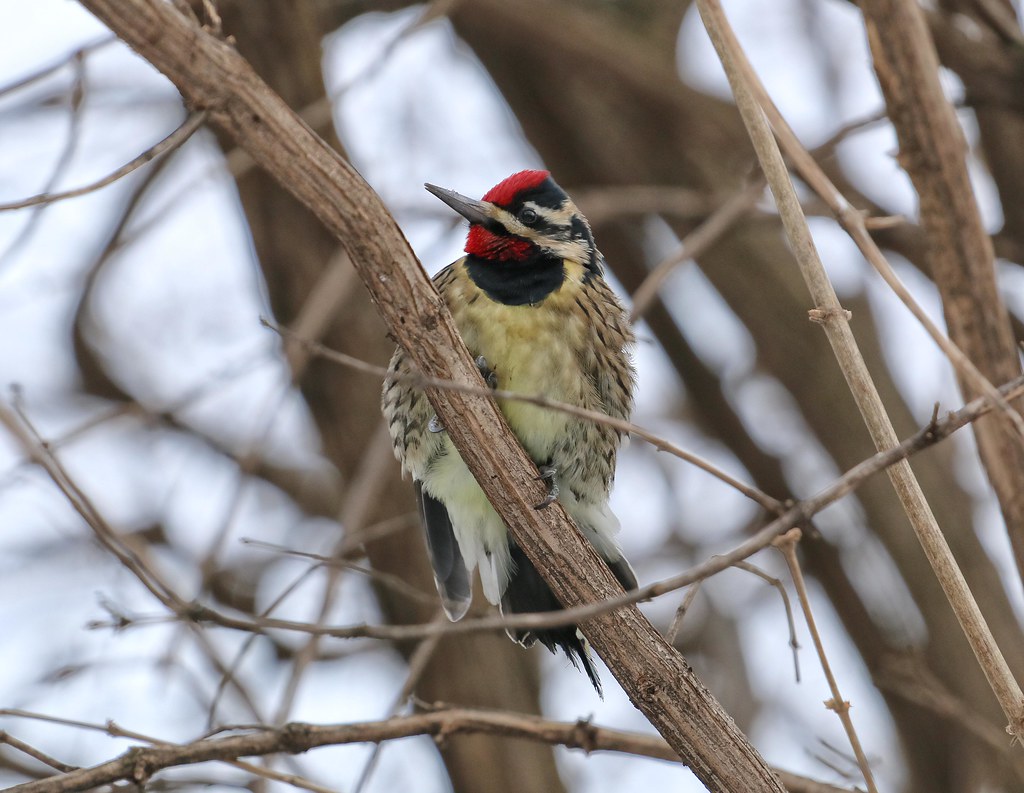
Meanwhile, this male yellow-bellied sapsucker was much more curious, getting very close and appearing to check me out.

Yellow-bellied Sapsucker

Yellow-bellied Sapsucker

Yellow-bellied Sapsucker 

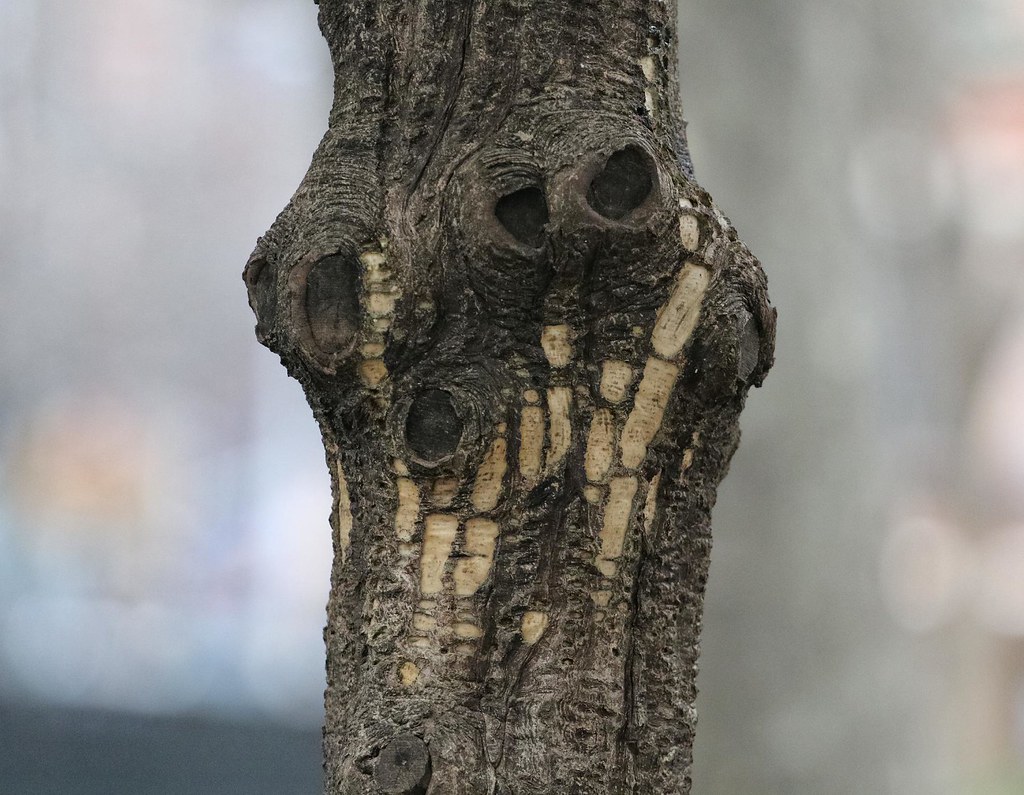
At the entrance to Tompkins Square Park at Avenue A and 9th Street, a sapsucker has left sap wells in the trunk of a holly. 

Evidence of a sapsucker 

It's worth revisiting the holly to see if any sap is flowing and if any other birds are sipping it.